Visual reference
More visual summaries for this topic
Browse the visual reference library · Download lesson Markdown
🔄 Understanding the AKI-CKD Continuum
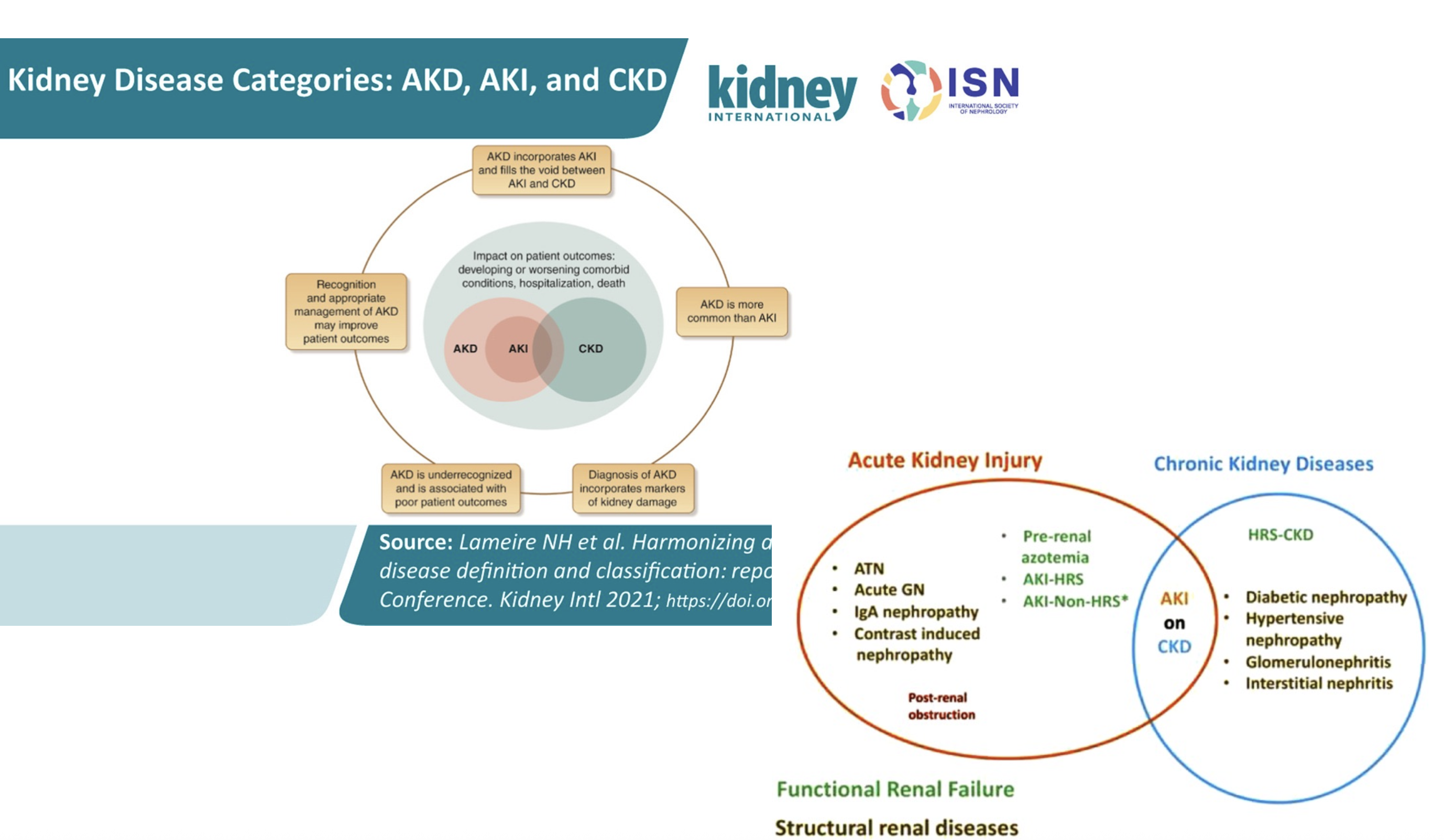
CKD represents the endpoint of progressive kidney damage, but the relationship with acute injury is bidirectional - CKD increases AKI risk, and AKI accelerates CKD progression.
📋 CKD Definition (KDIGO 2024)
Abnormalities of kidney structure or function present for >3 months, with implications for health
📊 Functional Criteria
- eGFR <60 mL/min/1.73m² for >3 months
- Albuminuria ≥30 mg/g (≥3 mg/mmol)
- Electrolyte abnormalities due to tubular disorders
🔬 Structural Criteria
- Pathologic abnormalities on biopsy
- Imaging abnormalities (polycystic, scarring)
- History of kidney transplantation
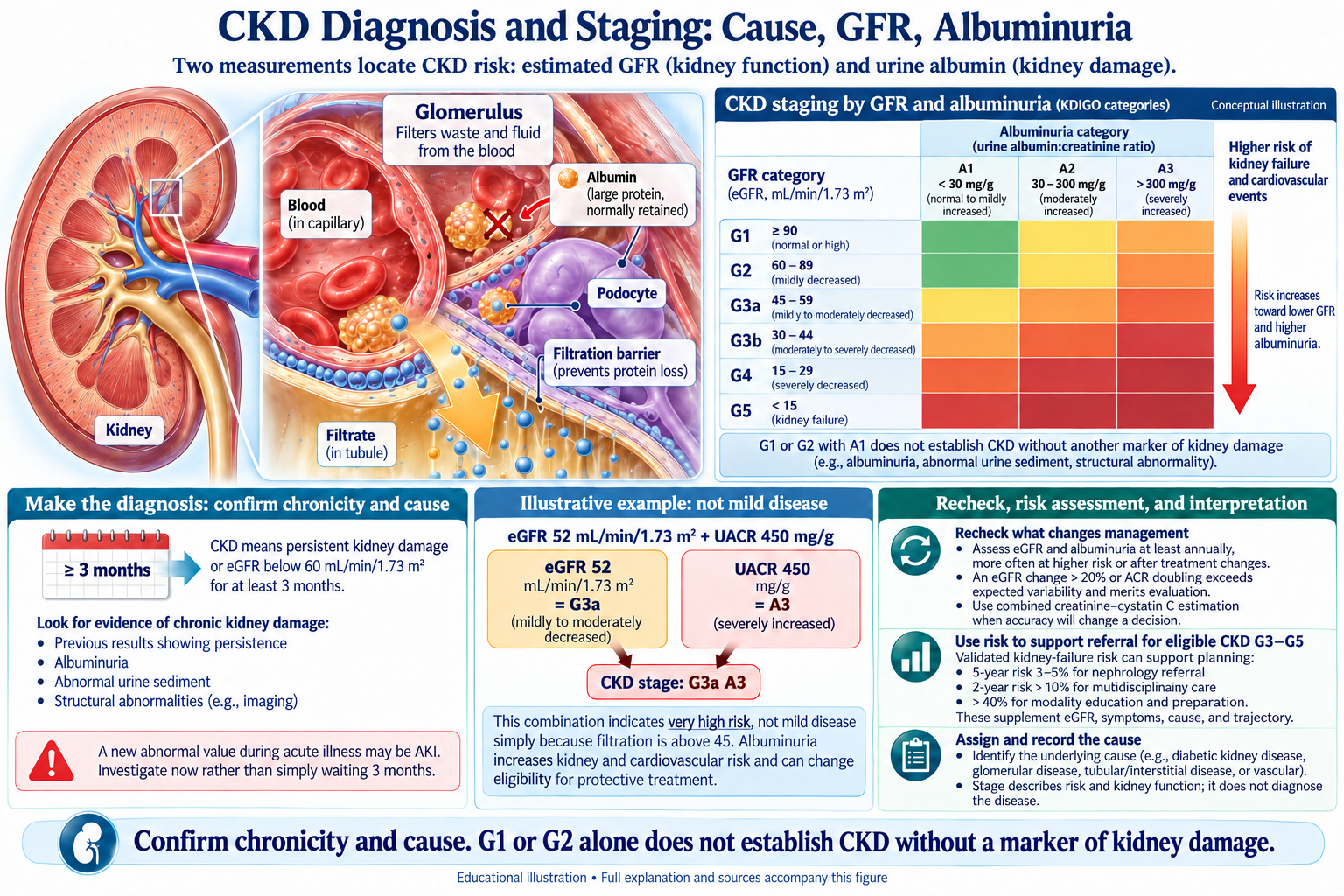
🎯 CKD Risk Stratification Matrix
The KDIGO risk matrix combines GFR and albuminuria to predict progression and guide monitoring frequency:
| GFR Category (mL/min/1.73m²) |
Albuminuria Category (mg/g) — KDIGO uses A1–A3; the 4th column is a teaching extension within A3 to highlight nephrotic-range proteinuria, NOT a formal KDIGO tier | |||
|---|---|---|---|---|
| A1 <30 |
A2 30-300 |
A3 300-3000 |
A3 (nephrotic-range) >3000 teaching emphasis only — within KDIGO A3 |
|
| G1 (≥90) | Low Risk* | Moderate Risk | High Risk | 🚨 EXTREME RISK |
| G2 (60-89) | Low Risk* | Moderate Risk | High Risk | 🚨 EXTREME RISK |
| G3a (45-59) | Moderate Risk | High Risk | Very High Risk | 🚨 EXTREME RISK |
| G3b (30-44) | High Risk | Very High Risk | Very High Risk | 🚨 EXTREME RISK |
| G4 (15-29) | Very High Risk | Very High Risk | Very High Risk | 🚨 EXTREME RISK |
| G5 (<15) | Very High Risk | Very High Risk | Very High Risk | 🚨 EXTREME RISK |
Comprehensive CKD Management
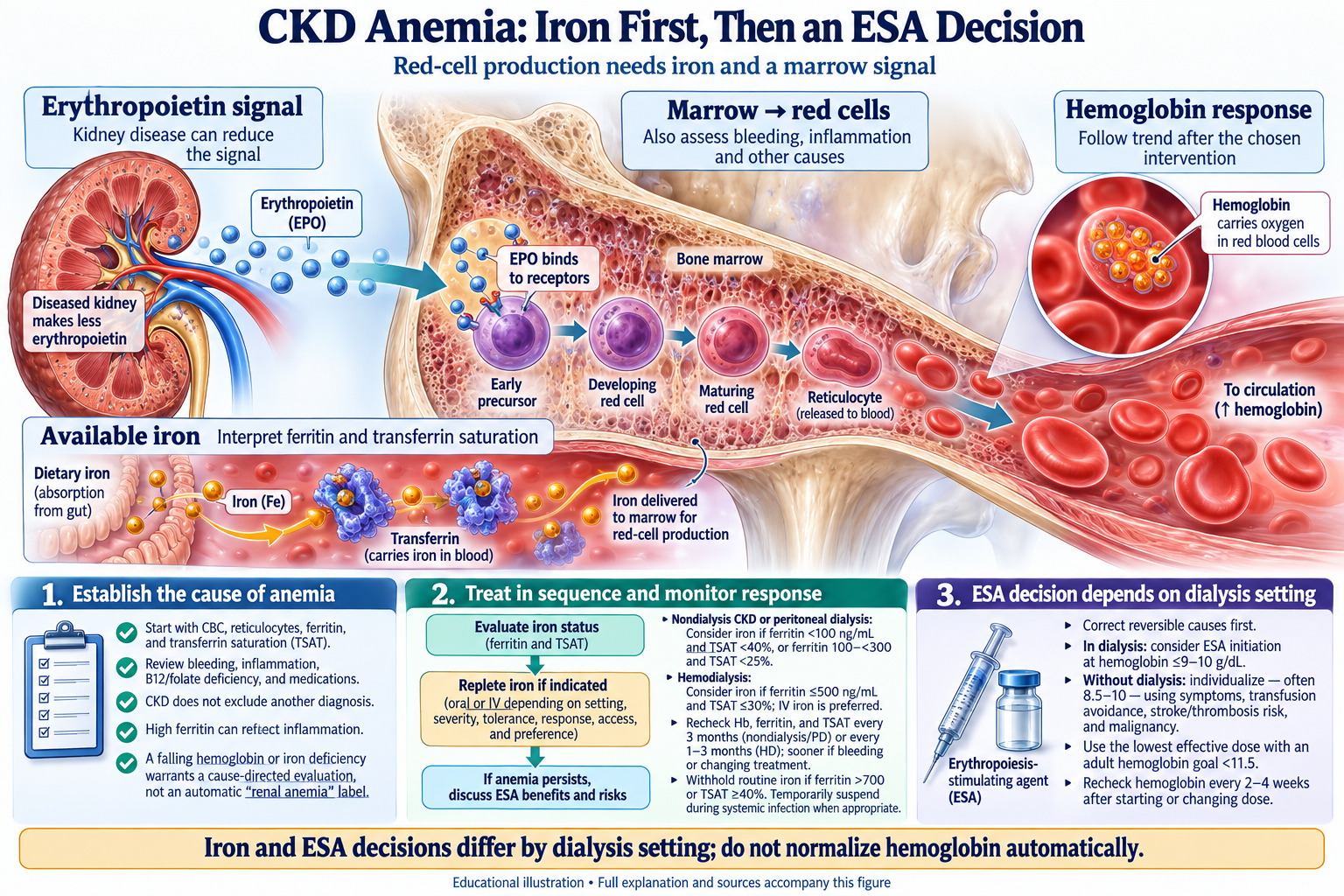
🩸 Anemia Management
Evidence-based approach to CKD anemia (final KDIGO 2026 guidance)
- Iron Deficiency: Absolute vs functional distinction
- Hepcidin Axis: Inflammation can reduce oral iron response
- Iron route: IV preferred in HD; individualize oral versus IV in nondialysis CKD/PD
- ESA Therapy: Goal is reducing transfusions
- ESA maintenance: Adult Hb goal below 11.5 g/dL; individualize risk
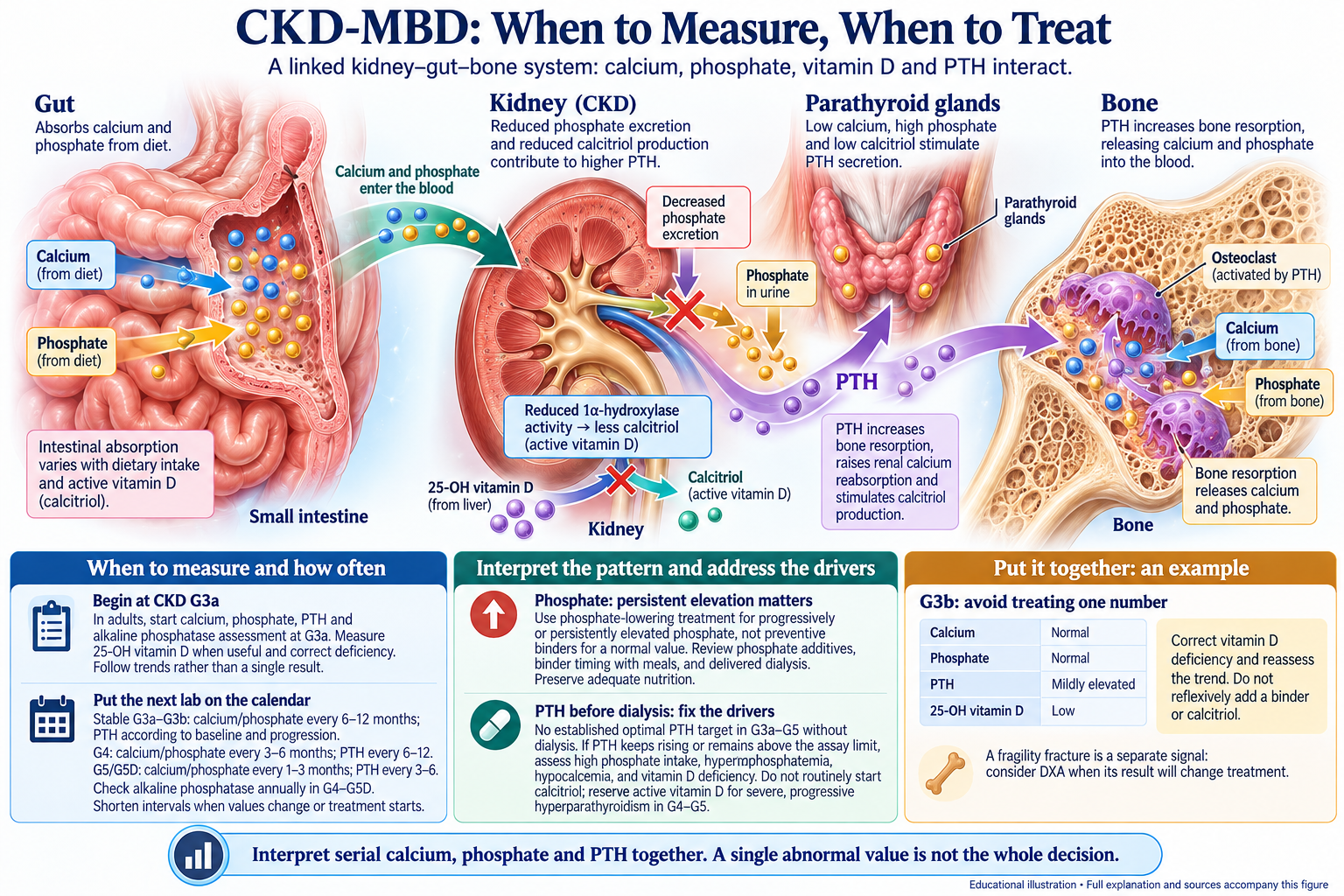
🦴 Mineral Bone Disorder
CKD-MBD management with 2024 evidence updates
- Vitamin D Pathway: 3-step synthesis disruption
- PTH Management: Serial trends; dialysis status changes interpretation
- Evidence Update: PRIMO/OPERA trial impacts
- Before dialysis: No established optimal PTH target; assess severity and progression
- Avoid: Routine vitamin D analogs (2017 KDIGO)
⚖️ Metabolic Acidosis
2024 KDIGO threshold update and treatment strategies
- Clinical concern: Consider treatment to prevent consequential acidosis, for example bicarbonate <18 mmol/L
- Evidence Base: UBI study, protein catabolism
- Treatment Options: Sodium bicarbonate vs fruits/vegetables
- Evidence: Do not promise a fixed eGFR benefit from alkali
- Monitor: Trends, not single values
💊 Five Pillars Management
Comprehensive approach to slow CKD progression
- Blood Pressure: Target <130/80 mmHg
- RAAS Inhibition: ACE-I/ARB first-line
- SGLT2 Inhibitors: Renoprotective effects
- Protein Restriction: 2024 evidence challenges
- Diabetes Control: A1C <7% in most patients
🫀 Cardiorenal Disease
CV risk assessment and prevention in CKD
- CV Risk: 2-10× higher than general population
- Risk Factors: Traditional + CKD-specific
- Prevention: Statins, aspirin, lifestyle
- Monitoring: Coronary calcium scoring
- Management: Aggressive risk factor modification
🧮 Interactive Calculators
Clinical decision support tools
- CKD Management: Comprehensive assessment
- Anemia Workup: Iron status evaluation
- PTH Management: Stage-specific recommendations
- Acidosis Treatment: Threshold-based guidance
- Evidence-Based: Latest guideline integration
💊 Renal Pharmacology & Medication Safety
Evidence-based medication management in CKD
- Dose Adjustments: GFR-based dosing strategies
- Nephrotoxin Avoidance: High-risk medications in CKD
- Drug Interactions: Critical pharmacokinetic considerations
- Dialysis Dosing: Supplemental dosing for dialyzed drugs
- Medication Safety: Comprehensive prescribing guidance
🚨 CKD Emergency Recognition
Severe Anemia (Hgb <7-8 g/dL)
- Consider urgent transfusion if symptomatic
- Evaluate for bleeding, hemolysis
- Check iron studies, B12, folate
Severe Hyperkalemia (K+ >6.5)
- ECG changes with acidosis
- Calcium gluconate, insulin/dextrose
- Consider emergent dialysis
Severe Acidosis (HCO₃ <12)
- Assess for intercurrent illness
- Consider IV bicarbonate if pH <7.1
- Monitor for respiratory compensation
Uremic Emergency
- Altered mental status, pericarditis
- Bleeding diathesis, uremic frost
- Consider emergent hemodialysis
📊 CKD Management Calculator
This educational calculator prompts review; it does not prescribe treatment. Choose HD versus PD explicitly. For anemia, HD iron-entry criteria are ferritin ≤500 ng/mL and TSAT ≤30%; nondialysis/PD criteria are ferritin <100 with TSAT <40%, or ferritin 100–<300 with TSAT <25%. Withhold routine iron at ferritin >700 or TSAT ≥40%. PTH interpretation requires the laboratory assay limit and serial calcium/phosphate results: approximately 2–9× the assay limit applies to dialysis, while optimal PTH before dialysis is unknown. A PTH >300 alone does not trigger calcitriol. Consider acidosis treatment based on clinical consequences (for example bicarbonate <18 mmol/L), with BP, potassium, and volume monitoring.
Patient Parameters
Management Recommendations
Enter patient parameters to see recommendations
💎 Key Clinical Pearls
🩸 Anemia Management
- Choose oral or IV iron in nondialysis CKD/PD by severity, tolerance, response, access, and preference; IV iron is preferred in HD
- ESA goal is reducing transfusions, not normalizing Hgb
- Check iron studies before starting ESA therapy
🦴 PTH Management
- Address modifiable factors before starting vitamin D analogs
- Modest PTH elevation can be adaptive; assess serial values with calcium, phosphate, intake, and vitamin D
- Do not routinely use active vitamin D in G3a–G5 without dialysis; reserve it for severe, progressive hyperparathyroidism in G4–G5 after modifiable causes are addressed
⚖️ Acidosis Management
- KDIGO 2024 gives bicarbonate <18 mmol/L as an example warranting treatment consideration, not an automatic universal threshold
- Select dietary or pharmacologic therapy with potassium, nutrition, BP, and fluid status in mind; outcome equivalence is not established
- Monitor trends, not single values
🎯 Essential CKD Learning Points
📊 Risk Stratification
- KDIGO matrix combines GFR + albuminuria
- Highest risk within KDIGO A3: nephrotic-range proteinuria >3 g/g (formal KDIGO uses A1–A3; the >3000 mg/g tier shown in the heat map above is a teaching emphasis, not a separate KDIGO category)
- Monitor frequency based on risk level
- Early nephrology referral for high risk
🎯 Evidence-Based Management
- 2024 guidelines emphasize individualization
- Avoid routine vitamin D analogs
- Consider consequential acidosis (for example bicarbonate <18 mmol/L), with individualized treatment
- IV iron preferred in HD; oral versus IV individualized before dialysis and in PD
🚨 Emergency Recognition
- Severe anemia may require transfusion
- Hyperkalemia with ECG changes
- Uremic emergencies need dialysis
- Severe acidosis evaluation
💡 Clinical Integration
- AKI-CKD continuum concept
- Cardiorenal disease prevention
- Five pillars approach
- Regular monitoring and adjustment