πŸ”¬ Hypercalcemia Diagnostic Algorithm

PTH-Based Systematic Approach to Differential Diagnosis

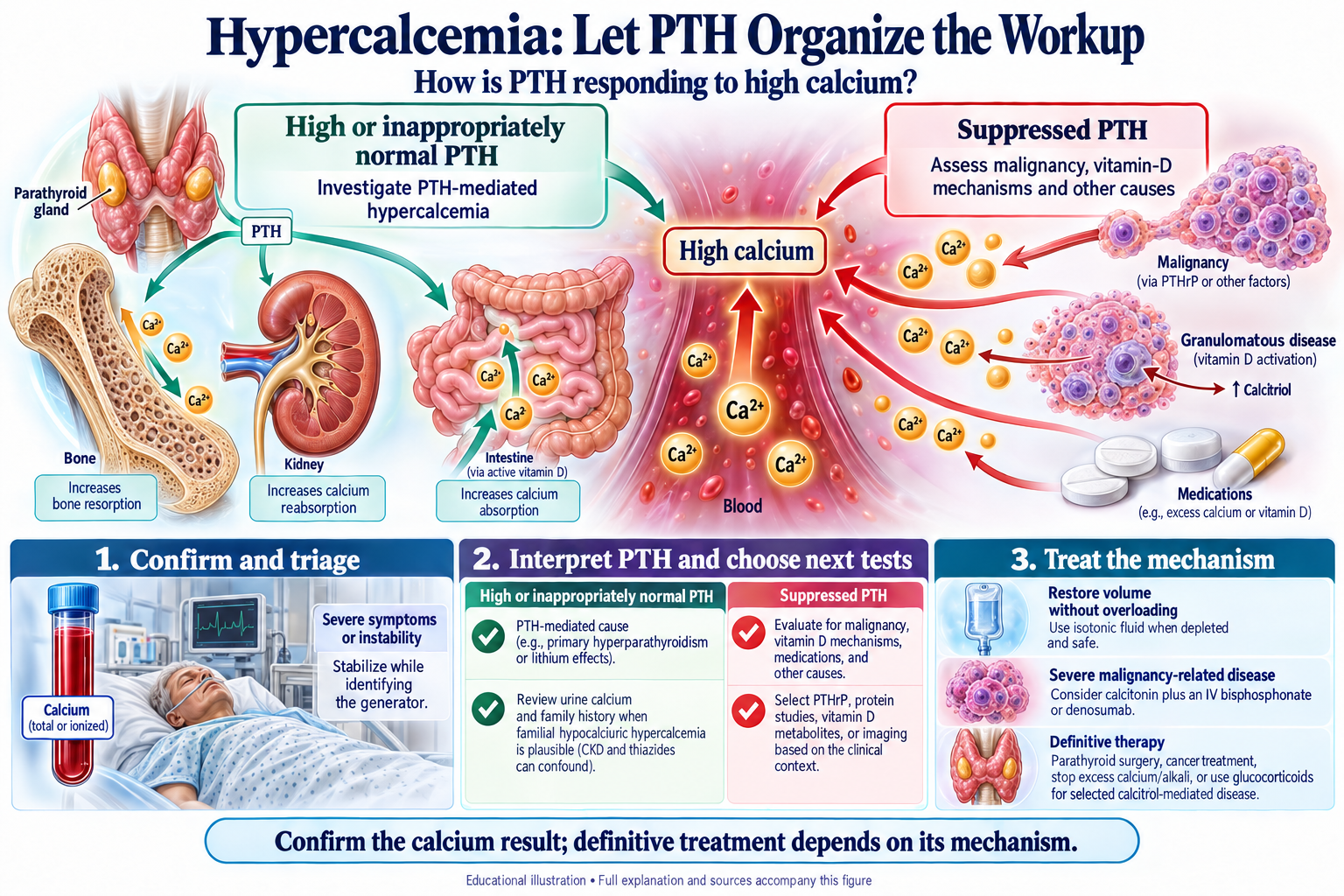
Systematic Approach to Hypercalcemia (Ca++ > 10.5 mg/dL) STEP 1: CONFIRM HYPERCALCEMIA Corrected Ca = Measured Ca + 0.8 Γ— (4.0 - Albumin) Or check ionized calcium STEP 2: CHECK PTH LEVEL Critical first branch point (Normal range: 15-65 pg/mL) PTH β‰₯20 pg/mL (Elevated or Inappropriately Normal) PTH <20 pg/mL (Suppressed) PTH-DEPENDENT HYPERCALCEMIA Parathyroid-mediated causes PRIMARY HPT (85%) β€’ Adenoma (80-85%) β€’ Hyperplasia (10-15%) β€’ Carcinoma (<1%) Labs: PTH↑, Phos↓ 1,25(OH)β‚‚D ↑/N Next: Neck imaging FHH (5%) Familial Hypocalciuric Hypercalcemia Key: 24h urine Ca Ca/Cr clearance ratio <0.01 Family history + OTHER (10%) β€’ Tertiary HPT β€’ Lithium-induced β€’ Thiazide unmasking Consider med history Check CKD status PTH-INDEPENDENT HYPERCALCEMIA Non-parathyroid causes Ca++ >13 mg/dL? High suspicion for malignancy (80-90% probability) MALIGNANCY WORKUP 1. Check PTHrP 2. SPEP/UPEP 3. CT chest/abd/pelvis 4. Check 1,25(OH)β‚‚D PTHrP+ β†’ Humoral 1,25↑ β†’ Lymphoma Lytic β†’ Myeloma/Mets VITAMIN D EVAL Check: β€’ 25(OH)D level β€’ 1,25(OH)β‚‚D level 25↑↑ β†’ Intoxication 1,25↑↑ + 25N/↓ β†’ Granulomas/Lymphoma (Check ACE, imaging) OTHER CAUSES β€’ Thyrotoxicosis β€’ Adrenal insufficiency β€’ Vitamin A toxicity β€’ Immobilization β€’ Milk-alkali syndrome Check: TSH, cortisol, medication history πŸ“‹ ADDITIONAL WORKUP FOR ALL PATIENTS β€’ Complete metabolic panel (Ca, Phos, Mg, Cr) β€’ 24-hour urine calcium and creatinine β€’ Alkaline phosphatase (bone turnover) β€’ Consider: ECG (short QT), renal ultrasound ⚠️ If Ca >14 mg/dL β†’ EMERGENCY Start treatment immediately while working up πŸ”¬ KEY LABORATORY PATTERNS DIAGNOSIS PTH PTHrP 25(OH)D 1,25(OH)β‚‚D Phosphate KEY FINDING Primary HPT ↑↑ Normal Normal ↑ or N ↓ Most common outpatient cause Malignancy (PTHrP) ↓ ↑↑ Normal ↓ or N ↓ Squamous cell ca, RCC Lymphoma ↓ Normal N/↓ ↑↑ N/↑ Extra-renal 1Ξ±-hydroxylase Vitamin D intoxication ↓ Normal ↑↑ ↑ N/↑ Check supplement history Sarcoidosis ↓ Normal N/↓ ↑↑ N/↑ ACE ↑, hilar lymphadenopathy πŸ’‘ CRITICAL CLINICAL PEARLS πŸ”΄ PTH is the FIRST test - determines entire diagnostic pathway πŸ”΄ "Inappropriately normal" PTH with hypercalcemia = primary hyperparathyroidism πŸ”΄ Ca++ >13 mg/dL with suppressed PTH = malignancy until proven otherwise πŸ”΄ Check 1,25(OH)β‚‚D if PTH suppressed - elevated suggests granulomas/lymphoma ⚠️ EMERGENCY if Ca >14 mg/dL or symptomatic - treat first, diagnose second! 🚨 TREATMENT PRIORITIES BY MECHANISM PTH-MEDIATED: β€’ Surgery (parathyroidectomy) β€’ Cinacalcet if surgery not option β€’ Bisphosphonates for bones NON-PTH MEDIATED: β€’ Treat underlying cause β€’ Steroids if granulomas/lymphoma β€’ Bisphosphonates + calcitonin πŸ“Š MONITORING DURING WORKUP β€’ Serial calcium levels (daily if >12 mg/dL) β€’ Renal function (creatinine, BUN) β€’ ECG monitoring (QT interval, arrhythmias) β€’ Mental status assessment Remember: PTH determines the pathway β†’ Elevated/Normal PTH = Parathyroid problem | Suppressed PTH = Look elsewhere
Initial Evaluation
Critical Decision Point
PTH-Dependent Path
PTH-Independent Path
Additional Evaluation
Reference Information