Visual reference
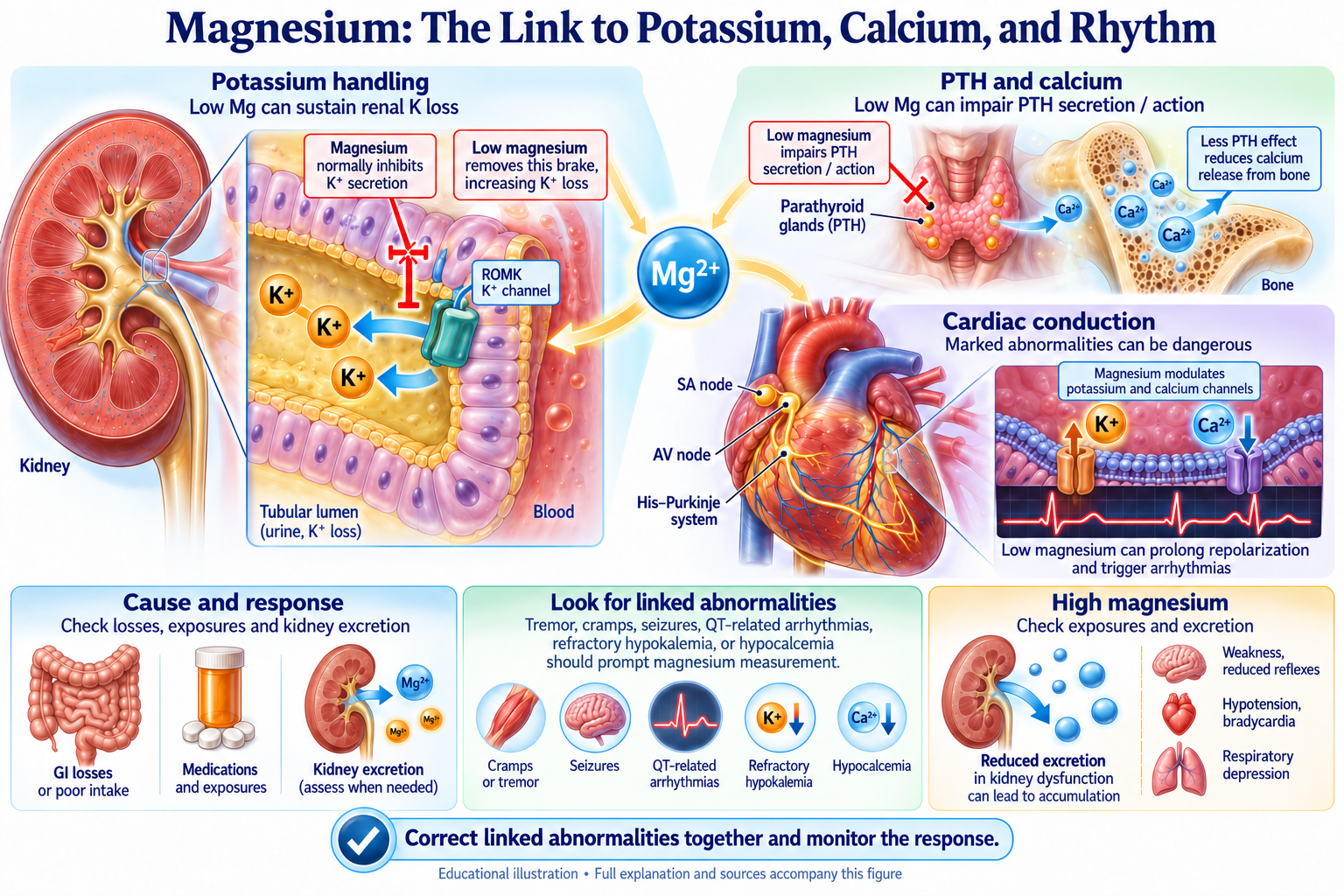
Browse the visual reference library · Download lesson Markdown
🚨 EMERGENCY RECOGNITION: Hypomagnesemia
1
Clinical Suspicion: Tetany, seizures, or torsades de pointes with normal Ca/K levels
2
High-Risk Patients: Chronic alcoholism, diuretics, PPI use, malabsorption
3
Associated Deficiencies: Check K, Ca, PO4 - often concurrent (60% hypokalemic)
4
Treatment Priority: Must correct Mg FIRST - K refractory until Mg repleted
📊 Definition and Clinical Significance
Hypomagnesemia Definition
- Serum Magnesium: <1.8 mg/dL (0.75 mmol/L)
- Mild: 1.2-1.8 mg/dL (0.5-0.75 mmol/L)
- Moderate: 0.8-1.2 mg/dL (0.35-0.5 mmol/L)
- Severe: <0.8 mg/dL (<0.35 mmol/L)
- Critical Insight: Normal serum levels don't exclude total body depletion
- Prevalence: 2-15% hospitalized, up to 65% ICU patients
🎯 Causes of Hypomagnesemia
| Category | Specific Causes | Key Clinical Features | Mechanism |
|---|---|---|---|
| Nutritional/GI | Chronic alcohol use disorder | Multiple nutrient deficiencies, withdrawal risk | ↓Absorption, ↑losses, poor intake |
| Malabsorption syndromes | Diarrhea, weight loss, steatorrhea | ↓Intestinal absorption | |
| Bariatric surgery (RYGB) | Post-surgical, rapid weight loss | ↓Absorptive surface area | |
| Renal Losses | Loop diuretics | Dose-dependent, concurrent hypokalemia | ↓TAL reabsorption |
| Proton pump inhibitors | Long-term use (>1 year) | ↓TRPM6/TRPM7 channels | |
| Aminoglycosides | Duration-dependent nephrotoxicity | Tubular toxicity | |
| Endocrine | Diabetes mellitus | Poor glycemic control, osmotic diuresis | ↑Renal losses |
| Primary aldosteronism | Hypertension, concurrent hypokalemia | ↑Distal tubule flow | |
| Genetic | Gitelman syndrome | Hypocalciuria, hypokalemia | NCCT mutations |
🔍 Clinical Manifestations
Neuromuscular Manifestations
- Early signs: Fatigue, weakness, irritability
- Progressive: Muscle cramps, fasciculations
- Chvostek/Trousseau signs: May be positive
- Severe: Tetany, seizures, altered mental status
- Key: Symptoms usually absent until <1.2 mg/dL
Cardiovascular Complications
- Arrhythmias: Atrial and ventricular
- Life-threatening: Torsades de pointes
- Enhanced digitalis toxicity: ↑Na+ cellular accumulation
- Vascular effects: Coronary spasm, hypertension
- ECG changes: QT prolongation, U waves
Metabolic Consequences
- Hypokalemia: 60% of patients concurrent
- Hypocalcemia: PTH resistance/↓secretion
- Hypophosphatemia: Impaired PTH action
- Vitamin D metabolism: ↓1α-hydroxylase activity
- Insulin resistance: ↓Glucose tolerance
🧮 Hypomagnesemia Risk and Replacement Calculator
Replacement Protocol: Enter values to calculate dosing
🔬 Diagnostic Workup
Initial Laboratory Assessment
- Serum magnesium (fasting): <1.8 mg/dL diagnostic
- Ionized magnesium: More accurate but limited availability
- Concurrent electrolytes: K, Ca, PO4, albumin
- Intact PTH: Suppressed in severe deficiency
- 25(OH)D level: Impaired activation
Determine Etiology
- 24-hour urine Mg: <120 mg/day in deficiency
- Fractional excretion: >2% suggests renal wasting
- Medication review: Diuretics, PPIs, antibiotics
- GI assessment: Diarrhea, malabsorption history
Specialized Testing
- Mg tolerance test: Gold standard for body stores
- Genetic testing: Suspected inherited disorders
- Alcohol use screening: CAGE, quantity assessment
- Nutritional evaluation: Comprehensive assessment
📐 Fractional Excretion of Magnesium (FEMg)
Formula: FEMg = (UMg × SCr) / (0.7 × SMg × UCr) × 100
- Normal response to deficiency: <2% (renal conservation)
- Renal wasting: >2% despite hypomagnesemia
- Clinical utility: Distinguish renal vs. extrarenal losses
🧪 Ionized Magnesium Testing
- Normal range: 0.45-0.60 mmol/L
- Advantages: Not affected by protein binding
- Clinical utility: Better correlation with intracellular stores
- Limitations: Limited availability, expensive
- Consider when: Normal total Mg with strong clinical suspicion
- Research evidence: May detect deficiency earlier than total Mg
💊 Treatment Strategies
Acute Severe Hypomagnesemia (<1.0 mg/dL)
1
IV Loading Dose: 1-2 grams (4-8 mmol) MgSO4 in 50-100 mL NS over 1-2 hours
2
Continuous Infusion: 6 grams (24 mmol) MgSO4 in 1000 mL NS over 24 hours
3
Monitoring: Serum Mg every 6-8 hours, check DTRs, renal function
4
Concurrent K replacement: Required for successful K repletion
Oral Magnesium Supplementation
- Preferred forms: Chloride, citrate, gluconate, glycinate
- Highly recommended: Magnesium chloride (25% elemental, excellent absorption)
- Avoid: Magnesium oxide (poor absorption, diarrhea)
- Dosing: 400-800 mg daily elemental Mg, divided doses
- Duration: Weeks to months depending on etiology
- Side effects: Diarrhea (dose-limiting, less with chloride form)
Chronic Parenteral Therapy
- Indications: Malabsorption, ongoing losses
- Dosing: 2-4 grams MgSO4 weekly or twice-weekly
- Administration: Outpatient infusion centers
- Monitoring: Monthly serum levels, clinical symptoms
Treatment of Underlying Conditions
- Medication review: Discontinue/modify offending agents
- Alcohol cessation: Comprehensive addiction treatment
- GI disorders: Specific therapy for malabsorption
- Endocrine disorders: Hormone replacement/suppression
💊 Oral Magnesium Formulations
| Formulation | Elemental Mg Content | Bioavailability | GI Tolerance | Clinical Notes |
|---|---|---|---|---|
| Magnesium Oxide | 60% | 4% (Poor) | Poor - Diarrhea | Avoid - despite high Mg content |
| Magnesium Citrate | 16% | 25-30% (Good) | Good | Preferred oral form |
| Magnesium Gluconate | 5.4% | 25-30% (Good) | Excellent | Well tolerated, lower Mg per pill |
| Magnesium Glycinate | 14% | 35-40% (Excellent) | Excellent | Chelated form, optimal absorption |
| Magnesium Lactate | 12% | 25-30% (Good) | Good | Alternative to citrate |
| Magnesium Chloride | 25% | 30-35% (Excellent) | Very Good | Highly bioavailable, well-tolerated |
⚠️ Special Clinical Considerations
PPI-Induced Hypomagnesemia
- Mechanism: ↓TRPM6/TRPM7 intestinal channels
- Time course: Usually >1 year of therapy
- High risk: Concurrent thiazides, elderly
- Management: PPI discontinuation often required
- Alternatives: H2 blockers don't affect Mg absorption
Alcohol Use Disorder
- Multiple mechanisms: ↓Intake, ↓absorption, ↑losses
- Withdrawal risk: ↑Seizure susceptibility
- Nutritional rehab: Thiamine, folate, B12 deficiencies
- Higher requirements: During detoxification
- Comprehensive care: Addiction medicine referral
Diuretic-Induced Deficiency
- Loop diuretics: Greatest Mg wasting (TAL)
- Thiazides: Gitelman syndrome phenocopy
- Dose-dependent: >80 mg furosemide daily high risk
- Prevention: K-sparing diuretics may help
- Monitoring: Baseline, 1-2 weeks, then q3-6 months
🔄 Critical Electrolyte Interactions
Magnesium-Potassium Relationship
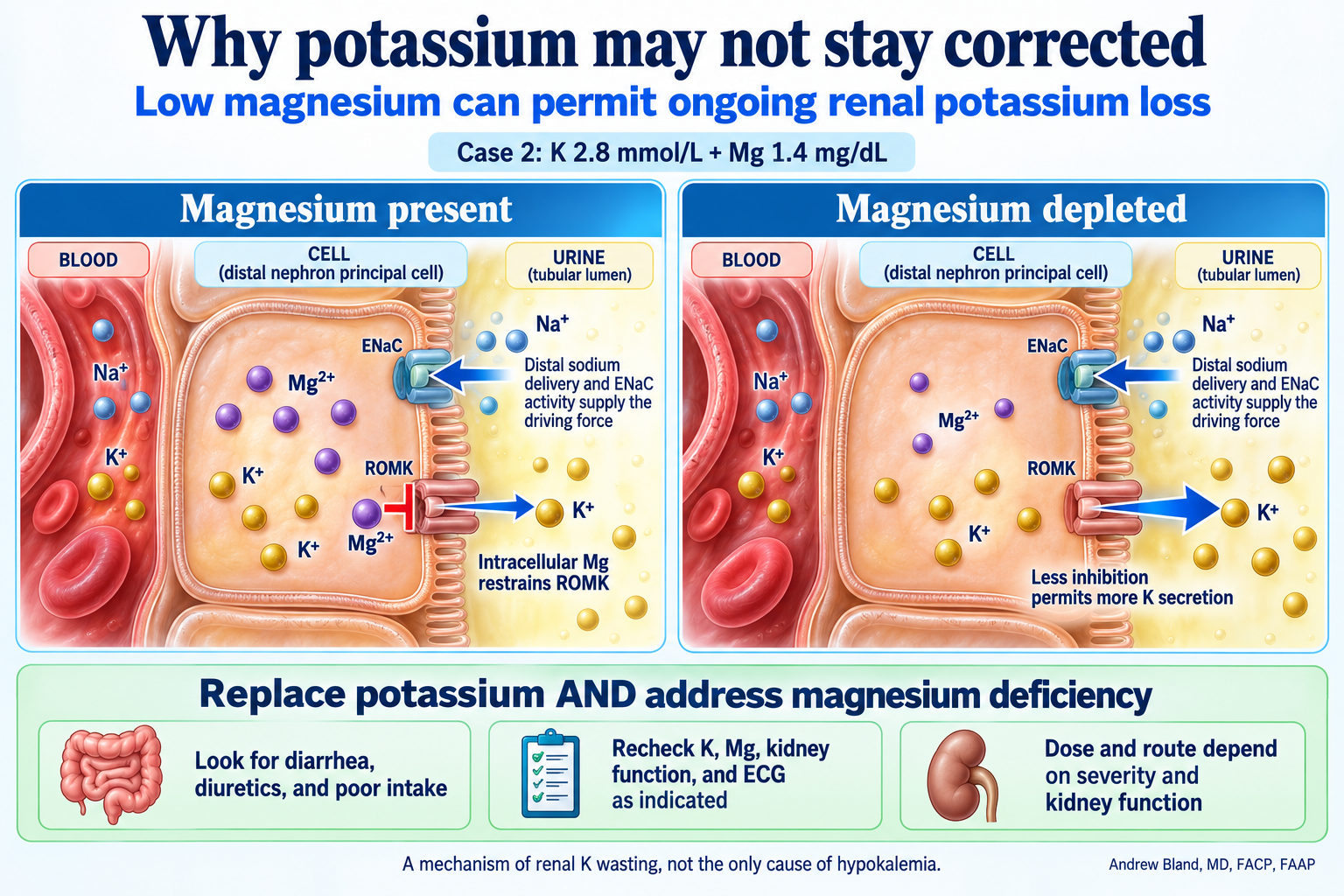
Low magnesium can permit ongoing renal potassium loss
- Physiologic interdependence: Mg deficiency impairs renal K conservation
- Clinical significance: 60% of hypomagnesemic patients have hypokalemia
- Treatment priority: Must correct Mg FIRST - K refractory otherwise
- Mechanism: ↓Na-K-ATPase activity, ↑K channel activity
- Dosing: Simultaneous replacement more effective than sequential
Magnesium-Calcium-PTH Axis
- PTH synthesis: Mg required for hormone production
- PTH secretion: Severe Mg deficiency (<1.0 mg/dL) suppresses PTH
- PTH resistance: ↓Target organ responsiveness in Mg deficiency
- Vitamin D metabolism: Mg cofactor for 1α-hydroxylase
- Clinical result: Hypocalcemia refractory to Ca replacement until Mg corrected
📊 Monitoring and Follow-up
Acute Treatment Monitoring
- Serum Mg: Every 6-8 hours during IV replacement
- Renal function: Creatinine, avoid overload
- Deep tendon reflexes: Clinical improvement marker
- Cardiac monitoring: If arrhythmias present
Chronic Management
- Target level: >1.8 mg/dL, ideally 2.0-2.4 mg/dL
- Follow-up frequency: Weekly initially, then monthly
- Symptom assessment: Muscle cramps, weakness resolution
- Concurrent electrolytes: K, Ca, PO4 normalization
🎯 Key Learning Points
- Recognition: Consider in alcohol use disorder, chronic diuretics, PPI therapy, malabsorption
- Clinical Clues: Refractory hypokalemia, unexplained tetany, torsades de pointes
- Diagnostic Limitation: Normal serum Mg doesn't exclude total body depletion
- Treatment Priority: Must correct magnesium BEFORE potassium will respond
- Oral Forms: Chloride, citrate, gluconate, glycinate preferred; avoid oxide
- IV Replacement: 1-2g loading dose, then 6g/24h for severe deficiency
- PPI Association: Long-term PPI use can cause refractory hypomagnesemia
- Electrolyte Interactions: Affects K, Ca, PO4 - comprehensive replacement needed
- Prevention: Monitor high-risk patients, consider prophylactic supplementation