Immunosuppression Protocols in Glomerular Disease
Avacopan evidence and regulatory update: The ADVOCATE article was retracted on 29 June 2026; its reported efficacy and comparative-safety results should not be used as established evidence. On 27 April 2026, FDA's CDER proposed withdrawal of TAVNEOS approval because a valid demonstration of efficacy could no longer be established and material facts in the application were untrue. FDA also identified serious liver-injury concerns. This is a proposed withdrawal, not a completed US withdrawal; FDA advises clinicians and patients to discuss available treatment options while the process is pending. Retraction notice · FDA notice, 27 April 2026.
Evidence-based dosing, monitoring, and supportive care for immunosuppressive therapy in glomerulonephritis
KDIGO GN 2021
RAVE 2010
ALMS 2009
AURORA 2021
ADVOCATE 2021 — RETRACTED 2026
Visual reference
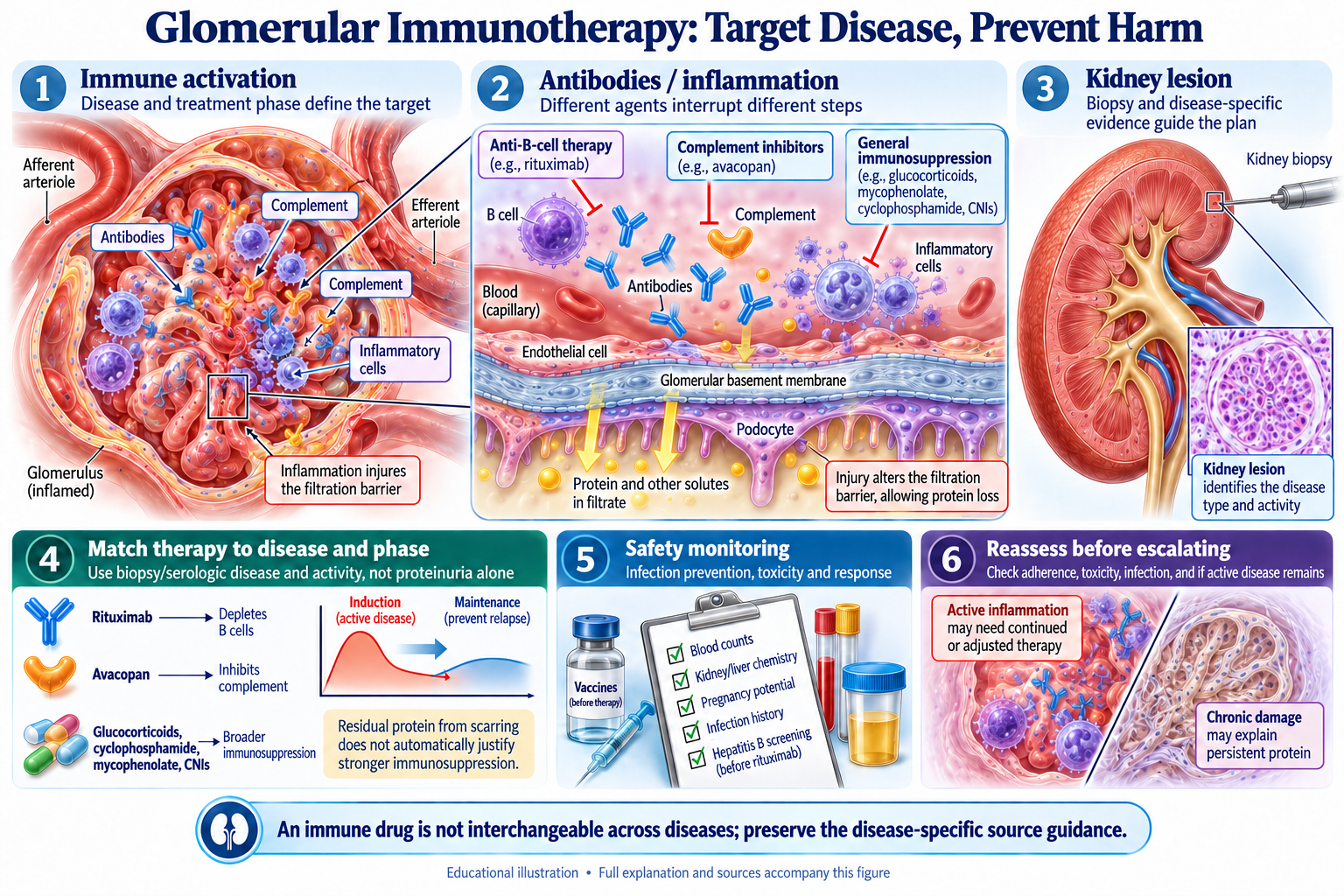
Browse the visual reference library · Download lesson Markdown
1. Pulse Methylprednisolone
Dosing
- Standard pulse: 500–1000 mg IV daily for 3 consecutive days
- Infuse over 30–60 minutes in 100–250 mL normal saline
- Typically followed by oral prednisone taper (see Section 2)
Indications
| Condition | Typical Pulse Dose | Notes |
|---|---|---|
| Rapidly progressive GN (RPGN) / crescentic GN | 1000 mg IV x 3 days | Start empirically before biopsy if clinical suspicion high; follow with cyclophosphamide or rituximab |
| Severe lupus nephritis (Class III/IV with crescents) | 500–1000 mg IV x 3 days | Per KDIGO 2021 GN and ACR/EULAR lupus nephritis guidelines |
| Anti-GBM disease | 1000 mg IV x 3 days | Combined with plasmapheresis and cyclophosphamide; dialysis-dependent patients with 100% crescents have poor renal prognosis |
| ANCA vasculitis with severe renal/pulmonary involvement | 500–1000 mg IV x 3 days | Followed by an individualized oral taper. ADVOCATE was retracted in 2026; it no longer supports an avacopan steroid-sparing recommendation. |
Monitoring During Pulse Therapy
- Blood glucose: Check every 6 hours; insulin sliding scale often needed; hyperglycemia common even in non-diabetics
- Blood pressure: Monitor closely; may cause acute hypertension
- Infection surveillance: Ensure no active untreated infection before pulsing; hold if febrile
- Electrolytes: Sodium retention and hypokalemia possible
- Mental status: Steroid psychosis can occur with high-dose IV steroids; more common in elderly patients
- Cardiac: Rare arrhythmias reported with rapid infusion; ensure adequate infusion time
Clinical Pearl: Do not delay pulse steroids in suspected RPGN while awaiting biopsy. Crescentic GN is a nephrology emergency — irreversible damage accrues within days to weeks.
2. Oral Prednisone Taper Schedules
Rapid Taper — RPGN / ANCA Vasculitis
Used after pulse methylprednisolone for severe disease. Goal: minimize cumulative steroid exposure while controlling active inflammation.
Weeks 1–2:Prednisone 1 mg/kg/day (max 60–80 mg/day)
Weeks 3–4:40 mg/day
Weeks 5–6:30 mg/day
Weeks 7–8:20 mg/day
Weeks 9–10:15 mg/day
Weeks 11–12:10 mg/day
Weeks 13–16:7.5 mg/day
Weeks 17–20:5 mg/day
Weeks 21–24:2.5 mg/day, then discontinue (or physiologic replacement if adrenal suppression suspected)
ADVOCATE evidence correction: The 2021 article was retracted in 2026. Its reported remission, steroid-sparing, and kidney-recovery results are historical claims, not validated support for an induction or tapering protocol. Read the retraction notice.
Standard Taper — Nephrotic Syndrome (MCD/FSGS)
Used for primary nephrotic syndromes. Duration depends on response.
Weeks 1–8:Prednisone 1 mg/kg/day (max 80 mg/day); assess for remission at 8 weeks
Weeks 9–12:If in remission: 0.5 mg/kg every other day
Weeks 13–16:Reduce by 5–10 mg every 2 weeks
Weeks 17–20:10 mg every other day
Weeks 21–24:5 mg every other day, then discontinue
Total duration:~24 weeks (6 months); FSGS may require up to 16 weeks of full-dose before declaring steroid-resistant
Lupus Nephritis Taper (post-pulse)
Weeks 1–4:0.5–1 mg/kg/day (typically 40–60 mg/day)
Month 2:Taper to 30 mg/day
Month 3:Taper to 20 mg/day
Month 4:Taper to 15 mg/day
Month 5:Taper to 10 mg/day
Month 6+:Taper to 5–7.5 mg/day; maintain low-dose long-term per rheumatology guidance; target ≤5 mg/day by 12 months
Steroid Adverse Effect Monitoring
| Adverse Effect | Monitoring | Prevention / Management |
|---|---|---|
| Hyperglycemia / new-onset diabetes | Fingerstick glucose QID during pulse; fasting glucose and HbA1c monthly during taper | Insulin for inpatient; metformin or insulin outpatient; SGLT2i caution if nephrotic |
| Osteoporosis | DEXA at baseline if expected ≥3 months of therapy | Calcium 1000–1200 mg/day + vitamin D 800–1000 IU/day; bisphosphonate if T-score ≤−1.5 or prednisone ≥7.5 mg/day ≥3 months (see Section 8) |
| Avascular necrosis | Clinical: hip/knee pain; MRI if symptomatic | Minimize cumulative dose; early orthopedic referral |
| Infections (opportunistic) | PCP prophylaxis (see Section 9); HBV screening pre-treatment | TMP-SMX DS daily or 3x/week; monitor for CMV, fungal infections |
| Hypertension | BP at each visit | Sodium restriction; antihypertensives as needed |
| Cataracts / glaucoma | Ophthalmology referral if ≥6 months of therapy | Annual eye exam |
| Adrenal suppression | AM cortisol if on ≥3 months and tapering below 7.5 mg/day | Do not abruptly discontinue; taper to physiologic dose (5 mg prednisone = ~20 mg cortisol); stress-dose steroids for surgery/illness |
| Weight gain / Cushing features | Weight at each visit | Dietary counseling; exercise; minimize dose |
| Psychiatric effects | Screen for mood changes, insomnia, psychosis | Dose reduction; short-acting steroids; psychiatry referral if severe |
| GI effects (peptic ulcer) | Symptoms; consider H. pylori testing | PPI if concurrent NSAID use; avoid NSAIDs when possible |
| Myopathy | Proximal muscle weakness | Minimize dose; physical therapy |
3. Cyclophosphamide
IV Pulse Protocols
| Protocol | Dosing | Duration | Primary Indication |
|---|---|---|---|
| Euro-Lupus (low-dose) | 500 mg IV every 2 weeks | 6 doses (3 months) | Lupus nephritis Class III/IV; non-inferior to NIH protocol in European cohorts (PMID: 12209517) |
| NIH Protocol (high-dose) | 0.5–1 g/m2 IV monthly | 6 months induction, then quarterly for 1–2 years (historical) | Severe proliferative lupus nephritis; higher toxicity but remains option for refractory disease |
| ANCA Vasculitis (CYCLOPS) | 15 mg/kg IV (max 1.2 g) every 2–3 weeks | 3–6 months induction | ANCA vasculitis with renal involvement; reduced cumulative dose vs. daily oral |
| Anti-GBM Disease | 2–3 mg/kg/day oral (preferred) or pulse IV | 2–3 months | Combined with plasmapheresis and steroids |
Dose Adjustments
- Renal impairment: Reduce dose by 25% if eGFR <25 mL/min; further adjust for dialysis patients
- Age ≥60 years: Reduce dose by 25% (increased bone marrow toxicity)
- Obesity: Use ideal body weight for BSA-based dosing
Monitoring
- WBC nadir: Check CBC at day 10–14 after each dose; target WBC nadir >3,000/μL; absolute neutrophil count >1,500/μL
- CBC before each dose: Hold if WBC <3,500/μL; dose-reduce by 25% if nadir WBC 2,000–3,000/μL
- Urinalysis: Monitor for hemorrhagic cystitis (microscopic hematuria)
- Hepatic function: LFTs at baseline and periodically
Hemorrhagic Cystitis Prevention
- Mesna (2-mercaptoethanesulfonate): 20% of cyclophosphamide dose given at 0, 4, and 8 hours after IV cyclophosphamide
- Aggressive IV hydration (2–3 L) on day of infusion
- Encourage frequent voiding; void before bedtime
- Morning administration preferred to allow daytime hydration and voiding
Fertility Preservation
- GnRH agonists (leuprolide): Administer 10–14 days before first cyclophosphamide dose; continue monthly during treatment to suppress ovarian function
- Sperm cryopreservation: Offer to all male patients of reproductive age before initiation
- Oocyte/embryo cryopreservation: Consider if time permits before urgent treatment
- Cumulative dose threshold: Risk of premature ovarian failure increases with cumulative dose >10 g and age >30 years
Malignancy Risk: Cumulative cyclophosphamide exposure increases long-term risk of bladder cancer, myelodysplastic syndromes, and lymphoma. Limit cumulative lifetime exposure when possible. Euro-Lupus protocol preferred over NIH for reduced toxicity.
4. Rituximab
Dosing Protocols
| Protocol | Dosing | Indication | Key Trial Data |
|---|---|---|---|
| RAVE Protocol | 375 mg/m2 IV weekly x 4 doses | ANCA vasculitis induction | Non-inferior to cyclophosphamide for induction of remission; superior for relapsing disease (PMID: 20647199) |
| RITUXVAS Protocol | 375 mg/m2 IV weekly x 4 doses + 2 pulses IV cyclophosphamide (15 mg/kg) with doses 1 and 3 | Severe renal vasculitis | Comparable remission and adverse event rates to standard cyclophosphamide (PMID: 20647198) |
| Rheumatoid arthritis dosing | 1000 mg IV x 2 doses, 2 weeks apart | Used off-label for membranous nephropathy, lupus nephritis, frequently relapsing MCD/FSGS | MENTOR trial: non-inferior to cyclosporine for membranous nephropathy; superior sustained remission at 24 months (PMID: 31269364) |
| Maintenance | 500 mg IV every 6 months | ANCA vasculitis maintenance (MAINRITSAN trial) | Superior to azathioprine for relapse prevention at 28 months (PMID: 25372085) |
Pre-infusion Protocol
- Acetaminophen 650–1000 mg PO
- Diphenhydramine 50 mg IV or PO
- Methylprednisolone 100 mg IV (or equivalent)
- First infusion: start at 50 mg/hr, escalate by 50 mg/hr every 30 min to max 400 mg/hr
- Subsequent infusions: may start at 100 mg/hr if prior infusion tolerated
Monitoring
- B-cell depletion: CD19/CD20 count before each dose; verify depletion (<5 cells/μL) at 2 weeks post-infusion
- Immunoglobulin levels: Quantitative IgG, IgA, IgM at baseline and every 6 months; hold rituximab if IgG <400 mg/dL and recurrent infections
- IgG replacement: Consider IVIG or SCIG if IgG <300 mg/dL or recurrent serious infections with IgG <500 mg/dL
- Infection screening: HBV serologies (HBsAg, anti-HBc, anti-HBs) mandatory before first dose; HBV reactivation risk is well-documented
- JC virus / PML risk: Rare but devastating; counsel patients to report new neurological symptoms (cognitive changes, visual disturbances, motor weakness); no reliable screening test for JC virus; risk increases with prior immunosuppression and prolonged B-cell depletion
- Vaccination timing: Complete vaccinations at least 4 weeks before rituximab; live vaccines contraindicated; response to vaccines is blunted for 6–12 months post-infusion
Hypogammaglobulinemia: Prolonged rituximab use causes cumulative IgG decline. The KDIGO 2021 GN guideline recommends checking immunoglobulins before each re-dosing cycle and holding if IgG is critically low with infections.
5. Mycophenolate Mofetil (MMF)
Key Trial Data
| Trial | Comparison | Result |
|---|---|---|
| ALMS Induction (2009) | MMF 3 g/day vs. IV cyclophosphamide (NIH) | Similar response rates overall; MMF with fewer severe infections and amenorrhea (PMID: 19369404) |
| ALMS Maintenance (2011) | MMF vs. azathioprine for LN maintenance | MMF superior in preventing treatment failure (renal flare, rescue therapy needed) (PMID: 22087680) |
| IMPROVE (2010) | MMF vs. azathioprine for ANCA vasculitis maintenance | MMF inferior to azathioprine for relapse prevention in ANCA vasculitis (PMID: 21060104) |
Dosing
- Target dose: 2–3 g/day in divided doses (BID)
- Titration: Start at 500 mg BID; increase by 500 mg/week as tolerated to target
- Mycophenolate sodium (Myfortic): Enteric-coated formulation; 720 mg Myfortic ~ 1000 mg MMF
- Renal dosing: No formal renal adjustment, but GI side effects may be more frequent in CKD
GI Side Effects and Management
- Diarrhea, nausea, and abdominal pain are the most common dose-limiting effects (up to 30–45% of patients)
- Strategies: split into TID dosing; switch to Myfortic (enteric-coated); take with food; temporary dose reduction
- Rule out CMV colitis or C. difficile if new diarrhea develops on immunosuppression
Therapeutic Drug Monitoring (TDM)
- Mycophenolic acid (MPA) AUC: Target AUC0–12 of 30–60 mg·h/L for lupus nephritis
- Trough level (C0): Target 1.5–3.0 μg/mL (less reliable than AUC but more practical)
- TDM most useful when: subtherapeutic response despite adequate dose, drug interactions suspected, or significant renal impairment
- Drug interactions: Antacids and cholestyramine reduce absorption; proton pump inhibitors may modestly reduce MPA levels
Teratogenicity: MMF is FDA pregnancy category X. Effective contraception is mandatory. Discontinue at least 6 weeks before planned conception. Switch to azathioprine if pregnancy is desired.
6. Calcineurin Inhibitors in Glomerular Disease
Voclosporin (AURORA Trial)
| Parameter | Detail |
|---|---|
| Trial | AURORA 1 (Phase 3, 2021) — Rovin BH et al. Lancet 2021;397(10289):2070-2080. PMID: 33971155 |
| Design | Voclosporin 23.7 mg BID + MMF + low-dose steroids vs. placebo + MMF + low-dose steroids |
| Primary Endpoint | Complete renal response at 52 weeks: 41% voclosporin vs. 23% placebo (p < 0.001) |
| Dosing | 23.7 mg BID (fixed dose); no therapeutic drug monitoring required |
| Advantages | Fixed dosing; more predictable PK than cyclosporine/tacrolimus; faster remission |
| Monitoring | eGFR (hold if >20% decline); BP; potassium; glucose; lipids |
| FDA Approval | January 2021 for active lupus nephritis in combination with background immunosuppression |
Tacrolimus in Membranous Nephropathy
- Dosing: 0.05–0.1 mg/kg/day in divided doses; target trough 4–8 ng/mL
- Efficacy: Achieves remission in 60–80% of MN patients; however, high relapse rate (40–50%) after discontinuation
- Monitoring: Trough levels weekly until stable, then monthly; renal function (nephrotoxicity risk); potassium; glucose; magnesium
- Duration: Typically 6–12 months; slow taper over 4–6 months to reduce relapse risk
- Often used in combination with low-dose steroids
Cyclosporine in Podocytopathies (MCD/FSGS)
- Dosing: 3–5 mg/kg/day in divided doses; target trough 100–175 ng/mL
- FSGS: Used as second-line for steroid-resistant or steroid-dependent disease (KDIGO 2021)
- MCD: Alternative to prolonged steroid courses in frequently relapsing disease
- MENTOR Trial comparison: Rituximab was non-inferior to cyclosporine for induction of remission in MN, and superior for sustained remission at 24 months
CNI Drug Interactions
Critical Interactions — CYP3A4 and P-glycoprotein:
- Azole antifungals (fluconazole, voriconazole, itraconazole): Dramatically increase CNI levels (2–5x); reduce CNI dose by 50–75% and monitor trough closely
- Macrolides (erythromycin, clarithromycin): Increase CNI levels; use azithromycin instead (minimal interaction)
- Diltiazem/verapamil: Increase CNI levels by 30–50%; may be used intentionally as "CNI-sparing" in transplant
- Grapefruit juice: Increases cyclosporine absorption; avoid
- Rifampin, phenytoin, carbamazepine: Potent CYP3A4 inducers; dramatically decrease CNI levels; avoid if possible
7. Complement Inhibitors
Eculizumab / Ravulizumab in aHUS
| Agent | Dosing | Notes |
|---|---|---|
| Eculizumab | 900 mg IV weekly x 4, then 1200 mg IV every 2 weeks | First-line for atypical HUS; start empirically when TTP excluded (ADAMTS13 >10%); dramatic improvement in renal recovery (PMID: 23738544) |
| Ravulizumab | Weight-based loading dose, then maintenance every 8 weeks | Long-acting C5 inhibitor; non-inferior to eculizumab with less frequent dosing; FDA-approved for aHUS (PMID: 32299680) |
- Mandatory pre-treatment: Meningococcal vaccination (MenACWY + MenB) at least 2 weeks before first dose; if urgent, vaccinate and provide ciprofloxacin prophylaxis until 2 weeks after vaccination
- Duration: Lifelong in most genetic aHUS; trial of withdrawal may be considered in complement factor H antibody-mediated disease after antibody titers normalize
- Monitoring: CH50 (should be near-zero on therapy); CBC, LDH, haptoglobin, schistocytes for TMA activity
Avacopan and ADVOCATE: Historical Trial, Retracted Evidence
| Issue | Teaching interpretation |
|---|---|
| Historical design | Avacopan, a C5a receptor inhibitor, was compared with a prednisone taper on background rituximab or cyclophosphamide. |
| Publication status | The 2021 ADVOCATE report was retracted on 29 June 2026. Retraction notice. |
| Originally reported benefits | The reported remission, steroid-sparing, kidney-recovery, and comparative-safety results are not presented here as reliable evidence. |
| Current clinical interpretation | The retraction neither proves absence of drug benefit nor validates any alternative regimen. Reassess independent evidence and current regulatory/guideline advice before selecting avacopan or a steroid taper. |
Emerging Complement Therapeutics in GN
- Iptacopan (oral factor B inhibitor): Under investigation for C3 glomerulopathy and IgA nephropathy
- Narsoplimab (MASP-2 inhibitor): Targets the lectin pathway; investigated in IgA nephropathy
- Pegcetacoplan (C3 inhibitor): Being studied in C3G
8. Bone Protection During Steroid Therapy
Glucocorticoid-induced osteoporosis (GIOP) is the most common form of secondary osteoporosis. Bone loss is most rapid in the first 3–6 months of therapy.
| Intervention | Dose / Detail | Indication |
|---|---|---|
| Calcium supplementation | 1000–1200 mg/day (diet + supplements) | All patients on prednisone ≥2.5 mg/day for ≥3 months |
| Vitamin D | 800–1000 IU/day cholecalciferol (D3); target 25(OH)D ≥30 ng/mL | All patients on prednisone ≥2.5 mg/day for ≥3 months |
| Bisphosphonates | Alendronate 70 mg weekly or risedronate 35 mg weekly or zoledronic acid 5 mg IV annually | Prednisone ≥7.5 mg/day for ≥3 months; OR any dose if T-score ≤−1.5; OR prior fragility fracture. Caution: Avoid if eGFR <30–35 mL/min (risk of adynamic bone disease in CKD; bisphosphonates accumulate and may worsen low-turnover bone disease) |
| Denosumab | 60 mg SC every 6 months | Alternative to bisphosphonates; does not require renal dose adjustment; preferred in CKD 4–5 if no evidence of adynamic bone. Caution: Must not discontinue abruptly (rebound bone loss and vertebral fractures) |
| DEXA scan | At baseline if anticipated ≥3 months of glucocorticoid therapy | Repeat at 1 year; use FRAX with glucocorticoid adjustment |
ACR/KDIGO Caveat: In advanced CKD (stages 4–5), standard osteoporosis treatments may be inappropriate. Check PTH and bone-specific alkaline phosphatase to differentiate high-turnover (secondary hyperparathyroidism) from low-turnover (adynamic) bone disease before initiating bisphosphonates.
9. Infection Prophylaxis
Pneumocystis jirovecii (PCP) Prophylaxis
| Agent | Dose | Notes |
|---|---|---|
| TMP-SMX (first-line) | 1 DS tablet (160/800 mg) daily or 3 times per week | Continue for duration of immunosuppression + 1–3 months after; also provides coverage for Nocardia, Listeria, Toxoplasma |
| Dapsone (alternative) | 100 mg daily | Check G6PD before starting; monitor methemoglobin levels |
| Atovaquone (alternative) | 1500 mg daily with food | Most expensive; well-tolerated; use if sulfa-allergic and G6PD-deficient |
| Pentamidine inhaled (alternative) | 300 mg monthly via nebulizer | Does not prevent extrapulmonary PCP; bronchospasm risk |
Indications for PCP Prophylaxis
- Prednisone ≥20 mg/day (or equivalent) for ≥4 weeks
- Any patient receiving cyclophosphamide, rituximab, or combination immunosuppression
- Triple immunosuppression (e.g., CNI + MMF + prednisone as in lupus nephritis)
- KDIGO 2021 GN guideline: recommend PCP prophylaxis for all patients receiving intensive immunosuppression for GN
Hepatitis B Screening and Management
- Mandatory screening before rituximab, cyclophosphamide, or high-dose steroids: HBsAg, anti-HBc (total), anti-HBs
- HBsAg positive: Start antiviral prophylaxis (entecavir or tenofovir) before immunosuppression; continue for 12–18 months after last dose
- HBsAg negative / anti-HBc positive (occult HBV): Monitor HBV DNA and ALT monthly; start antiviral if DNA becomes detectable. Pre-emptive antiviral recommended if receiving rituximab (high reactivation risk)
- Vaccinate: If anti-HBs negative and HBsAg negative, vaccinate before immunosuppression if possible
Vaccination Timing
| Vaccine | Timing | Notes |
|---|---|---|
| Influenza (inactivated) | Annually; can give on immunosuppression | May have reduced efficacy; still recommended |
| Pneumococcal (PCV20 or PCV15 + PPSV23) | Before immunosuppression if possible | Per ACIP 2023 adult schedule |
| COVID-19 (mRNA) | Updated booster per current recommendations | Reduced antibody response on rituximab; time 4–6 months after last dose if possible |
| Hepatitis B | Before immunosuppression | If anti-HBs negative; high-dose series (40 mcg x 3) for CKD/dialysis |
| Meningococcal (MenACWY + MenB) | At least 2 weeks before eculizumab/ravulizumab | Mandatory for complement inhibitor therapy |
| Live vaccines (MMR, varicella, zoster live) | Contraindicated on immunosuppression | Give ≥4 weeks before starting IS; Shingrix (recombinant, non-live) IS safe |
Practical Tip: Use the pre-immunosuppression window (often 2–4 weeks while awaiting biopsy results and insurance authorization) to administer vaccinations. Prioritize: pneumococcal, hepatitis B (if non-immune), and Shingrix (age ≥50).
Quick Reference: Immunosuppressive Agents Summary
| Agent | Key Indications in GN | Major Toxicities | Essential Monitoring |
|---|---|---|---|
| Pulse Methylprednisolone | RPGN, severe LN, anti-GBM | Hyperglycemia, hypertension, psychosis, infection | Glucose Q6H, BP, infection signs |
| Oral Prednisone | Most GN as part of induction/maintenance | Osteoporosis, diabetes, AVN, cataracts, adrenal suppression | Glucose, DEXA, weight, BP, eye exam |
| Cyclophosphamide | ANCA vasculitis, severe LN, anti-GBM | Bone marrow suppression, hemorrhagic cystitis, infertility, malignancy | CBC at nadir (day 10–14), UA, fertility counseling |
| Rituximab | ANCA vasculitis, MN, relapsing MCD/FSGS, refractory LN | Infusion reactions, hypogammaglobulinemia, PML (rare), HBV reactivation | CD19/CD20, IgG levels, HBV serologies |
| MMF | Lupus nephritis (induction + maintenance), ANCA maintenance (second-line) | GI (diarrhea, nausea), bone marrow suppression, teratogenicity | CBC, LFTs, MPA levels (optional) |
| Voclosporin | Active lupus nephritis (FDA-approved) | Nephrotoxicity, hypertension, hyperkalemia, infections | eGFR, BP, K+, glucose |
| Tacrolimus | Membranous nephropathy, MCD/FSGS (steroid-dependent) | Nephrotoxicity, tremor, diabetes, hyperkalemia | Trough levels, SCr, K+, glucose, Mg2+ |
| Eculizumab / Ravulizumab | Atypical HUS | Meningococcal infection (REMS), infusion reactions | CH50, LDH, haptoglobin, schistocytes, vaccination status |
| Avacopan | ANCA vasculitis; ADVOCATE efficacy evidence retracted — reassess independent evidence | Hepatotoxicity, infections | LFTs monthly x 6 months then quarterly |
References
- KDIGO 2021 Clinical Practice Guideline for the Management of Glomerular Diseases. Kidney Int. 2021;100(4S):S1-S276. PMID: 34556256
- Stone JH, Merkel PA, Spiera R, et al. Rituximab versus cyclophosphamide for ANCA-associated vasculitis (RAVE). N Engl J Med. 2010;363(3):221-232. PMID: 20647199
- Jones RB, Tervaert JW, Hauser T, et al. Rituximab versus cyclophosphamide in ANCA-associated renal vasculitis (RITUXVAS). N Engl J Med. 2010;363(3):211-220. PMID: 20647198
- Guillevin L, Pagnoux C, Karras A, et al. Rituximab versus azathioprine for maintenance in ANCA-associated vasculitis (MAINRITSAN). N Engl J Med. 2014;371(19):1771-1780. PMID: 25372085
- [RETRACTED — historical citation] Jayne DRW, Merkel PA, Schall TJ, Bekker P; ADVOCATE Study Group. Avacopan for the Treatment of ANCA-Associated Vasculitis. N Engl J Med. 2021;384:599–609. PMID 33596356. Retracted 29 June 2026: Rubin EJ, retraction notice; PMID 42377355.
- Appel GB, Contreras G, Dooley MA, et al. Mycophenolate mofetil versus cyclophosphamide for induction treatment of lupus nephritis (ALMS). J Am Soc Nephrol. 2009;20(5):1103-1112. PMID: 19369404
- Dooley MA, Jayne D, Ginzler EM, et al. Mycophenolate versus azathioprine as maintenance therapy for lupus nephritis (ALMS maintenance). N Engl J Med. 2011;365(20):1886-1895. PMID: 22087680
- Houssiau FA, Vasconcelos C, D'Cruz D, et al. Immunosuppressive therapy in lupus nephritis: the Euro-Lupus Nephritis Trial. Arthritis Rheum. 2002;46(8):2121-2131. PMID: 12209517
- Rovin BH, Teng YKO, Ginzler EM, et al. Efficacy and safety of voclosporin versus placebo for lupus nephritis (AURORA 1): a double-blind, randomised, multicentre, placebo-controlled, phase 3 trial. Lancet. 2021;397(10289):2070-2080. PMID: 33971155
- Fervenza FC, Appel GB, Barbour SJ, et al. Rituximab or cyclosporine in the treatment of membranous nephropathy (MENTOR). N Engl J Med. 2019;381(1):36-46. PMID: 31269364
- Legendre CM, Licht C, Muus P, et al. Terminal complement inhibitor eculizumab in atypical hemolytic-uremic syndrome. N Engl J Med. 2013;368(23):2169-2181. PMID: 23738544
- Rondeau E, Scully M, Ariceta G, et al. The long-acting C5 inhibitor, ravulizumab, is effective and safe in adult patients with atypical hemolytic uremic syndrome naive to complement inhibitor treatment. Kidney Int. 2020;97(6):1287-1296. PMID: 32299680
- Hiemstra TF, Walsh M, Mahr A, et al. Mycophenolate mofetil vs azathioprine for remission maintenance in ANCA-associated vasculitis (IMPROVE). JAMA. 2010;304(21):2381-2388. PMID: 21060104
- Aringer M, Costenbader K, Daikh D, et al. 2019 European League Against Rheumatism/American College of Rheumatology Classification Criteria for Systemic Lupus Erythematosus. Arthritis Rheumatol. 2019;71(9):1400-1412. PubMed
- Buckley L, Humphrey MB. Glucocorticoid-Induced Osteoporosis. N Engl J Med. 2018;379(26):2547-2556. PubMed
Andrew Bland, MD, FACP, FAAP | University of Dubuque PA Program | urinenephrology.org
© 2025. For educational use only. Not a substitute for clinical judgment.