Visual reference
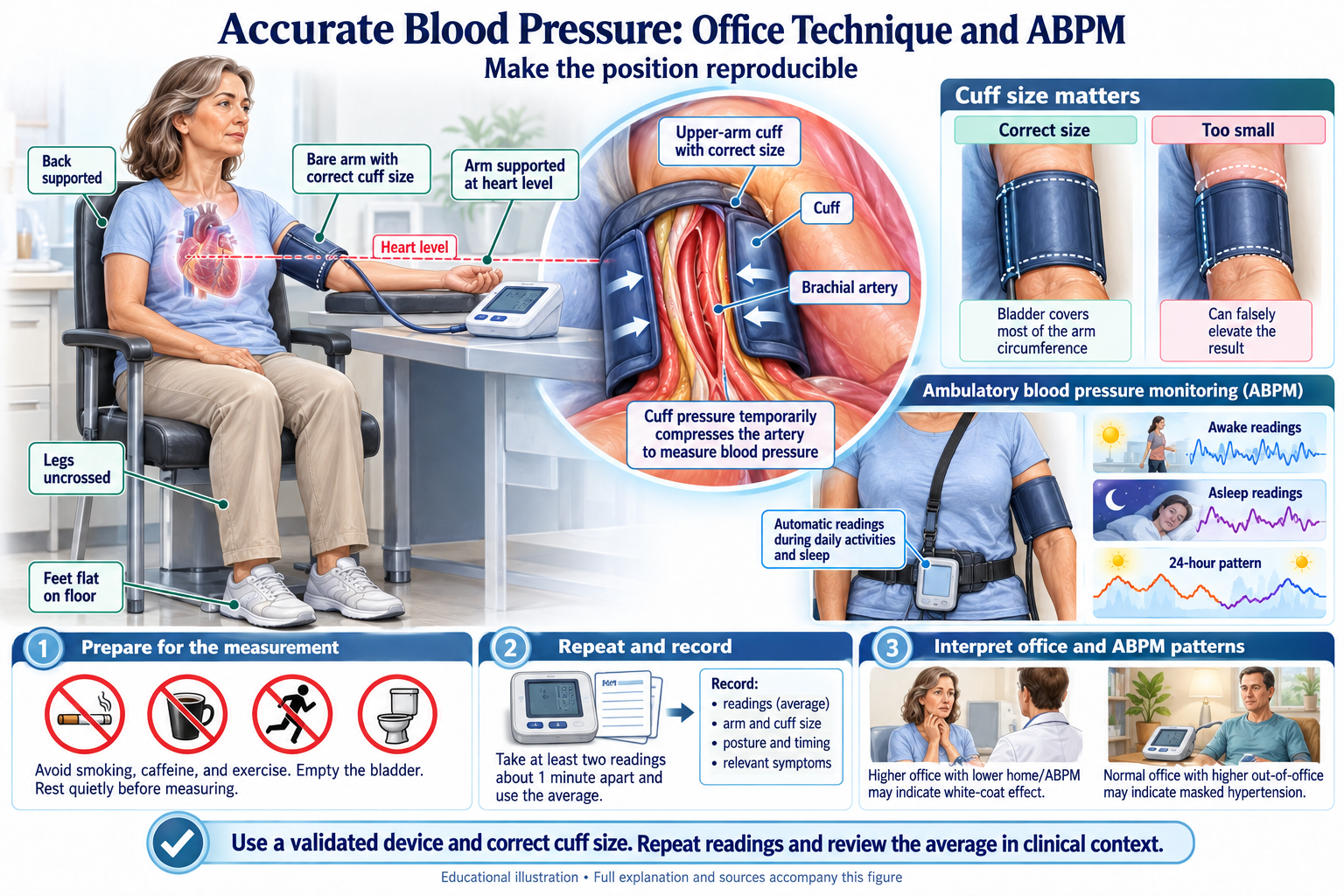
Browse the visual reference library · Download lesson Markdown
🎯 Measurement Precision Drives Treatment Accuracy
Diagnostic accuracy fundamentally determines treatment appropriateness. The 2025 guidelines elevate measurement standardization to unprecedented importance with specific protocols and device recommendations.
🏥 Office Blood Pressure Measurement Protocol
Class 1 Recommendation: Standardized Office Protocol
Pre-measurement Prep
30 minutes prior: Empty bladder, avoid caffeine, exercise, and smoking2
Patient Positioning
- Sit quietly for 5 minutes2
- Back fully supported
- Feet flat on floor
- Arm at heart level
Cuff Selection
Measurement Technique
🏠 Out-of-Office Monitoring: Essential Diagnostic Component
Key Paradigm Shift: Out-of-office monitoring is now essential, not supplementary. Both ambulatory and home monitoring provide superior diagnostic accuracy compared to isolated office measurements.
ABPM
Ambulatory Blood Pressure Monitoring24-hour recordings capturing diurnal variation, nocturnal dipping, and morning surge
📊 Diagnostic Thresholds1
| 24-hour average | ≥130/80 |
| Daytime average | ≥135/85 |
| Nighttime average | ≥120/70 |
🎯 Clinical Applications
HBPM
Home Blood Pressure MonitoringEqual to ABPM when unavailable; excellent diagnostic accuracy with proper technique
📋 7-Day Protocol3
✨ Advantages
- Eliminates white-coat effect
- Multiple readings over time
- Cost-effective accessibility
- Enhanced patient engagement
📊 Diagnostic Thresholds Comparison
| Measurement Setting | Hypertension Threshold | Clinical Context | Recommendation Class |
|---|---|---|---|
| Office/Clinical | ≥130/80 mmHg | Standardized protocol required | Class 1 |
| ABPM 24-hour | ≥130/80 mmHg | Gold standard reference | Class 1 |
| ABPM Daytime | ≥135/85 mmHg | Awake/active period | Class 1 |
| ABPM Nighttime | ≥120/70 mmHg | Sleep period assessment | Class 1 |
| Home Monitoring | ≥130/80 mmHg | 7-day average protocol | Class 1 |
⚠️ White-Coat vs Masked Hypertension
🥼 White-Coat Hypertension
Prevalence: 15-30% of patients with elevated office readings2,6
Definition: Elevated office BP (≥130/80) with normal out-of-office BP (<130/80)1
Class 2a Recommendation: Exclude before diagnosis when office BP 130-159/80-99 mmHg1
Clinical Impact: Prevents unnecessary treatment and medication-related adverse effects
🎭 Masked Hypertension
Prevalence: 10-15% of patients with normal office readings2,6
Definition: Normal office BP (<130/80) with elevated out-of-office BP (≥130/80)1
Class 2b Recommendation: Screen in high-risk patients1
Clinical Impact: Target organ damage and cardiovascular event risk comparable to sustained hypertension (HR 2.06 vs sustained normotension, Bobrie 2004)4,5
🎯 Risk Factors for Masked Hypertension Screening
Patient Characteristics
- Male sex
- Obesity (BMI ≥30)
- High-normal office BP (120-129/80-84)
- Advanced age
Comorbid Conditions
- Diabetes mellitus
- Chronic kidney disease
- Obstructive sleep apnea
- Target organ damage
Environmental Factors
- Occupational stress
- Smoking history
- Excessive alcohol consumption
- Family history of early CVD
🚫 Cuffless Devices: Class 3 Recommendation Against
❌ Definitive Class 3 Recommendation7
The guidelines provide a definitive Class 3 recommendation against cuffless devices, reflecting absence of standardized validation protocols and unacceptable measurement variability.7
Current Limitations
- No standardized validation protocols
- Unacceptable measurement variability
- Lack of FDA approval for clinical decisions
- Population-specific calibration issues
Clinical Implications
- Cannot replace validated devices
- Risk of diagnostic inaccuracy
- Potential for inappropriate treatment
- Consumer confusion regarding reliability
While consumer wearables proliferate, no current cuffless technology meets accuracy standards for clinical decision-making.
🎯 Clinical Implementation Strategies
Evidence-Based Workflow Integration
📋 Office Visit Protocol
- Verify patient preparation compliance
- Use validated automated device
- Follow standardized positioning
- Obtain multiple measurements
- Document technique used
🏠 Out-of-Office Strategy
- Prescribe ABPM when available
- Provide HBPM training and devices
- Establish monitoring schedules
- Review technique periodically
- Integrate data into clinical decisions
📊 Quality Assurance
- Regular device calibration
- Staff training standardization
- Patient education programs
- Documentation compliance
- Outcome monitoring
🎯 Key Clinical Pearls
🎯 Measurement Accuracy
Proper technique is more important than device type. Automated devices reduce observer bias and terminal digit preference.
📊 Diagnostic Precision
Out-of-office monitoring is essential for accurate diagnosis, not supplementary. It should be routine in hypertension evaluation.
⚠️ Technology Limitations
Cuffless devices cannot replace validated measurement methods. Consumer wearables provide trends, not diagnostic accuracy.