Visual reference
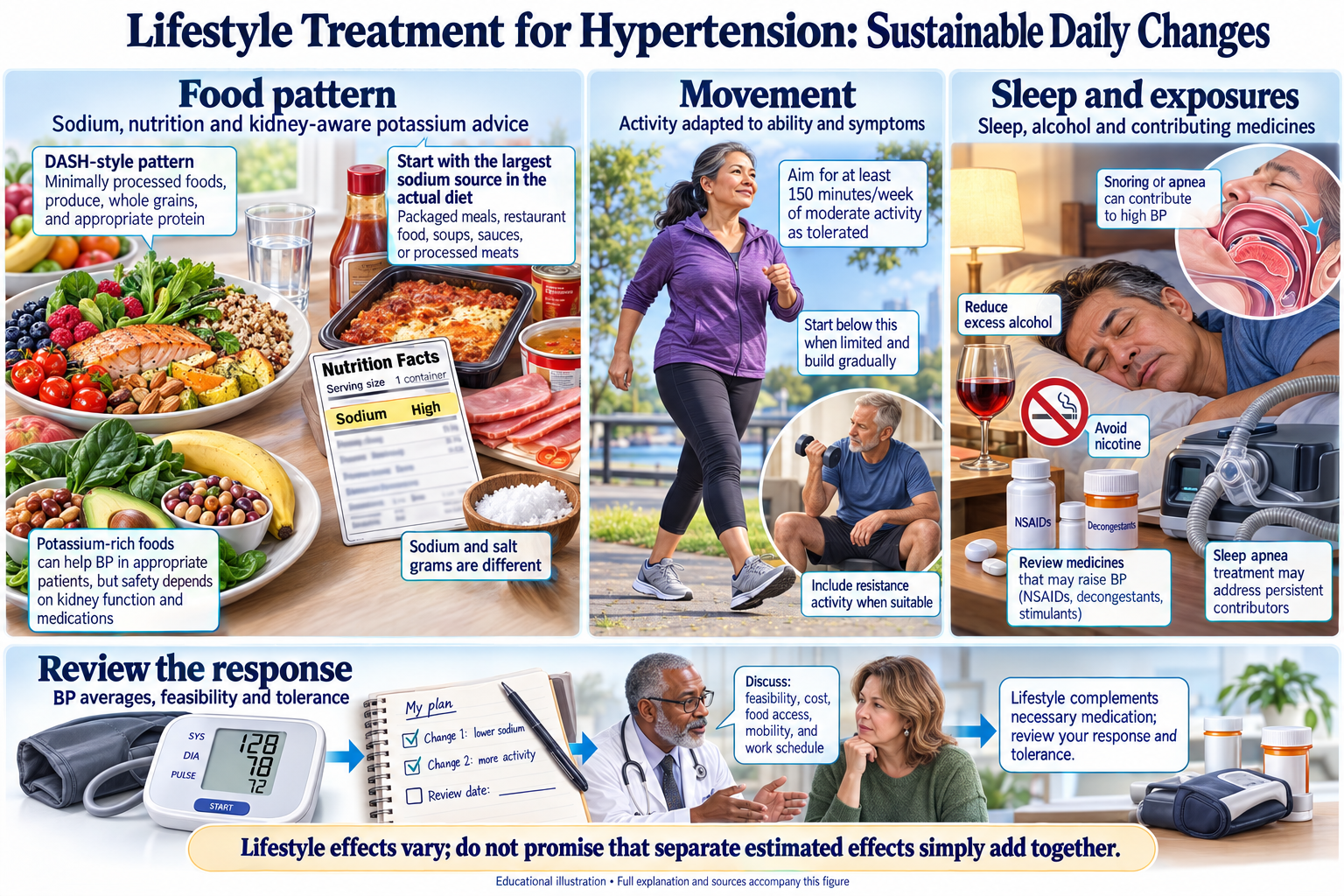
Browse the visual reference library · Download lesson Markdown
📊 Quantifiable Blood Pressure Reductions
The 2025 guidelines provide specific, evidence-based targets for lifestyle modifications with documented blood pressure reductions. Each intervention offers measurable cardiovascular benefits that complement or sometimes rival pharmacologic therapy.
🆕 Potassium-Enriched Salt Substitutes
Class 2a Recommendation: Revolutionary Evidence
🧂 SSaSS Trial Results
- 3.34 mmHg systolic BP reduction
- 13% decrease in stroke risk
- 21,000+ participants over 4.74 years
- Compelling cardiovascular outcomes
⚖️ Optimal Formulation
- 25% potassium chloride
- 75% sodium chloride
- Dual benefit mechanism
- Enhanced palatability vs pure KCl
⚠️ Safety Considerations
- Contraindicated: eGFR <30 mL/min/1.73m²
- Avoid with potassium-sparing diuretics
- Monitor for baseline hyperkalemia
- Patient education on hidden sodium sources
Implementation requires patient education regarding hidden sodium sources and label reading, as 75% of dietary sodium derives from processed foods rather than table salt.
🎯 Evidence-Based Lifestyle Interventions
⚖️ Weight Management
Target Goals:
- Optimal BMI: <25 kg/m²
- Waist circumference: <40" men, <35" women
- Weight loss rate: 1-2 pounds per week
- Realistic goal: 5-10% initial body weight
Evidence Base:
- Linear relationship between weight loss and BP reduction
- Greater effects in older adults and those with higher baseline BP
- Sustained benefits require maintenance
- Combination with exercise enhances effects
Implementation Strategies:
- Caloric deficit of 500-750 kcal/day
- Structured meal planning
- Regular weight monitoring
- Behavioral modification techniques
🥗 DASH Dietary Pattern
Core Components:
- Fruits: 4-5 servings/day
- Vegetables: 4-5 servings/day
- Whole grains: 7-8 servings/day
- Low-fat dairy: 2-3 servings/day
- Lean proteins: ≤6 oz/day
- Nuts/seeds: 4-5 servings/week
Mechanisms:
- High potassium, magnesium, calcium
- Reduced sodium intake
- Increased fiber and antioxidants
- Improved endothelial function
Evidence:
- DASH trial: 5.5 mmHg SBP reduction
- DASH-Sodium: 11 mmHg with low sodium
- Greater effects in hypertensive patients
- Sustained benefits with adherence
🧂 Sodium Restriction
Target Goals:
- Standard goal: <2,300 mg/day
- Ideal goal: <1,500 mg/day
- Current intake: ~3,400 mg/day (average American)
- WHO recommendation: <2,000 mg/day
Enhanced Effects:
- African Americans: Greater response
- Older adults: Enhanced sensitivity
- Higher baseline BP: Larger reductions
- Salt-sensitive patients: Dramatic response
Implementation:
- Focus on processed food reduction
- Read nutrition labels carefully
- Cook meals at home when possible
- Use herbs and spices for flavor
🏃♀️ Physical Activity
Aerobic Exercise Prescription:
- Moderate intensity: 150 minutes/week
- Vigorous intensity: 75 minutes/week
- Or combination: Equivalent mix
- Session duration: ≥10 minutes
Additional 4 mmHg with Resistance Training
- Frequency: 2-3 times per week
- Type: Dynamic resistance training
- Sets/Reps: 2-3 sets of 8-12 repetitions
- Major muscle groups: All included
Mechanisms:
- Improved endothelial function
- Enhanced arterial compliance
- Sympathetic nervous system modulation
- Weight management synergy
🍷 Alcohol Moderation
Recommended Limits:
- Men: ≤2 drinks per day
- Women: ≤1 drink per day
- Abstinence: Preferable option
- Standard drink: 12 oz beer, 5 oz wine, 1.5 oz spirits
J-Curve Relationship:
- Light-moderate consumption may have modest benefits
- Heavy consumption significantly increases BP
- Recent evidence challenges any protective effect
- Abstinence recommended for optimal health
Clinical Considerations:
- Individual risk assessment required
- Consider liver disease, medication interactions
- Binge drinking particularly harmful
- Support for alcohol reduction when needed
🧘♀️ Stress Management
Evidence-Based Techniques:
- Transcendental meditation: Strongest evidence
- Mindfulness-based stress reduction: Well-studied
- Progressive muscle relaxation: Effective
- Deep breathing exercises: Accessible
Implementation:
- Duration: 15-20 minutes daily
- Consistency: Regular practice essential
- Environment: Quiet, comfortable space
- Guidance: Apps, classes, or instruction
Additional Benefits:
- Improved medication adherence
- Enhanced sleep quality
- Better overall cardiovascular health
- Reduced healthcare utilization
📊 Quantified BP Reduction Summary
| Lifestyle Intervention | SBP Reduction (mmHg) | Evidence Quality | Key Population Effects |
|---|---|---|---|
| Weight Loss | 1 per kg lost | High | Linear relationship, greater in older adults |
| DASH Diet + Low Sodium | 11 | High | Greater effects in hypertensive patients |
| Sodium Restriction | 5-6 | High | Enhanced in African Americans, elderly |
| Potassium Salt Substitute | 3.34 | High | SSaSS trial, 13% stroke reduction |
| Aerobic Exercise | 5-8 | High | 150 min/week moderate intensity |
| Resistance Training | 4 | Moderate | Additional to aerobic exercise |
| Alcohol Moderation | 3-4 | Moderate | From heavy to moderate consumption |
| Stress Management | 2-5 | Moderate | Meditation techniques most effective |
🧮 Lifestyle Impact Calculator
Cumulative BP Reduction Estimator
Select Implemented Interventions:
Estimated BP Reduction
Breakdown:
Clinical Impact:
🥗 DASH Diet Implementation Guide
Daily Servings
- Grains: 6-8 servings
- Vegetables: 4-5 servings
- Fruits: 4-5 servings
- Low-fat dairy: 2-3 servings
- Lean meat: ≤6 oz
- Nuts/seeds: 4-5/week
Key Nutrients
- Potassium: 4,700 mg/day
- Magnesium: 500 mg/day
- Calcium: 1,240 mg/day
- Fiber: 30 g/day
- Sodium: <2,300 mg/day
Sample Meal Ideas
- Breakfast: Oatmeal with berries, low-fat milk
- Lunch: Salad with grilled chicken, vegetables
- Dinner: Baked fish, quinoa, steamed broccoli
- Snacks: Fruits, nuts, low-fat yogurt
🎯 Implementation Success Strategies
🎯 Start Small
Implement one or two interventions initially. Gradual adoption leads to better long-term adherence than attempting multiple simultaneous changes.
📱 Use Technology
Leverage smartphone apps for tracking diet, exercise, and blood pressure. Technology-assisted interventions show superior outcomes in clinical trials.
👥 Social Support
Involve family members and friends in lifestyle changes. Social support significantly improves adherence and long-term success rates.