ADPKD: risk, family history and targeted testing
Updated October 24, 2026 · Andrew Bland, MD, FACP, FAAP
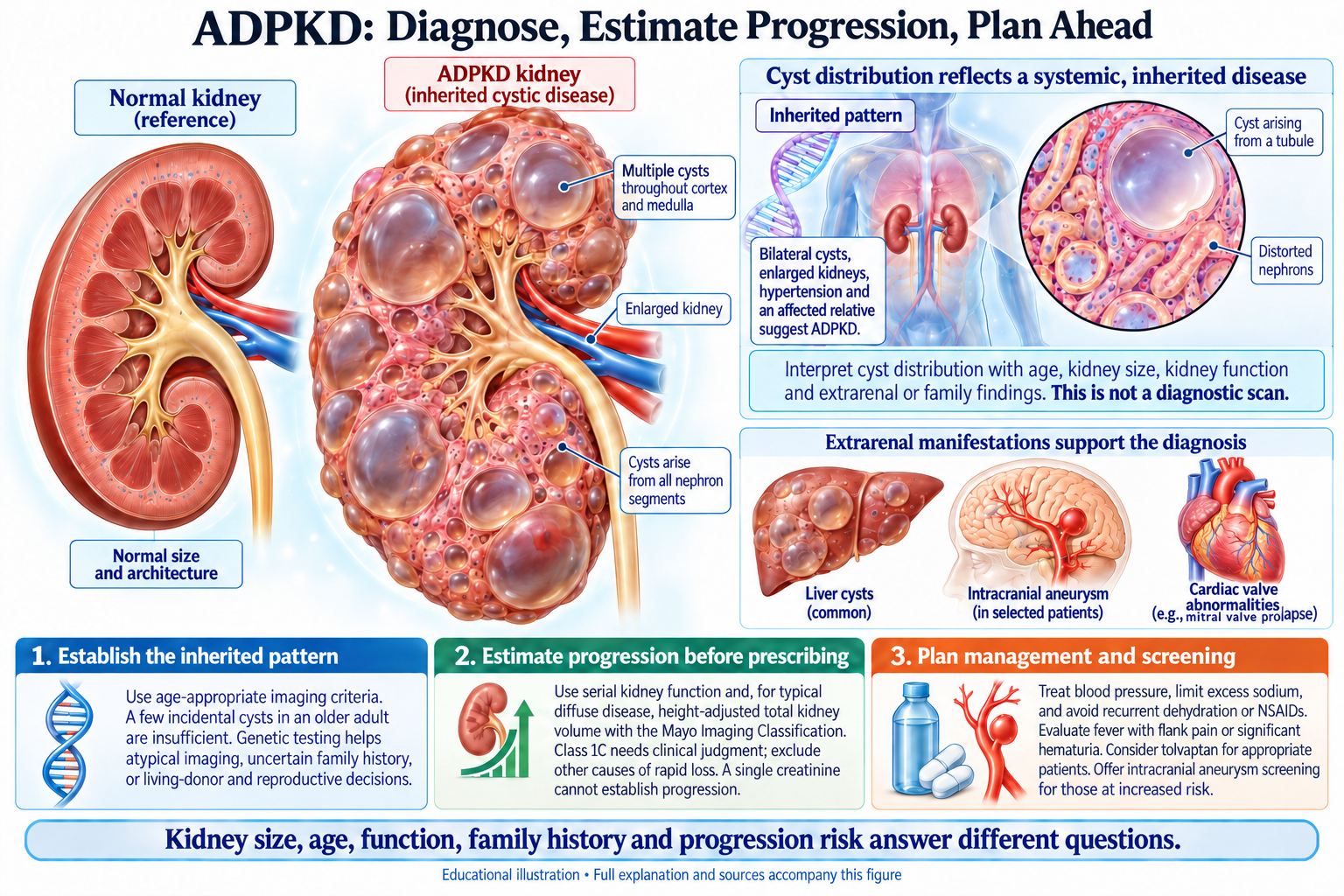
For at-risk adults in families of unknown PKD1/PKD2 genotype, Pei ultrasound criteria are ≥3 total renal cysts at age 15–39; ≥2 in each kidney at 40–59; ≥4 in each kidney at 60 or older. Fewer than two total cysts at age ≥40 can exclude disease in this population. A negative study in a younger adult does not necessarily exclude it; donor and atypical presentations need specialist assessment. Pei et al., primary study.
KDIGO 2025 ADPKD, corrected April 2026
Read diagram text and evidence
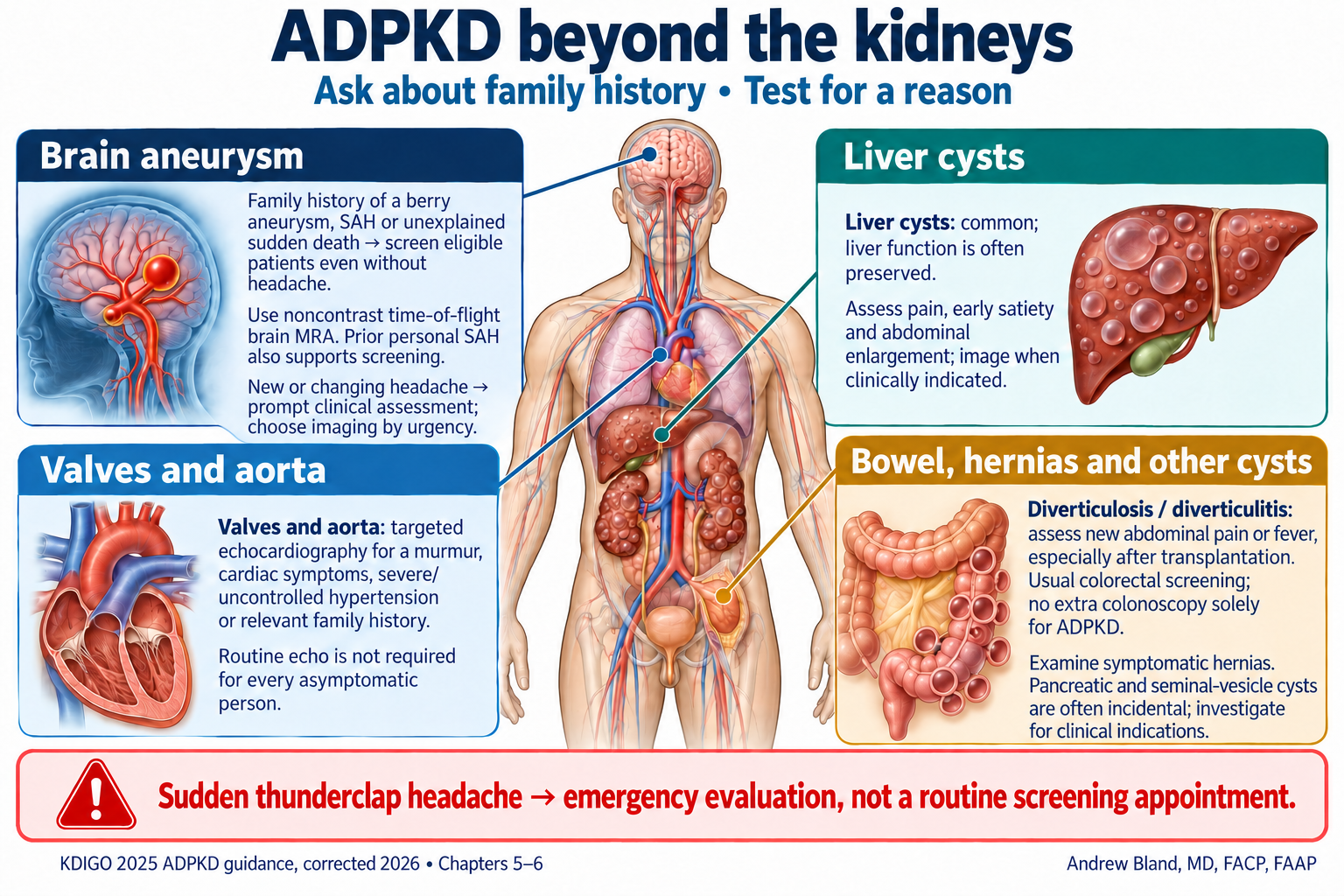
A family history of intracranial (berry) aneurysm, subarachnoid hemorrhage or unexplained sudden death, or personal prior SAH, supports aneurysm screening in people eligible for treatment with reasonable life expectancy—even without headache. Noncontrast time-of-flight brain MRA is preferred for screening. New or changing headache needs prompt clinical assessment; thunderclap headache needs emergency evaluation rather than an outpatient screening appointment. Discuss screening requests in other patients; repeat screening after a negative study is individualized, often 5–10 years in higher-risk people.
Liver cysts are common and liver function is often preserved; assess pain, early satiety and abdominal enlargement. Target echocardiography to cardiac symptoms, murmur, severe/uncontrolled hypertension or relevant family history. Include diverticulosis/diverticulitis: investigate new abdominal pain or fever, especially after transplantation, but use usual colorectal-screening indications rather than additional colonoscopy solely for ADPKD. Examine symptomatic hernias; investigate pancreatic or seminal-vesicle cysts according to clinical findings.
Andrew Bland, MD, FACP, FAAP
Mayo classification, Irazabal et al. — PubMed · KDIGO 2025 ADPKD, corrected April 2026
Read diagram text and evidence
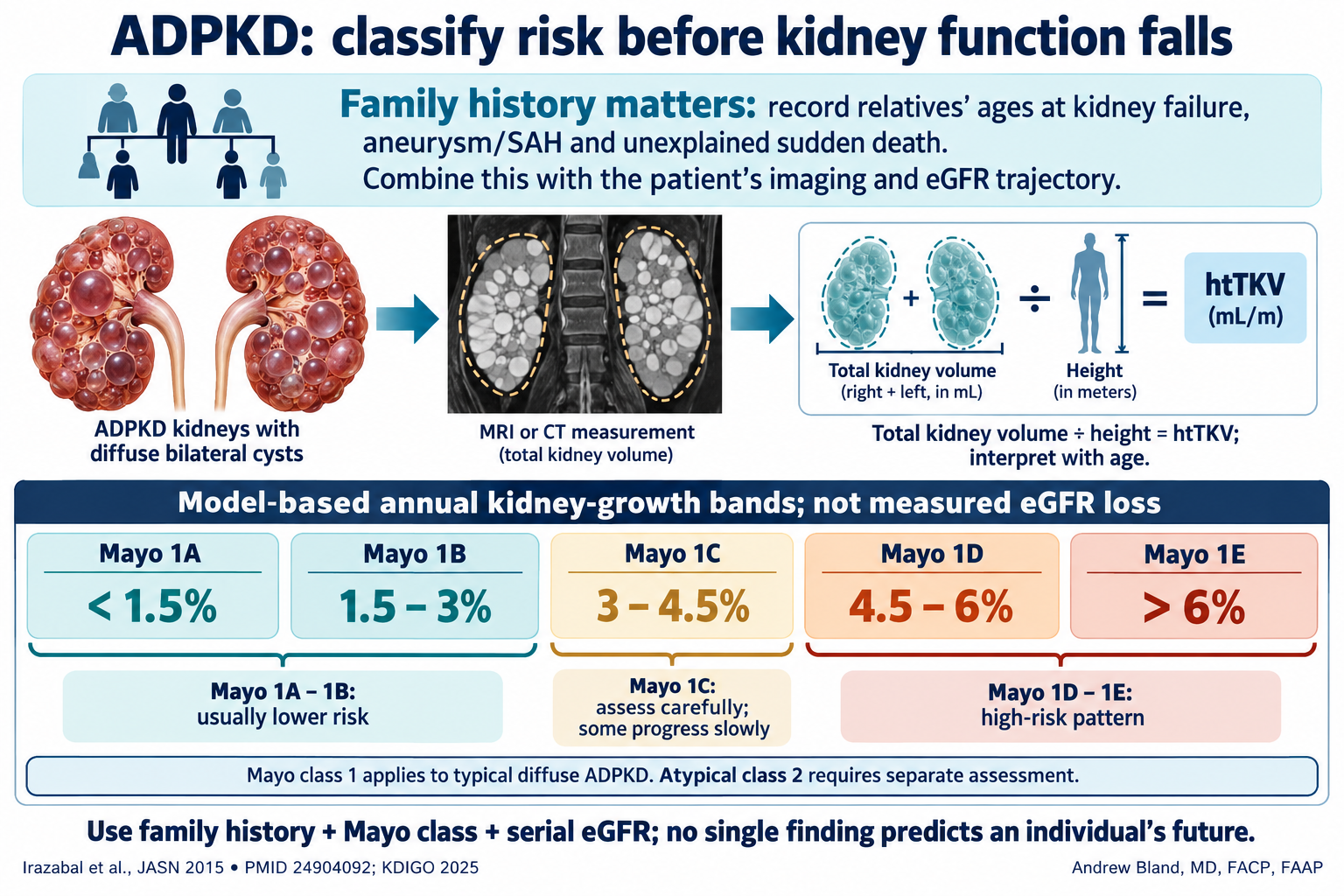
Record relatives’ ages at kidney failure, including early KRT, and family aneurysm, subarachnoid hemorrhage or unexplained sudden death. Family history is important but does not determine an individual outcome. In typical diffuse ADPKD, MRI/CT total kidney volume divided by height gives htTKV, interpreted with age. Mayo classes 1A–1E correspond to model-based annual growth bands: <1.5%, 1.5–3%, 3–4.5%, 4.5–6%, and >6%. These are not measured eGFR-loss percentages. Class 1C includes some slower progressors; use additional evidence. Atypical class 2 requires separate assessment. The pictured scan is an illustration, not the patient’s MRI or a diagnostic example. No Mayo class can be assigned from kidney length alone.
Andrew Bland, MD, FACP, FAAP
TEMPO 3:4 — PubMed · REPRISE — PubMed · FDA JYNARQUE label, 2026 · KDIGO 2025 ADPKD, corrected April 2026
Read diagram text and evidence
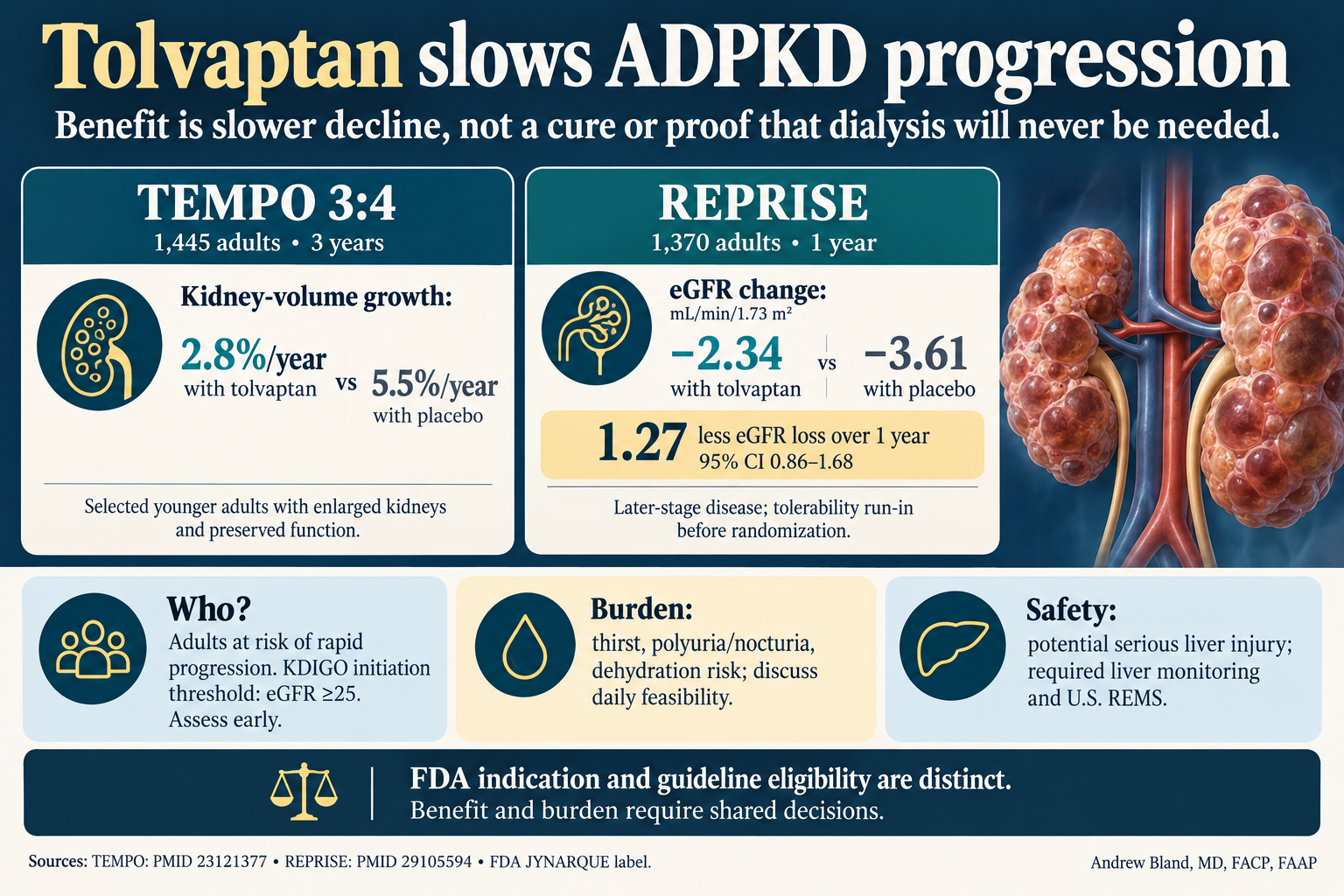
TEMPO 3:4 enrolled 1,445 selected adults and followed them for three years: kidney-volume growth was 2.8%/year with tolvaptan versus 5.5%/year with placebo. REPRISE randomized 1,370 adults with later-stage disease after a tolerability run-in: one-year eGFR change was −2.34 versus −3.61 mL/min/1.73 m², a difference of 1.27 (95% CI 0.86–1.68). These endpoints show slower progression, not proof that dialysis is prevented or a guaranteed number of dialysis-free years.
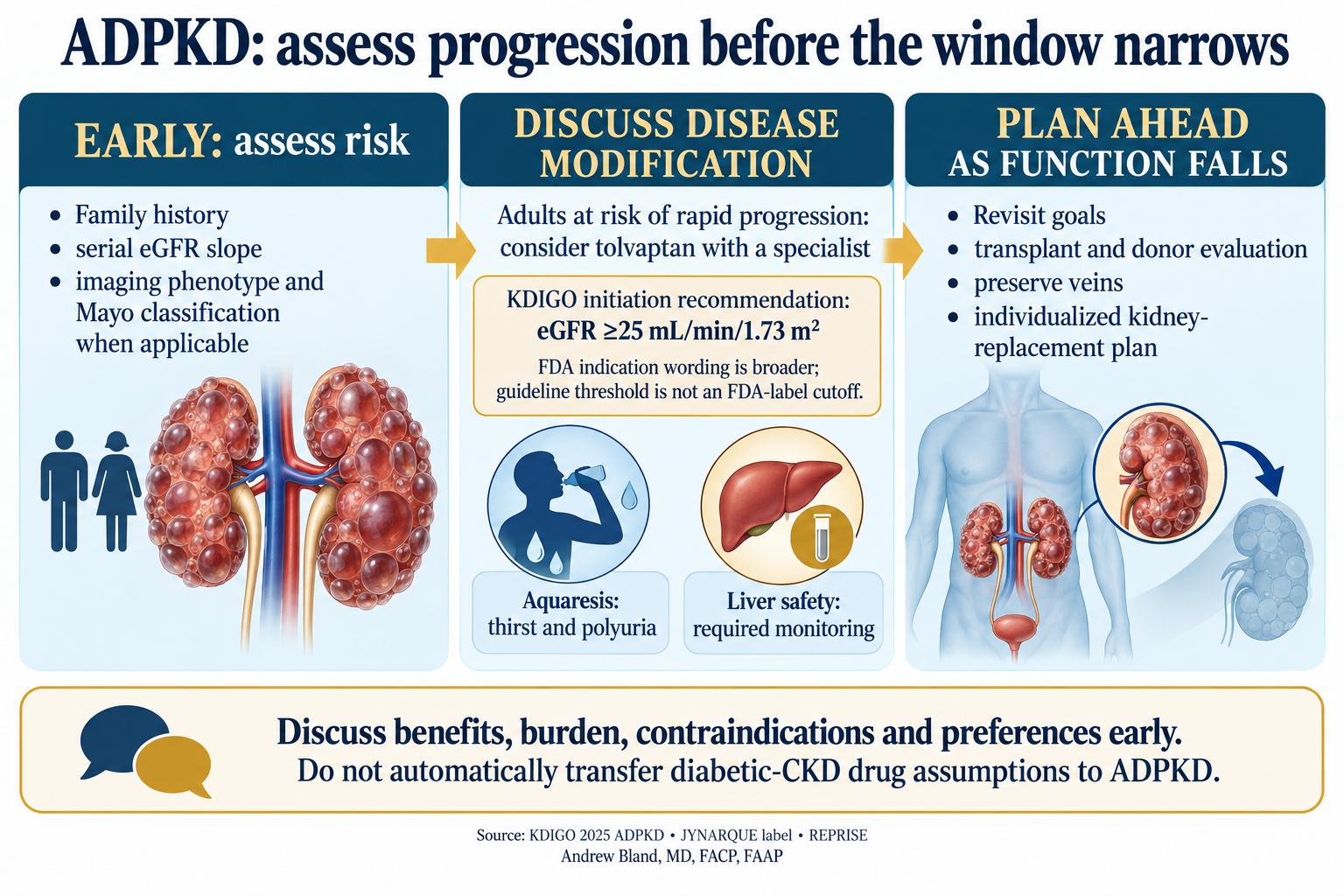
Balance benefit against thirst, polyuria/nocturia, dehydration and possible serious liver injury. The U.S. label requires REMS participation and liver tests before treatment, at 2 and 4 weeks, monthly for 18 months, then every 3 months. Discuss ability to maintain hydration, monitoring, costs and patient preferences. Evaluate early, while guideline-supported initiation remains an option.
Andrew Bland, MD, FACP, FAAP
KDIGO 2025 ADPKD, corrected April 2026 · FDA JYNARQUE label, 2026 · REPRISE — PubMed
Read diagram text and evidence
At diagnosis, document family history, BP, kidney imaging, kidney-function trend and proteinuria. Assess progression risk before advanced CKD develops. Mayo classification and serial eGFR inform a discussion of tolvaptan with the specialist. KDIGO recommends initiation in eligible adults at risk of rapid progression with eGFR at least 25 mL/min/1.73 m²; the FDA indication is not written as that numerical cutoff. At eGFR 22, individualized KRT and transplant planning are essential, and starting tolvaptan is outside the standard KDIGO initiation recommendation. This is not a blanket FDA contraindication or an automatic stop rule for someone already taking it.
Andrew Bland, MD, FACP, FAAP
⚡ Emergency Recognition & Management
🚨 Cyst Complications: Recognition & Management
🩸 Cyst Hemorrhage
- Presentation: Acute severe flank pain + gross hematuria
- Key Feature: Hemoglobin usually stable (bleeding into cyst)
- Management: Conservative, usually self-limited
- Duration: Hematuria resolves in days to weeks
🦠 Cyst Infection
- Presentation: Fever, flank pain, and elevated WBC
- Best Antibiotics: Fluoroquinolones (excellent cyst penetration)
- Alternatives: Trimethoprim-sulfamethoxazole
- Duration: 4-6 weeks treatment typically needed
- Avoid: Beta-lactams, nitrofurantoin (poor penetration)
💥 Cyst Rupture
- Presentation: Sudden severe pain followed by rapid improvement
- Mechanism: Pressure relief as cyst contents leak
- Hematuria: May have brief episode
- Management: Usually self-resolves without treatment
📊 Clinical Significance
- Global Prevalence: Up to 12 million people worldwide
- ESRD Cause: 4th leading cause of end-stage renal disease
- Most Common: Hereditary kidney disease globally
- Healthcare Burden: Significant economic impact
- Variability: Wide clinical spectrum from mild to severe
- Systemic Disease: Multiple organ involvement
🧬 Genetic Basis
- PKD1 Gene: 78% of cases, chromosome 16p13.3
- PKD2 Gene: 15% of cases, chromosome 4q21-23
- Rare Genes: IFT140, GANAB, ALG5, ALG9, NEK8, DNAJB11
- PKD1 Severity: More severe disease, earlier ESRD onset
- PKD2 Course: Milder phenotype, later progression
- Protein Products: Polycystin-1 and polycystin-2
🔍 Diagnostic Criteria
Ravine Criteria (Age-Dependent)
- 🔹 15-29 years: ≥2 cysts (unilateral or bilateral)
- 🔹 30-59 years: ≥2 cysts in each kidney
- 🔹 ≥60 years: ≥4 cysts in each kidney
Pei Unified Criteria
- ✅ 15-39 years: ≥3 cysts (100% PPV)
- Age ≥40: fewer than two total renal cysts excludes typical PKD1/PKD2 ADPKD in the at-risk population studied; use specialist assessment for atypical families.
- 🎯 Advantage: Works for PKD1 and PKD2
🧬 Genetic Testing Decision Aid
📈 Mayo Imaging Classification (htTKV)
- Class 1A: Estimated kidney growth <1.5%/year (low risk)
- Class 1B: Estimated kidney growth 1.5-3.0%/year (low-intermediate risk)
- Class 1C: Estimated kidney growth 3.0-4.5%/year (intermediate-high risk)
- Class 1D: Estimated kidney growth 4.5-6.0%/year (high risk)
- Class 1E: Estimated kidney growth >6.0%/year (highest risk)
- Method: Uses age- and sex-adjusted htTKV growth trajectories from the Mayo Clinic PKD database
⚖️ Progression Risk Factors
- PKD1 Mutations: More severe disease, average ESRD age 54
- PKD2 Mutations: Milder progression, average ESRD age 74
- Early Hypertension: Before age 35 indicates rapid progression
- Male Gender: More rapid progression than females
- Height-Adjusted TKV: Most important predictor of progression
- Family History: Grandfather's transplant suggests moderate progression
💊 Tolvaptan: First Disease-Modifying Therapy
📏 Height-Adjusted TKV Calculator
🧠 Intracranial Aneurysm Screening
⚠️ CRITICAL: MRA vs MRI for Aneurysm Screening
MRA (Magnetic Resonance Angiography) is the test of choice for intracranial aneurysm screening, NOT standard brain MRI. MRA specifically images blood vessels and can detect aneurysms ≥3mm. Standard brain MRI does not adequately visualize cerebral vasculature.
Epidemiology
- ADPKD Prevalence: 8-10% (4x higher than general population)
- General Population: 2-3%
- Family History: Higher screening frequency needed
- High-Risk Features: >7mm, irregular shape, symptoms
Screening Protocol
- Test of Choice: MRA brain (not standard MRI)
- Initial: Symptoms or high-risk occupation
- Repeat: Every 5-10 years if negative
- Screening: personal SAH or family aneurysm/SAH/unexplained sudden death; discuss other requests individually. New or changing headache requires assessment; thunderclap headache is an emergency.
High-Priority Screening Candidates
Family aneurysm, SAH or unexplained sudden death supports screening even without headache. Consider other screening requests through shared decisions. New/changing headache requires assessment; thunderclap headache requires emergency evaluation.
🫀 Polycystic Liver Disease
- Prevalence: 81.7% of ADPKD patients have hepatic cysts
- Age Correlation: 20% in 3rd decade → 75% in 7th decade
- Gender Difference: Women have larger, more numerous cysts
- Estrogen Effect: Pregnancy and HRT increase cyst growth
- Symptoms: Abdominal pain, early satiety, GERD
- Severe Disease: May require intervention or transplant
🦴 Other Extrarenal Manifestations
- Colonic Diverticulosis: Increased risk vs general population
- Pancreatic Cysts: ~9% of patients >20 years
- Cardiac Valves: Mitral valve prolapse more common
- Thoracic Aortic Aneurysms: Elevated risk reported
- Abdominal Aortic: No increased risk
- Hernia: Inguinal and umbilical hernias common
🏥 Comprehensive ADPKD Management Strategy
📷 Best Imaging Modalities for ADPKD
🧲 MRI for Total Kidney Volume
- Superior to CT: More accurate TKV measurements
- No Radiation: Safe for repeated monitoring
- Better Contrast: Superior soft tissue contrast
- Gold Standard: For Tolvaptan eligibility assessment
🧠 MRA for Aneurysm Screening
- Test of Choice: NOT standard brain MRI
- Vessel Imaging: Specifically visualizes cerebral vasculature
- Detection Limit: Can identify aneurysms ≥3mm
- No Contrast: Time-of-flight technique preferred
🔍 Ultrasound for Diagnosis
- Initial Screening: First-line diagnostic tool
- Age-Specific Criteria: Pei-Ravine criteria application
- Limitations: Cannot accurately measure TKV
- Family Screening: Cost-effective for relatives
👨👩👧👦 Family Screening Protocols
Age 15-39 Years
- Diagnostic Threshold: ≥3 cysts total (unilateral or bilateral) indicates ADPKD
- Special Consideration: Ages 15-19, even 1-2 cysts may be significant
- Genetic Testing: Consider for family planning purposes
- Repeat if Negative: Every 3-5 years until age 30
Age 40+ Years
- Exclusion Rule: ≤2 cysts rules out ADPKD (high NPV)
- Diagnostic threshold, age 40–59: ≥2 cysts in each kidney in an at-risk adult.
- Age 60+: ≥4 cysts per kidney required
- Late Negative: Very unlikely to develop ADPKD after 30
Follow-up Protocols
- Initial Negative (Age 15): Repeat at age 18
- Ages 18-30: Every 3-5 years if negative
- After Age 30: If consistently negative, ADPKD very unlikely
- Genetic Counseling: Important for all family members
🫀 Transplant Planning & Surgical Considerations
⏰ Transplant Timing
- Referral Timing: eGFR approaches 20-25 mL/min/1.73m²
- Early Planning: Allows time for workup and living donor identification
- Current Function: eGFR 78 - too early for formal evaluation
- Patient Education: Appropriate to begin discussions
⚔️ Nephrectomy Considerations
- Usually Unilateral: Single kidney removal to create space
- Bilateral Rare: Carries significant risk of severe hypotension
- Immediate Risk: Bilateral requires immediate transplantation
- Indications: Mass effect, recurrent infections, space constraints
🎯 ADPKD-Specific Factors
- Unique Consideration: Large kidneys may need removal
- Good Outcomes: Similar to other kidney diseases
- Living Donors: Can receive from relatives (if unaffected)
- Space Planning: Surgical approach differs from other causes
🎯 Key Clinical Pearls
Disease Modification
Tolvaptan is first approved therapy that slows kidney function decline in high-risk patients with adequate monitoring.
TKV Predicts Progression
Height-adjusted total kidney volume is the most important predictor of future renal function decline and ESRD.
Systemic Disease
ADPKD affects multiple organs. Use targeted testing based on family history, symptoms and guideline indications; routine screening of every organ is not required.
Genetic Counseling
PKD1 vs PKD2 mutations significantly affect disease severity and progression timeline, informing patient counseling.