⚡ Emergency Recognition Protocol
1
Metastatic Disease Signs: Bone pain, hemoptysis, neurologic changes, hypercalcemia
2
Tumor Thrombus: Lower extremity edema, varicocele, new heart murmur
3
Hemorrhage Risk: Large masses >7cm, central location, prior intervention
4
Urgent Referral: Constitutional symptoms, rapidly growing mass, suspicious imaging
📊 Epidemiology & Risk Factors
- Incidence Trends: 1% per year increase 2015-2019
- Mortality Improvement: 2% per year decline 2016-2020
- Early Detection: 37-61% diagnosed incidentally on imaging
- Stage Distribution: 70% present with stage I disease
- Most Common Cancer: 6th in men, 9th in women
- Global Burden: ~434,840 incident cases annually worldwide
🧬 Pathological Classification
- Clear Cell RCC: 75-80% of cases, VHL gene inactivation
- Papillary RCC: Type I and II variants, intermediate prognosis
- Chromophobe RCC: Best prognosis, lowest metastatic risk
- Molecular Features: VHL alterations drive metabolic reprogramming
- Histologic Impact: Influences treatment selection and prognosis
- Grading Systems: Fuhrman/ISUP grades correlate with outcomes
🎯 Size-Based Metastatic Risk Stratification
T1a (≤4cm)
5.4%
Overall progression rate at 35 months median follow-up
T1b (4.1-7.0cm)
4-13%
Varies by histologic subtype
T2a (7.1-10cm)
15-20%
Substantial increase in risk
Histologic Risk Considerations:
Clear Cell: Highest metastatic potential
Papillary: Intermediate, size-dependent
Chromophobe: Lowest risk, supports observation
🧮 RCC Metastatic Risk Calculator
Estimated Metastatic Risk
6-8%
Active surveillance appropriate for selected patients
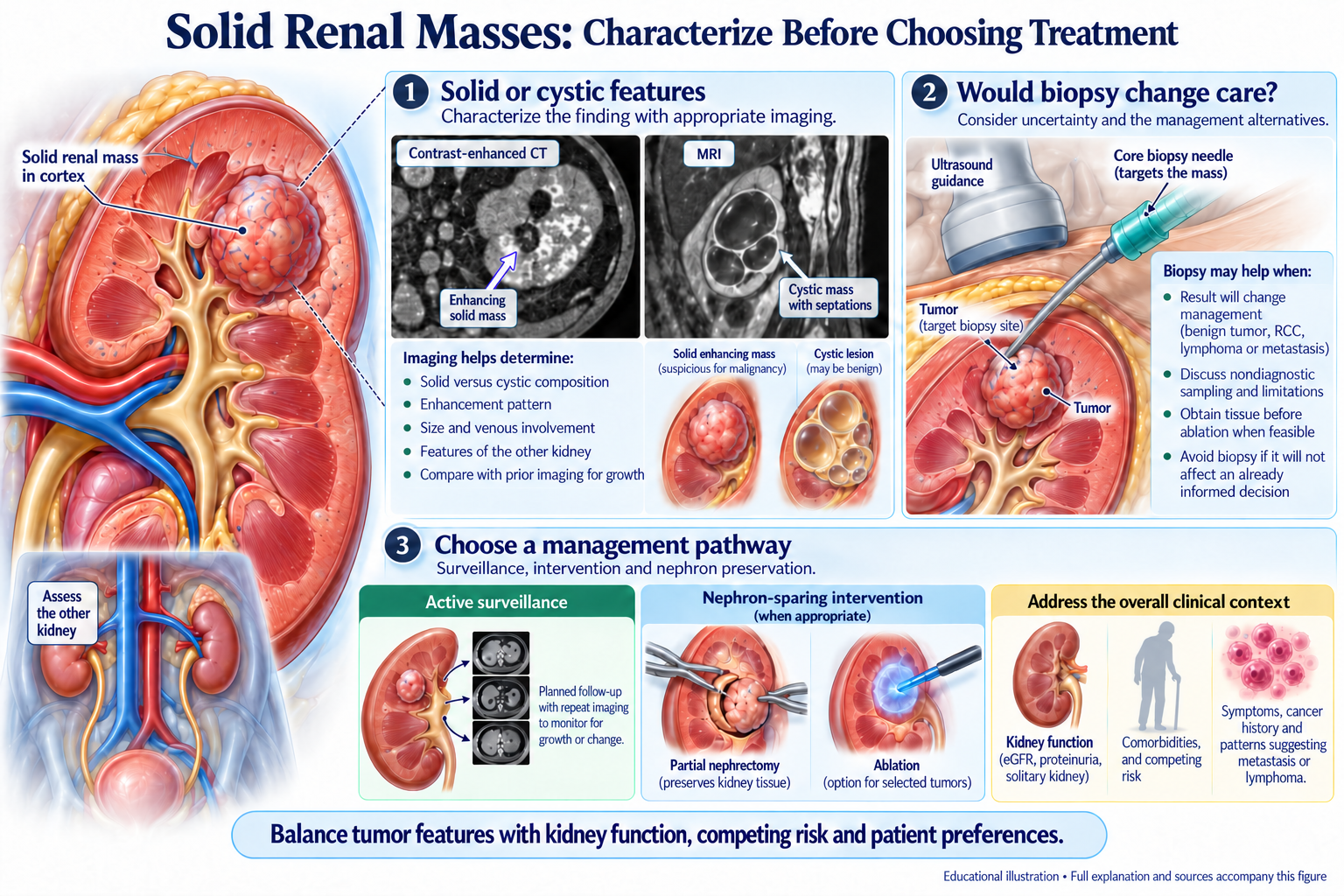
🔬 Active Surveillance
- Growth Rate: Median 2.8mm/year for T1a lesions
- Progression Risk: 1-2% develop metastases during surveillance
- Optimal Candidates: Elderly, comorbid, small tumors
- Protocol: CT/MRI at 3-6 months, then annually
- Delayed Treatment: No adverse oncologic outcomes
- Quality of Life: Preserves function, avoids treatment toxicity
❄️ Percutaneous Cryoablation
- Technical Success: 95-96% for tumors ≤4cm
- Optimal Size: ≤3cm lesions achieve >95% success
- Local Control: 95% at intermediate-term follow-up
- Renal Function: Superior preservation vs partial nephrectomy
- 5-Year RFS: 85-90% for T1a lesions
- 10-Year DSS: 94% in prospective studies
💊 Advanced RCC: Immunotherapy Revolution
1
First-Line Standard: Pembrolizumab + Axitinib (KEYNOTE-426)
2
Alternative Combinations: Nivolumab + Cabozantinib, Lenvatinib + Pembrolizumab
3
Risk Stratification: IMDC criteria guide treatment selection
4
Sustained Benefit: 5-year follow-up confirms durable responses
❄️ Cryoablation Patient Selection
✅ Ideal Candidates
- T1a masses ≤3cm
- Significant comorbidities
- Solitary kidney
- Hereditary syndromes
- Patient preference
⚠️ Relative Contraindications
- Tumors >4cm
- Central location
- Collecting system proximity
- Young healthy patients
- Desire for definitive pathology
Expected Outcomes by Size
≤3cm: >95% success
3-4cm: 90-95% success
>4cm: 85-90% success
💊 Pembrolizumab + Axitinib
- KEYNOTE-426: Superior efficacy vs sunitinib
- 5-Year Follow-up: Sustained benefit confirmed
- Response Rate: 60.2% vs 39.6% with sunitinib
- Median OS: 45.7 months vs 40.1 months
- Quality of Life: Better tolerability profile
- Biomarkers: PD-L1 not predictive in this combination
🎯 Nivolumab + Cabozantinib
- CheckMate 9ER: Significant PFS and OS improvement
- Median PFS: 16.6 months vs 8.3 months
- Overall Response: 55.7% vs 27.1%
- Mechanism: Dual immune checkpoint and angiogenesis blockade
- Tolerability: Manageable safety profile
- All Risk Groups: Benefit across IMDC risk categories
⚡ Lenvatinib + Pembrolizumab
- CLEAR Trial: Superior outcomes vs sunitinib
- 4-Year Data: Long-term efficacy confirmed
- Median PFS: 23.9 months vs 9.2 months
- Response Rate: 71.0% vs 36.1%
- Unique Profile: Multi-kinase inhibitor combination
- Management: Requires dose reduction expertise
🎯 Clinical Decision Framework
T1a (≤4cm) Management
- Active surveillance for elderly/comorbid
- Cryoablation for intermediate candidates
- Partial nephrectomy for young/healthy
- Consider histology and growth rate
T1b-T2 (>4cm) Management
- Partial nephrectomy preferred
- Radical nephrectomy for complex cases
- Consider neoadjuvant therapy
- Multidisciplinary team approach
Advanced Disease
- Immunotherapy combinations first-line
- IMDC risk stratification
- Sequence therapy based on response
- Clinical trial consideration
🎯 Key Learning Points
Size-Risk Correlation
Metastatic risk increases substantially with tumor size, but histology modifies this relationship significantly.
Personalized Management
Patient factors, tumor characteristics, and preferences guide treatment selection among surgery, ablation, and surveillance.
Immunotherapy Standard
Combination immunotherapy has revolutionized advanced RCC treatment with durable survival benefits.
Active Surveillance Safety
Well-selected patients can safely delay treatment without compromising oncologic outcomes.