Visual reference
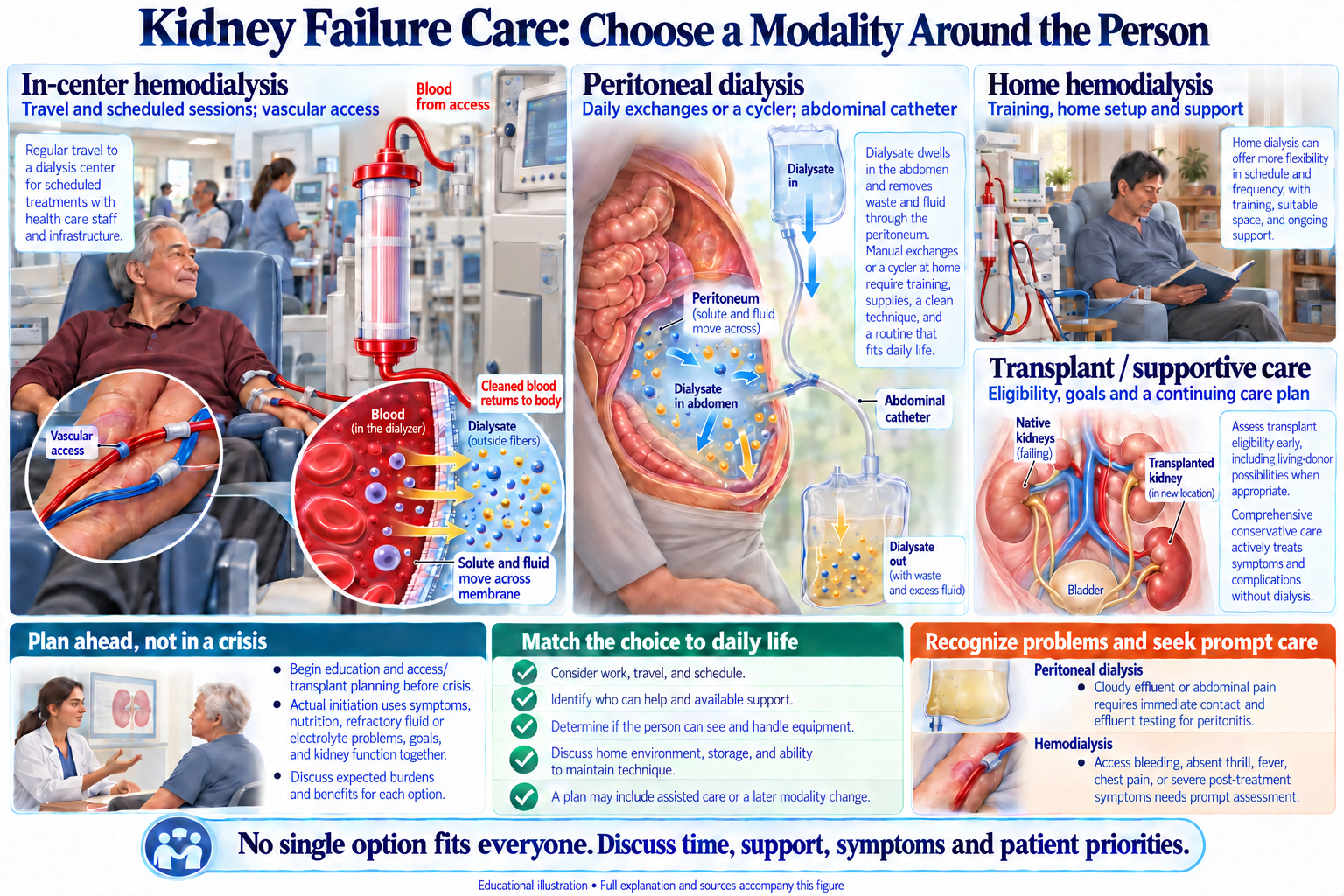
Browse the visual reference library · Download lesson Markdown
Executive Summary
Home hemodialysis on the NxStage System One runs on one physical idea. Dialysate flows at roughly one-third of blood flow, so spent dialysate leaves the filter more than 90% saturated with urea, and the drained effluent volume divided by total body water approximates single-pool Kt/V. Dose is, in effect, dialysate volume. UpToDate and NxStage call this the frequent low-dialysate-volume approach (FLDVA) [25].
The prescription is built from five levers: frequency, treatment time, dialysate volume, flow fraction, and the dialysate bath. Get those right and the machine does the rest.
The evidence is clear about what frequency buys and honest about what it does not. In the Frequent Hemodialysis Network (FHN) Daily Trial, 6×/week in-center HD improved the composite of death or left-ventricular-mass gain (HR 0.61, 95% CI 0.46–0.82) and death or decline in physical-health score (HR 0.70, 0.53–0.92) [1]. At extended follow-up, mortality was lower: 16% versus 28%, RRR approximately 46% | ARR 12.3% | NNT 8 over a median 3.6 years [2]. Registry data agree — daily HHD carried 20% lower mortality than matched peritoneal dialysis [6], and home HD has run below facility-HD mortality across two decades of Australian and New Zealand data [7]. But frequency also increased vascular-access interventions (HR 1.71) [1], the nocturnal arm showed no co-primary benefit and an unexplained late mortality signal [3,4], and frequent HD did nothing for albumin, anemia, cognition, or depression in the randomized data [1].
Two principles should anchor every decision:
Clinical Pearl: Clinical Pearl — Dose is a floor to clear, not a goal to optimize KDOQI sets a standardized weekly Kt/V minimum of 2.1, target 2.3, for schedules other than thrice-weekly [21]. Among 2,373 home-HD patients, stdKt/V showed no association with mortality, hospitalization, or transfer to in-center care [26]. Clear the floor. Then drive decisions off volume, blood pressure, phosphorus, acid-base, electrolytes, and nutrition — not off a Kt/V number.
Warning: The signature benefit is phosphate, and it can overshoot Frequent HD is the most effective phosphate therapy in nephrology: 73% of 6×/week patients needed no binders at 12 months versus 8% on 3×/week [37]. On nocturnal schedules the pendulum reverses — 42% required phosphate added to the dialysate to prevent hypophosphatemia [37].
This paper details the settings, the bath, the monitoring panel, the vascular-access trade-off, and a step-by-step framework for assessing and adjusting an NxStage prescription. It closes with a worked starting prescription.
1. Purpose and Scope
This is an operational clinical reference for building, monitoring, and adjusting an NxStage System One / System One S home hemodialysis prescription. It covers short-daily HHD primarily, with nocturnal HHD noted where the evidence or physiology diverges. The audience is the nephrologist and the home-dialysis nursing team.
This educational review introduces frequent home hemodialysis using a low-dialysate-volume approach. Consult the cited literature, current device instructions, and the local home-dialysis team when applying its principles.
2. The Evidence Case for Frequent and Home Hemodialysis
2.1 What frequency buys — the FHN Daily Trial
The FHN Daily Trial randomized 245 patients to 6×/week in-center HD versus conventional 3×/week for 12 months [1]. The frequent arm averaged 5.2 sessions/week and reached a weekly standardized Kt/V of 3.54 ± 0.56 versus 2.49 ± 0.27 — separation you can only get from frequency, not from intensifying a thrice-weekly schedule.
Both co-primary composite outcomes favored frequent HD:
| Co-primary composite | Hazard ratio (95% CI) |
|---|---|
| Death or increase in LV mass (cardiac MRI) | 0.61 (0.46–0.82) |
| Death or decrease in RAND-36 physical-health composite | 0.70 (0.53–0.92) |
LV mass fell by 16.4 g with frequent HD versus 2.6 g conventional (P<0.001). Blood-pressure and phosphorus control improved. Intradialytic hypotension was less common (10.9% versus 13.6% of monitored sessions, P=0.04). The cost was access — vascular-access interventions rose (HR 1.71, 1.08–2.73). There was no effect on cognition, self-reported depression, serum albumin, or ESA dose [1].
At a median 3.6 years, the mortality separation reached significance: 20/125 (16%) deaths with frequent HD versus 34/120 (28%) conventional, HR 0.54 (0.31–0.93) [2]. Frequent HD also reversed adverse ventricular remodeling, with the largest effect in patients who had minimal residual urine [5].
Warning: Critical-appraisal note on FHN Read the primary endpoints for what they are. Both co-primary composites were anchored on LV mass — a surrogate — and on a patient-reported physical-health score, not hard clinical outcomes. The mortality benefit (HR 0.54) came only from post-hoc extended follow-up, not the 12-month trial. Sponsorship was NIH/NIDDK and CMS — academic, no industry medical-writer concern. The control arm was conventional thrice-weekly HD, the appropriate standard of care. And the access-harm signal (HR 1.71) was prospectively measured — it is real, not an artifact.
2.2 The nocturnal signal — read with caution
The FHN Nocturnal Trial randomized only 87 patients to 6×/week home nocturnal HD versus conventional [3]. Despite delivering 1.82-fold higher weekly stdKt/V and 2.45-fold more treatment time, neither co-primary outcome was significant (death/LV mass HR 0.68; death/physical-health HR 0.91). The trial was underpowered. Hyperphosphatemia and hypertension improved.
Extended follow-up then produced a higher mortality hazard in the nocturnal arm — HR 3.88 (1.27–11.79) [4]. The authors caution against over-reading it: the comparator was largely home-based conventional HD with an unusually low event rate (0.03 deaths/patient-year), the sample was tiny, and post-trial prescriptions changed heavily. It is hypothesis-generating, not a verdict. The honest summary: frequency’s benefit is best-established for short-daily; the nocturnal mortality signal is unexplained and contested.
2.3 Comparative and registry data
- Daily HHD versus peritoneal dialysis (Weinhandl, USRDS, 4,201 matched pairs): 20% lower all-cause mortality (HR 0.80, 0.73–0.87), 8% lower hospitalization, 37% lower technique failure [6]. Caveat — among patients starting home therapy within 6 months of ESRD onset, mortality was similar (HR 0.95).
- ANZDATA (52,097 patients, 1998–2017): home HD mortality ran below facility HD throughout, even as uptake shifted toward older, sicker patients [7].
- Technique-failure penalty (ANZDATA, Semple): after home-HD failure and return in-center, adjusted mortality was markedly higher (HR 3.93 at 0–30 days, still 2.29 beyond 90 days) [8]. That is an argument for supporting patients well on home therapy, not a property of home HD itself.
- Extended-hours meta-analysis (Hull, 476 patients, 6 trials): no proven QoL or mortality benefit, no excess access events, most trials at high risk of bias [9]. The ACTIVE Dialysis RCT (200 patients) found no difference in quality of life or LV mass with extended hours, but lower phosphate and potassium, higher hemoglobin, and fewer BP and binder medications [10].
2.4 Patient-centered outcomes
The FREEDOM cohort reported the outcomes patients actually feel. Post-dialysis recovery time fell from 476 to 63 minutes [11]. Depression scores improved (BDI 11.2→7.8; proportion with depressive symptoms 41%→27%) [11], and restless-legs severity dropped [12]. Antihypertensive burden fell from 1.7 to 1.0 agents, with the proportion on none rising 21%→47% [13]. Frequent HD also shortens recovery by roughly an hour versus conventional [14]. Culleton’s nocturnal RCT discontinued or reduced antihypertensives in 16/26 patients and stopped binders in 19/26 [15].
Clinical Pearl: Clinical Pearl — What to promise, and what not to Evidence supports better BP and phosphorus control, LV-mass regression, shorter recovery time, and — for short-daily — a mortality signal. Evidence does not support gains in albumin, anemia/ESA requirement, cognition, or measured depression from dose alone [1,40]. Set expectations there.
3. How the NxStage Platform Works
3.1 Low-volume dialysate and the flow-fraction concept
Conventional in-center HD floods the dialyzer with 500–800 mL/min of dialysate. NxStage does the opposite and exploits saturation. When dialysate flow is low relative to blood flow, spent dialysate approaches equilibrium with blood urea, so nearly every liter is fully used. Clearance is the product of saturation (the dialysate-to-plasma ratio, D/P) and dialysate flow rate [25].
Flow Fraction (FF) is the NxStage-specific term for the ratio:
FF = dialysate (effluent) flow ÷ blood flow
Two numbers matter, and they are not the same:
- Physiologic ideal: dialysate saturation approaches 100% at FF 25–33% (Qb roughly 3× Qd) [25]. Manufacturer guidance says saturation exceeds 90% when blood flow is roughly 3× dialysate flow.
- Operator-practical: UpToDate reports that experienced programs “typically use a flow fraction of 40 to 50 percent to make efficient use of the dialysate and achieve the target Kt/V without substantially increasing the time on dialysis” [25].
The tension is time versus dialysate. A lower FF wrings more clearance out of each liter but takes longer; a higher FF is faster but leaves each liter less used. Above roughly FF 0.50 the trade turns bad — saturation drops below 90% and you spend dialysate (bags, PureFlow time, cost) on clearance you do not bank. Peer-reviewed work confirms the physiology: at low FF, urea clearance approximately equals dialysate flow rate [16]. Practical range: FF 0.40–0.50, with 0.30–0.35 reserved for when time is not the constraint.
Two consequences worth internalizing:
- A fixed flow fraction holds delivered Kt/V steady even if blood flow wobbles intradialytically — a stability advantage at home [25].
- Because the ratio is fixed, ultrafiltration adds to the total fluid leaving the dialyzer and therefore adds time — roughly 6–10 minutes per extra liter of UF [25]. In some patients that becomes its own incentive to limit fluid intake.
3.2 PureFlow SAK versus bagged dialysate
| Feature | Premixed bags | PureFlow SL + SAK |
|---|---|---|
| Unit | 5-L bags, warmed on the cycler | On-demand batch from tap water + concentrate |
| Batch / volume | Prescribed as number of bags (5-L increments) | Batches of 40, 50, or 60 L; supports 2–3 treatments within 72 h |
| Logistics | Maximally portable (travel) | 1 SAK approximately 8–12 bags — far less delivery, storage, disposal |
| Quality | Terminally sterilized, <0.25 EU/mL | Ultrapure: bench <0.1 CFU/mL, <0.03 EU/mL for up to 12 weeks |
| Ceiling | Build any volume from 5-L units | A single batch caps a treatment at 60 L; >60 L needs PureFlow plus bags |
Practical rule: anything above approximately 30 L/treatment is a PureFlow job. Forty liters on bags is eight bags to hang daily — cumbersome and costly. A single batch cannot exceed 60 L, so very large patients on less-frequent schedules must combine sources.
4. Building the Prescription — Settings
- Estimate total body water.
- Set treatment frequency.
- Select the per-session spKt/V target.
- Calculate dialysate volume from body water and target dose.
- Set blood flow and flow fraction.
- Calculate treatment time from dialysate volume, ultrafiltration, and dialysate flow.
- Select the potassium, calcium, and lactate bath.
- Confirm ultrafiltration rate is below 13 mL/kg/h and preferably below 10.
4.1 Frequency and time
- 3.5–4×/week mitigates the long interdialytic gap and lowers ultrafiltration rate.
- 5–6×/week adds the survival, BP, and UFR benefit seen in FHN and FREEDOM [1,2,11].
- Minimum 12 hours/week; 15 or more preferred. Phosphate benefit scales with total weekly time — nocturnal (25 or more h/week) is the strongest phosphate lever.
- Short-daily sessions run approximately 2.5–4 hours; nocturnal uses lower blood flow (200–300 mL/min) over longer times.
4.2 Dialysate volume and body size
The clearance floor is fixed by physiology:
Minimum dialysate volume per treatment = Total Body Water (V) × target per-session spKt/V (at 100% saturation)
Estimate V by the Watson equation (Therapy Handbook coefficients: women V = 0.42 × weight, men V = 0.50 × weight; a bedside proxy is approximately 50% of body weight). A field shortcut used by NxStage prescribers and echoed by OpenEvidence: daily dialysate volume ≈ V × 0.4. Worked example — a 99-kg patient with Watson V of 49 L receives 49 × 0.4 ≈ 19.6 L, and since Qd is fixed, time follows (volume ÷ Qd). Because real saturation is approximately 90%, not 100%, run slightly above the floor. Note that delivered spKt/V typically runs approximately 0.05 above prescribed, because the Watson equation modestly overestimates V [25].
NxStage Dosing-Calculator volume ranges (Therapy Handbook; assumes approximately 1.5 L UF, FF 0.30–0.40, sessions <3 h), for a stdKt/V target of 2.1:
| Patient weight | 6×/wk | 5×/wk | 4×/wk | 3.5×/wk |
|---|---|---|---|---|
| <60 kg | 20–30 L | 20–30 L | 20–30 L | 25–30 L |
| 80 kg | 20–30 L | 20–30 L | 30–40 L | 30–50 L |
| 100 kg | 20–30 L | 25–30 L | 30–50 L | 40–60 L |
| 120 kg | 25–30 L | 30–40 L | 40–50 L | 45–60 L |
| 140 kg | 25–30 L | 40–50 L | 50–60 L | 55–70 L* |
*>60 L per treatment requires PureFlow plus bags. A stdKt/V target of 2.3 shifts every cell higher. The signal from this table is simple: at 5–6×/week, most patients are dosed at 20–30 L. Frequency does the work. Body size and lower frequency drive volume up.
4.3 Blood flow, dialysate flow, flow fraction
| Parameter | System One | System One S |
|---|---|---|
| Blood flow (Qb) | 300–500 mL/min (200–300 nocturnal) | up to 600 mL/min |
| Dialysate flow (Qd) | up to 200 mL/min (12 L/h) | up to 300 mL/min (18 L/h) |
| Max ultrafiltration | — | 2.4 L/h |
Set Qb high relative to Qd (typically 400–450 mL/min) to keep FF in the efficient range. Time ≈ (dialysate volume + UF volume) ÷ Qd.
4.4 Ultrafiltration rate — the mortality-linked setting
A central advantage of daily HD: the same weekly fluid, spread over 5–6 sessions, keeps per-session UF rate low. That matters.
- UFR > 13 mL/kg/h → all-cause mortality HR 1.59, CV mortality HR 1.71 (Flythe, HEMO cohort) [28]. Confirmed in 118,394 patients — >13 HR 1.31, >10 HR 1.22 (Assimon) [29]. Risk starts climbing above approximately 10 mL/kg/h.
- Manufacturer guidance is more conservative still: UFR ≤ 8 mL/kg/h suggests lower mortality risk (frequent HHD averages approximately 6.0 versus approximately 9.4 mL/kg/h in-center).
Target: keep UFR < 13 mL/kg/h, ideally < 10. Achieve it by adding frequency or time and holding interdialytic weight gain ≤ 3 kg — not by pulling harder per session [30].
5. The Dialysate Bath
Verified NxStage lactate dialysate menu (Therapy Handbook):
| Component | NxStage lactate options |
|---|---|
| Sodium | 140 mEq/L |
| Buffer (lactate) | 35, 40, 45 mEq/L |
| Potassium | 1, 2, 3 mEq/L (no 4K in the lactate line) |
| Calcium | 3.0–3.5 mEq/L (1.5–1.75 mmol/L) |
| Magnesium | 1 mEq/L |
Warning: Correction to a common assumption The NxStage lactate formulary is K 1/2/3 and Ca 3.0–3.5 only. A “4K” bath and low-calcium 2.0–2.5 mEq/L baths belong to conventional in-center bicarbonate dialysis, not the standard NxStage lactate line. Do not order a 4K NxStage lactate bath — it does not exist. A separate PureFlow bicarbonate product exists; confirm its menu before prescribing it.
5.1 Potassium — the arrhythmia lever
Low-potassium dialysate is a modifiable sudden-cardiac-death risk.
- Dialysate K < 2 mEq/L was associated with sudden cardiac arrest, independent of pre-dialysis serum potassium (Pun, 43,200 patients; 4.5 SCA events per 100,000 treatments) [31].
- In DOPPS, dialysate K < 3 mEq/L was associated with sudden death; short treatment time, large UF volume, and low Kt/V compounded it [32]. Sudden death is roughly a quarter of all dialysis deaths [33].
Frequent-HD nuance — a defensible extrapolation, not a frequent-HD RCT: daily dialysis produces lower pre-dialysis potassium and a smaller serum-to-dialysate gradient, so an aggressive 1–2 mEq/L bath is usually unnecessary and potentially hazardous. Default most daily-HD patients to K 2–3. Reserve K 1 for documented, persistent hyperkalemia. Never combine the lowest-K bath with rapid UF or a QT-prolonging drug. The Handbook targets a post-dialysis serum K > 3.1 mEq/L. Select by pre- and post-dialysis potassium.
5.2 Calcium
Frequent dialysis removes calcium in smaller, recurrent increments, which is why the NxStage standard bath (3.0–3.5 mEq/L) sits higher than the low-calcium in-center baths. For nocturnal or otherwise intensive schedules, the higher 3.5 mEq/L (1.75 mmol/L) is often indicated to offset greater cumulative calcium removal [35]. Titrate by serum calcium and PTH. Remember that low-calcium dialysate independently predisposes to intradialytic hypotension and arrhythmia [31,36].
5.3 Buffer (lactate)
NxStage dialysate is lactate-buffered — lactate converts roughly 1:1 to bicarbonate. Select by pre-dialysis serum bicarbonate: use 45 mEq/L for HCO₃⁻ ≤ 20, and 35–40 mEq/L for HCO₃⁻ ≥ 24, targeting a mid-week pre-treatment bicarbonate of 22–26 mEq/L. Modeling shows dialysate lactate concentration and weekly dialysate volume are the primary determinants of pre-dialysis serum tCO₂; on nocturnal schedules 45 mEq/L can over-correct, and reducing volume limits the rise [18]. Prefer bicarbonate-based solutions if lactate metabolism is impaired (hepatic failure, lactic acidosis).
6. Monitoring and Laboratory Surveillance
6.1 Laboratory panel and cadence
| Test | Cadence | Basis |
|---|---|---|
| Delivered dose (stdKt/V via pre/post BUN) | Monthly (one representative session) | KDOQI adequacy; operational cadence |
| CBC (Hgb) | Monthly routine; every 2–4 wk after ESA change | KDIGO anemia minimum q3 mo; monthly is dialysis/CMS practice |
| Iron studies (TSAT, ferritin) | Every 1–3 months | Anemia management |
| Calcium, phosphate | Every 1–3 months | KDIGO CKD-MBD |
| PTH | Every 3–6 months | KDIGO CKD-MBD |
| Alkaline phosphatase | Every 12 months (or with high PTH) | KDIGO CKD-MBD |
| Serum bicarbonate | Monthly (drives buffer choice) | Acid-base management |
| Albumin, nPCR (nPNA) | Monthly | Nutrition surveillance |
| Residual kidney function (24-h urine urea/Cr clearance) | Periodically if RKF contributes to dose | KDOQI |
The monthly cadence for adequacy and nutrition is standard operational practice. KDIGO minimums for MBD and anemia are less frequent, and the interval should scale to the size of any abnormality.
6.2 Measuring delivered dose at home
- Draw pre-dialysis BUN and a correctly sampled post-dialysis BUN on one representative monthly session. Compute spKt/V (Daugirdas second-generation equation), then convert to stdKt/V including UF and residual clearance [23].
- Post-BUN sampling technique matters. Use the slow-blood-flow/stop-pump method — reduce Qb to approximately 50–100 mL/min for approximately 15 seconds, or stop the pump 10–20 seconds before drawing — so access recirculation does not falsely lower the post-BUN and overstate the dose.
- Always convert to stdKt/V before judging adequacy. A per-session spKt/V of 0.5 looks inadequate against the thrice-weekly floor of 1.2, but it is on target at 5–6×/week (see §8.2).
6.3 Water and dialysate quality (PureFlow)
Two standards are in play. Cite the one in force locally.
| Fluid | AAMI RD52 (CMS 42 CFR 494.40) | ISO 23500 (current) |
|---|---|---|
| Product water | <200 CFU/mL, <2 EU/mL (action 50/1) | <100 CFU/mL, <0.25 EU/mL |
| Standard dialysate | <200 CFU/mL, <2 EU/mL | <100 CFU/mL, <0.5 EU/mL |
| Ultrapure dialysate | — | <0.1 CFU/mL, <0.03 EU/mL |
CMS requires bacteriological and endotoxin testing at least quarterly for home systems, per manufacturer labeling. PureFlow is validated to ultrapure grade (bench <0.1 CFU/mL, <0.03 EU/mL for up to 12 weeks); because the system is preconfigured and validated, NxStage labeling does not mandate routine per-batch dialysate culturing. Confirm the exact interval against current FDA labeling and unit policy.
7. Vascular Access
Access is the dominant home-HD failure mode, and frequency raises the exposure — more sessions mean more cannulations, which is why FHN saw more access interventions (HR 1.71) [1]. The key decision is cannulation method.
- Buttonhole (constant-site) cannulation increases infection. Meta-analysis: bacteremia RR 2.76 (1.14–6.67) [45]. A home-HD cohort found total AVF infections IRR 3.85 [44]. A long-term RCT recorded no infections in standard-needled fistulas versus a median 11 months to first buttonhole infection [43]. Buttonhole does reduce aneurysm, hematoma, and infiltration [46], and it is not reliably less painful [47].
- Net recommendation: prefer rope-ladder (area/stepladder) cannulation for infection safety. Reserve buttonhole for limited or difficult needling sites, with rigorous aseptic protocol and ongoing audit.
- Favor an AVF or AVG over a catheter. Catheters carry higher infection, hospitalization, and mortality; only about a quarter of home-HD starts use a catheter.
8. Assessing Whether the Prescription Is Working
- Confirm weekly standardized Kt/V is at least 2.1; if not, add frequency, time, or dialysate volume.
- If phosphorus remains high, increase frequency or time.
- If volume or blood pressure remains high, increase frequency and reassess dry weight.
- If uremic symptoms persist, add time or frequency and reassess membrane performance.
- If dose and clinical endpoints are controlled, continue and consider trimming excess dialysate volume for efficiency.
8.1 First principle: dose is a floor, not a goal
There are no RCTs powered on hard outcomes that set a small-solute clearance goal in home HD. And stdKt/V did not predict mortality, hospitalization, or transfer among 2,373 home-HD patients [25,26]. Clear the Kt/V floor, then judge success on clinical endpoints — volume and BP, phosphorus, acid-base, electrolytes, anemia, and nutrition.
8.2 Delivered-dose targets by frequency
KDOQI: for schedules other than thrice-weekly, minimum delivered stdKt/V 2.1, target 2.3 [21]. Because per-session dose is small by design, the spKt/V needed to reach stdKt/V of approximately 2.1 depends on frequency [25]:
| Frequency | Per-session spKt/V for stdKt/V approximately 2.1 |
|---|---|
| 4×/week | approximately 0.8 |
| 5×/week | approximately 0.6 |
| 6×/week | approximately 0.45–0.5 |
Warning: A real discrepancy to resolve at the bedside KDOQI targets stdKt/V 2.3 (minimum 2.1) [21]. UpToDate’s authors pragmatically target a weekly stdKt/V of 2.0–2.1, close to the in-center target, while acknowledging that urea kinetic modeling has never been validated as a measure of adequacy for frequent low-volume HD [25]. Both are defensible. Treat 2.1 as the floor you must clear and 2.3 as the guideline aspiration — and do not chase Kt/V past the point where clinical endpoints are already controlled.
For orientation, FHN Daily delivered stdKt/V 3.54 at 6×/week [1]. You cannot meaningfully raise weekly dose inside a 3×/week schedule — frequency and time are the levers, not per-session intensity. Residual kidney function counts toward total stdKt/V and legitimately lowers the required dialytic dose; the variable-target model formalizes this [27]. These targets rest on established kinetics — the standardized Kt/V model [19] and the equivalent renal urea clearance concept [20] — and on the KDOQI supporting systematic review, which found that more-than-thrice-weekly and extended-length HD did not improve hard clinical outcomes versus conventional therapy [22], consistent with the FHN solute-clearance analyses [24].
8.3 The multidimensional check — signs to change
| Finding | What it means | Prescription change |
|---|---|---|
| Uremic symptoms despite on-target stdKt/V | Small-solute Kt/V misses middle molecules; β2-microglobulin falls with frequency [41] | Add frequency and/or time (nocturnal); high-flux/large-pore membrane [42] |
| Phosphorus > 5.0 mg/dL | Phosphate is time/frequency-limited, not flow-limited | Increase frequency, then time (nocturnal strongest); binders as bridge |
| Volume overload / uncontrolled BP | Under-removal of salt and water | Increase frequency (gentler daily UF), reassess dry weight, lengthen time |
| Falling albumin / low nPCR | Intake versus catabolism — not fixed by dose (FHN: no albumin benefit) [40] | Nutrition intervention first; confirm not under-dialyzed |
| Hyperkalemia pre-dialysis | Interdialytic potassium load | Lower K bath (toward 2, rarely 1); check the long gap and diet |
| Hypophosphatemia on nocturnal | Over-clearance of phosphate | Add phosphate to the dialysate; taper binders; liberalize dietary phosphorus |
9. Adjusting the Prescription
9.1 Mineral-bone — the phosphate signature, and its reversal
Frequent HD is the most effective phosphate control available (FHN) [37]:
- Daily arm: pre-dialysis phosphorus −0.46 mg/dL, binder dose −1.35 g/day; 73% needed no binders at 12 months versus 8% on 3×/week.
- Nocturnal arm: pre-dialysis phosphorus −1.24 mg/dL; 42% required phosphate added to the dialysate to prevent hypophosphatemia.
- Calcium and PTH were essentially unchanged — manage those with dialysate calcium (§5.2), vitamin D analogs, and calcimimetics, not by changing frequency.
Convergent data: nocturnal binder discontinuation near 75% [38], and an every-other-day nocturnal OL-HDF series saw binder use fall 77%→3% with 58% needing dialysate phosphate supplementation [39]. Action: as binders come off on intensive or nocturnal schedules, monitor for hypophosphatemia and add phosphate to the bath per unit protocol.
9.2 Anemia and nutrition — set honest expectations
RCTs show no anemia or ESA benefit from frequency [1,15]. Some intensive or convective cohorts report lower ESA and iron needs, but that is not RCT-proven [39]. Do not expect ESA savings from short-daily HD. Albumin does not improve with dose [40] — nutrition is a separate workstream.
9.3 Troubleshooting and when to return in-center
- Recurrent circuit clotting → check heparin dosing (typical NxStage: 1,000–2,000 U bolus, then 500–1,500 U/h; consider syringe pump or LMWH for long or nocturnal runs), access flow, low-Qb states.
- Pressure/air alarms → cannulation position, line kinks, access recirculation or stenosis.
- Bring a home patient back in-center for: access failure needing intervention, recurrent failed cannulation, catheter-related bacteremia, refractory volume or BP not fixable by prescription, recurrent hemodynamic instability without a partner present, persistently inadequate delivered dose with symptoms, or care-partner burnout and safety concerns — a leading real-world cause of technique failure.
10. Patient Selection, Training, and Safety
- Barriers to home HD are mostly modifiable — absence of a care partner, fear of cannulation or disconnection, and doubt about learning self-HD [49]. Address them rather than exclude.
- Training on the low-dialysate-volume NxStage-type platform is comparatively short — a median approximately 2.5 weeks in a European cohort, versus 3–8 weeks on some conventional home machines [53].
- Home safety (202 patients, 757 patient-years): serious adverse events are rare (severe-event rate 0.009/patient-year), and the sentinel events are needle dislodgement and air embolism [48]. Every first-event patient was retrained. Periodic vascular-access technique audit and retraining is the core prevention strategy; some programs add wetness/blood-loss detectors and remote monitoring.
- Residual kidney function and incremental start. Frequent nocturnal HD accelerated RKF loss — urine volume reached zero in 52%/67% of patients at months 4/12 versus 18%/36% in controls; the Daily trial showed no such effect [50]. An incremental start — fewer or shorter sessions initially, escalating as RKF declines — is feasible on NxStage, may better preserve RKF, and has been associated with improved survival, provided RKF is monitored regularly to avoid under-dialysis [17,51,52].
11. A Worked Starting Prescription
Generic example — a 68-kg anuric woman with a mature AVF, starting home HD 5×/week.
Dose and volume. Total body water V = 0.42 × 68 = 28.6 L. For 5×/week, target per-session spKt/V ≈ 0.6, so the floor volume = 28.6 × 0.6 ≈ 17 L. Run modestly above the floor (saturation approximately 90%) and a 20–25 L prescription is adequate. A 40-L prescription would deliver spKt/V approximately 1.2 — generous, right for a larger patient or for margin, but for an average-size woman it is more clearance than she needs and worth trimming for cost and efficiency unless there is a reason to keep it.
Flow-fraction check on a 40 L / 3 h order. 40 L ÷ 180 min = 222 mL/min dialysate flow. At Qb 400, FF = 0.56 — high. The back end of that volume comes off under-saturated. To hold FF ≤ 0.45 you would need Qb approximately 500, feasible only with a strong AVF. Cleaner options: trim to approximately 24–30 L (FF approximately 0.40–0.45 at Qb 400), raise Qb toward 450–500, or extend to 3.5 hours. That is the efficiency lesson in miniature — at high volume and short time you pay for clearance you do not bank.
Bath. Start K 3 mEq/L, not 2K, unless she is documented hyperkalemic — daily schedules rarely need aggressive potassium removal, and low-K baths carry the arrhythmia signal. Ca 3.0–3.5 mEq/L. Lactate 40 mEq/L, adjusted by pre-dialysis bicarbonate.
Ultrafiltration. Spread over 5 sessions, per-session UF stays well below 13 mL/kg/h — one of the main reasons daily HD is hemodynamically gentler.
Monitor. Monthly stdKt/V (confirm ≥ 2.1), phosphorus (expect binder needs to fall), potassium (adjust bath), bicarbonate (adjust lactate), calcium and PTH, Hgb and iron, albumin and nPCR; periodic access surveillance.
12. Quick Reference
| Parameter | Starting range | Titrate by |
|---|---|---|
| Frequency | 4–6×/week short-daily (5–6 nights nocturnal) | dose, phosphorus, volume |
| Session time | 2.5–4 h short-daily (6–8 h nocturnal); 15 or more h/week | phosphorus, UFR |
| Per-session spKt/V | 0.8 (4×) → 0.6 (5×) → 0.45–0.5 (6×) for stdKt/V ≥ 2.1 | monthly BUN |
| Dialysate volume | V × target spKt/V (approximately 20–30 L most patients) | body size, RKF |
| Flow fraction (Qd/Qb) | 0.40–0.50 (>90% saturation near 0.33) | time versus efficiency |
| Dialysate flow | ≤200 mL/min (One) / ≤300 (One S) | machine ceiling |
| Potassium bath | 2–3 mEq/L default; 1 only for true hyperkalemia | pre/post K, SCD risk |
| Calcium bath | 3.0–3.5 mEq/L (higher for nocturnal) | serum Ca, PTH, IDH risk |
| Buffer (lactate) | 45 (HCO₃⁻ ≤20) → 35–40 (HCO₃⁻ ≥24) | pre-dialysis bicarbonate |
| UF rate | keep < 13, ideally < 10 mL/kg/h | IDWG (≤3 kg), dry weight |
| Phosphate additive | add to bath when phosphorus trends low on nocturnal | serum P after stopping binders |
Sources: the primary literature cited below; Glickman JD and Golper TA, Short daily home hemodialysis: The low dialysate volume approach (UpToDate, updated October 24, 2025); and BC Renal, NxStage Nursing Manual (revised December 2016). Device procedures must follow the current local training program and device instructions.
Medical Associates Department of Nephrology | University of Illinois College of Medicine at Peoria | University of Dubuque Physician Assistant Program | Butler College of Osteopathic Medicine
References
- Chertow GM, et al. In-center hemodialysis six times per week versus three times per week (FHN Daily Trial). N Engl J Med. 2010;363(24):2287-2300. PMID: 21091062
- Chertow GM, et al. Long-term effects of frequent in-center hemodialysis. J Am Soc Nephrol. 2016;27(6):1830-1836. PMID: 26467779
- Rocco MV, et al. The effects of frequent nocturnal home hemodialysis: the FHN Nocturnal Trial. Kidney Int. 2011;80(10):1080-1091. PMID: 21775973
- Rocco MV, et al. Long-term effects of frequent nocturnal hemodialysis on mortality: the FHN Nocturnal Trial. Am J Kidney Dis. 2015;66(3):459-468. PMID: 25863828
- Chan CT, et al. Effects of frequent hemodialysis on ventricular volumes and left ventricular remodeling. Clin J Am Soc Nephrol. 2013;8(12):2106-2116. PMID: 23970131
- Weinhandl ED, et al. Mortality, hospitalization, and technique failure in daily home hemodialysis and matched peritoneal dialysis patients. Am J Kidney Dis. 2016;67(1):98-110. PMID: 26319755
- Marshall MR, et al. Home versus facility dialysis and mortality in Australia and New Zealand. Am J Kidney Dis. 2021;78(6):826-836. PMID: 33992726
- Semple D, et al. Mortality After Home Hemodialysis Treatment Failure and Return to In-Center Hemodialysis. Am J Kidney Dis. 2022;79(1):15-23.e1. PMID: 34274359
- Hull KL, et al. Extended-hours hemodialysis: a systematic review and meta-analysis. Hemodial Int. 2020;24(2):133-147. PMID: 32141181
- Jardine MJ, et al. A trial of extending hemodialysis hours and quality of life (ACTIVE Dialysis). J Am Soc Nephrol. 2017;28(6):1898-1911. PMID: 28151412
- Jaber BL, et al. Effect of daily hemodialysis on depressive symptoms and postdialysis recovery time (FREEDOM). Am J Kidney Dis. 2010;56(3):531-539. PMID: 20673601
- Jaber BL, et al. Impact of short daily hemodialysis on restless legs symptoms and sleep disturbances. Clin J Am Soc Nephrol. 2011;6(5):1049-1056. PMID: 21415315
- Bakris GL, et al. Intensive hemodialysis, blood pressure, and antihypertensive medication use. Am J Kidney Dis. 2016;68(5S1):S15-S23. PMID: 27772639
- Garg AX, et al. Patients receiving frequent hemodialysis have better health-related quality of life compared to patients receiving conventional hemodialysis. Kidney Int. 2017;91(3):746-754. PMID: 28094031
- Culleton BF, et al. Effect of frequent nocturnal hemodialysis vs conventional hemodialysis on left ventricular mass and quality of life. JAMA. 2007;298(11):1291-1299. PMID: 17878421
- Brunati C, et al. [Home Daily Hemodialysis with NxStage System One: monocentric italian casistic results]. G Ital Nefrol. 2017;34(5):119-133. PMID: 28963833
- Toth-Manikowski SM, et al. Incremental short daily home hemodialysis: a case series. BMC Nephrol. 2017;18(1):216. PMID: 28679363
- Leypoldt JK, Kraus MA, Collins AJ. Optimizing serum total carbon dioxide concentration during short and nocturnal frequent hemodialysis using lactate as dialysate buffer base. Hemodial Int. 2020;24(4):470-479. PMID: 32779359
- Gotch FA. The current place of urea kinetic modelling with respect to different dialysis modalities. Nephrol Dial Transplant. 1998;13(Suppl 6):10-14. PMID: 9719197
- Casino FG, Lopez T. The equivalent renal urea clearance: a new parameter to assess dialysis dose. Nephrol Dial Transplant. 1996;11(8):1574-1581. PMID: 8856214
- National Kidney Foundation. KDOQI Clinical Practice Guideline for Hemodialysis Adequacy: 2015 Update. Am J Kidney Dis. 2015;66(5):884-930. PMID: 26498416
- Slinin Y, et al. Timing of dialysis initiation, duration and frequency of hemodialysis sessions, and membrane flux: a systematic review for the KDOQI 2015 update. Am J Kidney Dis. 2015;66(5):823-836. PMID: 26498415
- Daugirdas JT, et al. Standard Kt/Vurea: a method of calculation that includes effects of fluid removal and residual kidney clearance. Kidney Int. 2010;77(7):637-644. PMID: 20107428
- Greene T, et al. Solute clearances and fluid removal in the Frequent Hemodialysis Network trials. Am J Kidney Dis. 2009;53(5):835-844. PMID: 19339093
- El Shamy O, Abra G, Chan CT. Patient-centered home hemodialysis: approaches and prescription. Clin J Am Soc Nephrol. 2024;19(4):517-524. PMID: 37639246
- Rivara MB, et al. Weekly standard Kt/Vurea and clinical outcomes in home and in-center hemodialysis. Clin J Am Soc Nephrol. 2018;13(3):445-455. PMID: 29326306
- Casino FG, Basile C. The variable target model: a paradigm shift in the incremental haemodialysis prescription. Nephrol Dial Transplant. 2017;32(1):182-190. PMID: 27742823
- Flythe JE, Kimmel SE, Brunelli SM. Rapid fluid removal during dialysis is associated with cardiovascular morbidity and mortality. Kidney Int. 2011;79(2):250-257. PMID: 20927040
- Assimon MM, et al. Ultrafiltration rate and mortality in maintenance hemodialysis patients. Am J Kidney Dis. 2016;68(6):911-922. PMID: 27575009
- Flythe JE, Curhan GC, Brunelli SM. Disentangling the ultrafiltration rate-mortality association: the respective roles of session length and weight gain. Clin J Am Soc Nephrol. 2013;8(7):1151-1161. PMID: 23493384
- Pun PH, et al. Modifiable risk factors associated with sudden cardiac arrest within hemodialysis clinics. Kidney Int. 2011;79(2):218-227. PMID: 20811332
- Jadoul M, et al. Modifiable practices associated with sudden death among hemodialysis patients in the DOPPS. Clin J Am Soc Nephrol. 2012;7(5):765-774. PMID: 22403271
- Hung AM, Hakim RM. Dialysate and serum potassium in hemodialysis. Am J Kidney Dis. 2015;66(1):125-132. PMID: 25828570
- Makar MS, Pun PH. Sudden cardiac death among hemodialysis patients. Am J Kidney Dis. 2017;69(5):684-695. PMID: 28223004
- Toussaint N, et al. Review of dialysate calcium concentration in hemodialysis. Hemodial Int. 2006;10(4):326-337. PMID: 17014507
- Kim ED, et al. Associations of serum and dialysate electrolytes with QT interval and prolongation in incident hemodialysis: the Predictors of Arrhythmic and Cardiovascular Risk in End-Stage Renal Disease (PACE) study. BMC Nephrol. 2019;20(1):133. PMID: 30999887
- Daugirdas JT, et al. Effects of frequent hemodialysis on measures of CKD mineral and bone disorder. J Am Soc Nephrol. 2012;23(4):727-738. PMID: 22362907
- Copland M, et al. Intensive hemodialysis, mineral and bone disorder, and phosphate binder use. Am J Kidney Dis. 2016;68(5S1):S24-S32. PMID: 27772640
- Maduell F, et al. An Observational Study of the First 100 Patients Undergoing Nocturnal Every-Other-Day Online Hemodiafiltration: Clinical Outcomes and Patient and Technique Survival. J Clin Med. 2025;14(1):251. PMID: 39797333
- Kaysen GA, et al. The effect of frequent hemodialysis on nutrition and body composition (FHN). Kidney Int. 2012;82(1):90-99. PMID: 22456602
- Huang SS, et al. The effect of increased frequency of hemodialysis on serum cystatin C and β2-microglobulin concentrations: A secondary analysis of the frequent hemodialysis network (FHN) trial. Hemodial Int. 2019;23(3):297-305. PMID: 30861262
- Vanholder R, et al. Home haemodialysis and uraemic toxin removal: does a happy marriage exist? Nat Rev Nephrol. 2012;8(10):579-588. PMID: 22926247
- MacRae JM, et al. Arteriovenous fistula survival and needling technique: long-term results from a randomized buttonhole trial. Am J Kidney Dis. 2014;63(4):636-642. PMID: 24239019
- Muir CA, et al. Buttonhole cannulation and clinical outcomes in a home hemodialysis cohort and systematic review. Clin J Am Soc Nephrol. 2014;9(1):110-119. PMID: 24370768
- Peralta R, et al. Cannulation Technique of Vascular Access in Hemodialysis and the Impact on the Arteriovenous Fistula Survival: Systematic Review and Meta-Analysis. J Clin Med. 2023;12(18):5946. PMID: 37762887
- Wang LP, et al. Effect of buttonhole cannulation versus rope-ladder cannulation in hemodialysis patients with vascular access: A systematic review and meta-analysis of randomized/clinical controlled trials. Medicine (Baltimore). 2022;101(29):e29597. PMID: 35866782
- Atkar RK, MacRae JM. The buttonhole technique for fistula cannulation: pros and cons. Curr Opin Nephrol Hypertens. 2013;22(6):629-636. PMID: 24076555
- Tennankore KK, et al. Adverse technical events in home hemodialysis. Am J Kidney Dis. 2015;65(1):116-121. PMID: 25441436
- Culleton BF, Asola MR. The impact of short daily and nocturnal hemodialysis on quality of life, cardiovascular risk and survival. J Nephrol. 2011;24(4):405-415. PMID: 21688250
- Daugirdas JT, et al. Effect of frequent hemodialysis on residual kidney function (FHN). Kidney Int. 2013;83(5):949-958. PMID: 23344474
- Tangvoraphonkchai K, Davenport A. Incremental hemodialysis — a European perspective. Semin Dial. 2017;30(3):270-276. PMID: 28185299
- Jaques DA, et al. Outcomes of incident patients treated with incremental haemodialysis as compared with standard haemodialysis and peritoneal dialysis. Nephrol Dial Transplant. 2022;37(12):2514-2521. PMID: 35731591
- Cherukuri S, et al. Home hemodialysis treatment and outcomes: retrospective analysis of the KIHDNEy cohort. BMC Nephrol. 2018;19(1):262. PMID: 30314451