Visual summary
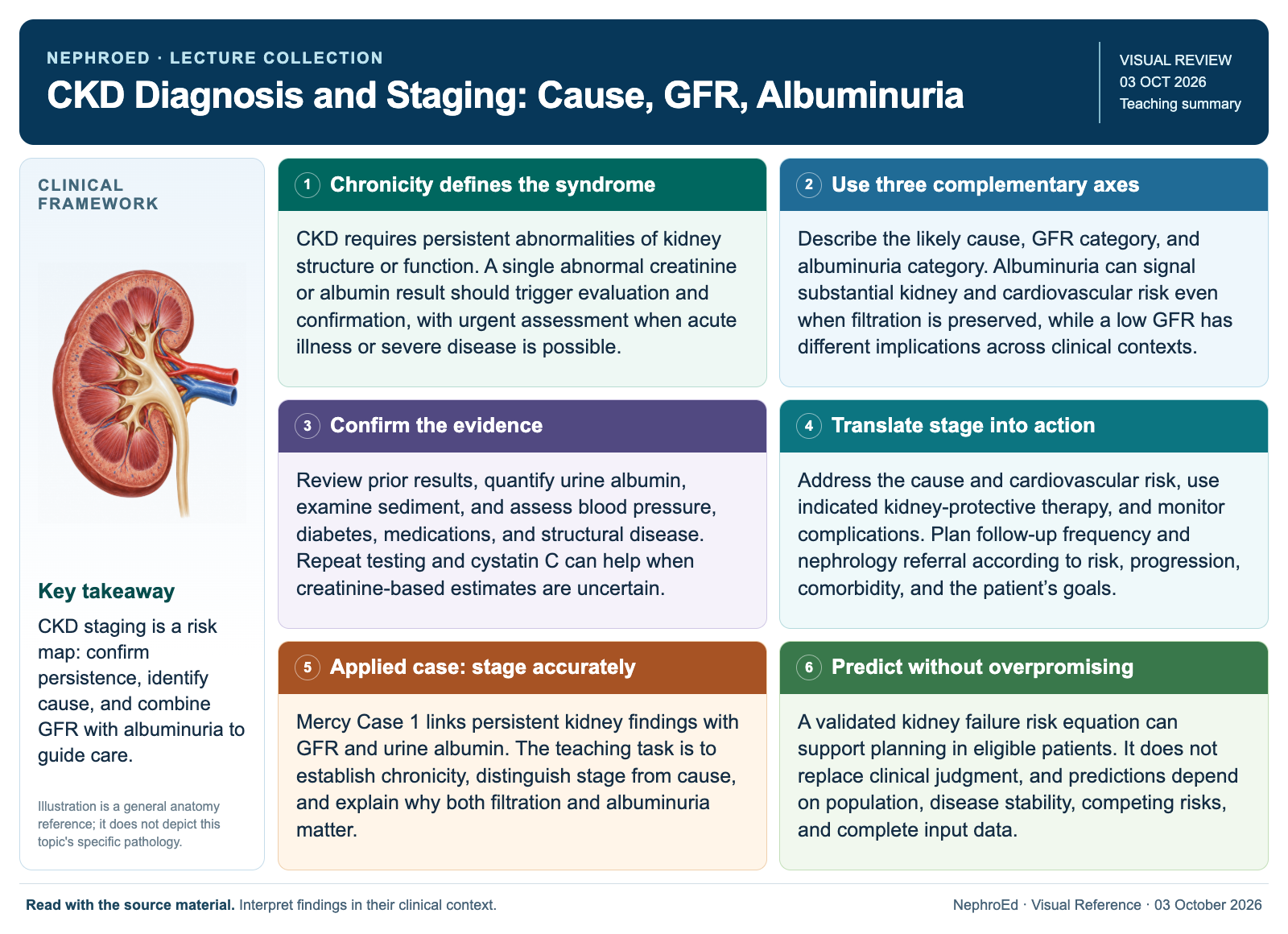
CKD staging is a risk map: confirm persistence, identify cause, and combine GFR with albuminuria to guide care.
Text version
Chronicity defines the syndrome
CKD requires persistent abnormalities of kidney structure or function. A single abnormal creatinine or albumin result should trigger evaluation and confirmation, with urgent assessment when acute illness or severe disease is possible.
Use three complementary axes
Describe the likely cause, GFR category, and albuminuria category. Albuminuria can signal substantial kidney and cardiovascular risk even when filtration is preserved, while a low GFR has different implications across clinical contexts.
Confirm the evidence
Review prior results, quantify urine albumin, examine sediment, and assess blood pressure, diabetes, medications, and structural disease. Repeat testing and cystatin C can help when creatinine-based estimates are uncertain.
Translate stage into action
Address the cause and cardiovascular risk, use indicated kidney-protective therapy, and monitor complications. Plan follow-up frequency and nephrology referral according to risk, progression, comorbidity, and the patient’s goals.
Applied case: stage accurately
Mercy Case 1 links persistent kidney findings with GFR and urine albumin. The teaching task is to establish chronicity, distinguish stage from cause, and explain why both filtration and albuminuria matter.
Predict without overpromising
A validated kidney failure risk equation can support planning in eligible patients. It does not replace clinical judgment, and predictions depend on population, disease stability, competing risks, and complete input data.
Continue learning
This graphic summarizes a topic. The full educational pages provide the broader discussion and references.