Visual summary
The best kidney failure plan combines clinical readiness, informed choice, reliable access, and ongoing assessment of lived burden.
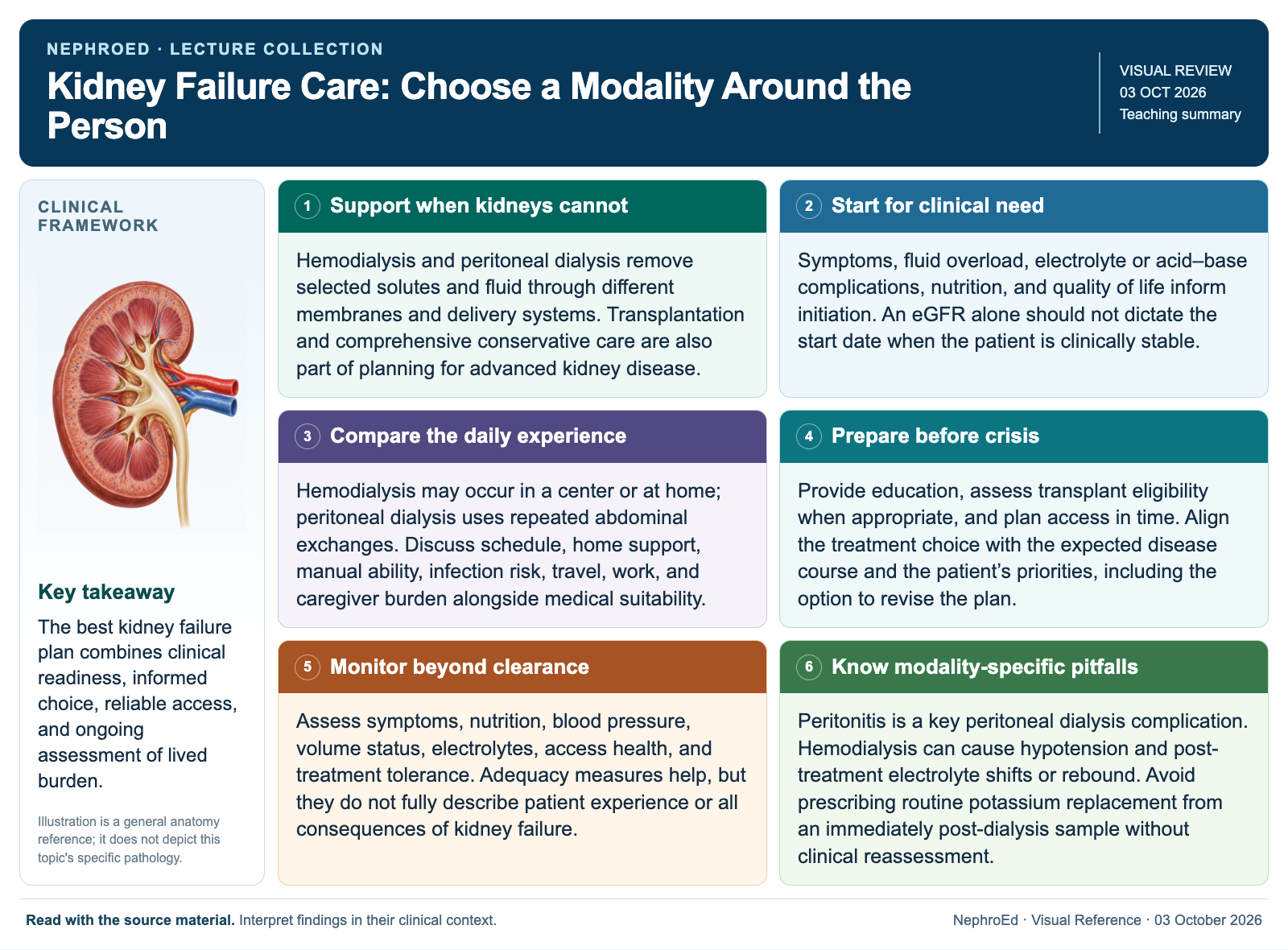
Text version
Support when kidneys cannot
Hemodialysis and peritoneal dialysis remove selected solutes and fluid through different membranes and delivery systems. Transplantation and comprehensive conservative care are also part of planning for advanced kidney disease.
Start for clinical need
Symptoms, fluid overload, electrolyte or acid–base complications, nutrition, and quality of life inform initiation. An eGFR alone should not dictate the start date when the patient is clinically stable.
Compare the daily experience
Hemodialysis may occur in a center or at home; peritoneal dialysis uses repeated abdominal exchanges. Discuss schedule, home support, manual ability, infection risk, travel, work, and caregiver burden alongside medical suitability.
Prepare before crisis
Provide education, assess transplant eligibility when appropriate, and plan access in time. Align the treatment choice with the expected disease course and the patient’s priorities, including the option to revise the plan.
Monitor beyond clearance
Assess symptoms, nutrition, blood pressure, volume status, electrolytes, access health, and treatment tolerance. Adequacy measures help, but they do not fully describe patient experience or all consequences of kidney failure.
Know modality-specific pitfalls
Peritonitis is a key peritoneal dialysis complication. Hemodialysis can cause hypotension and post-treatment electrolyte shifts or rebound. Avoid prescribing routine potassium replacement from an immediately post-dialysis sample without clinical reassessment.
Continue learning
This graphic summarizes a topic. The full educational pages provide the broader discussion and references.