Visual summary
Histology, immunofluorescence, electron microscopy, clinical context, and the trajectory should tell a coherent story. A biopsy pattern still needs an etiologic explanation.
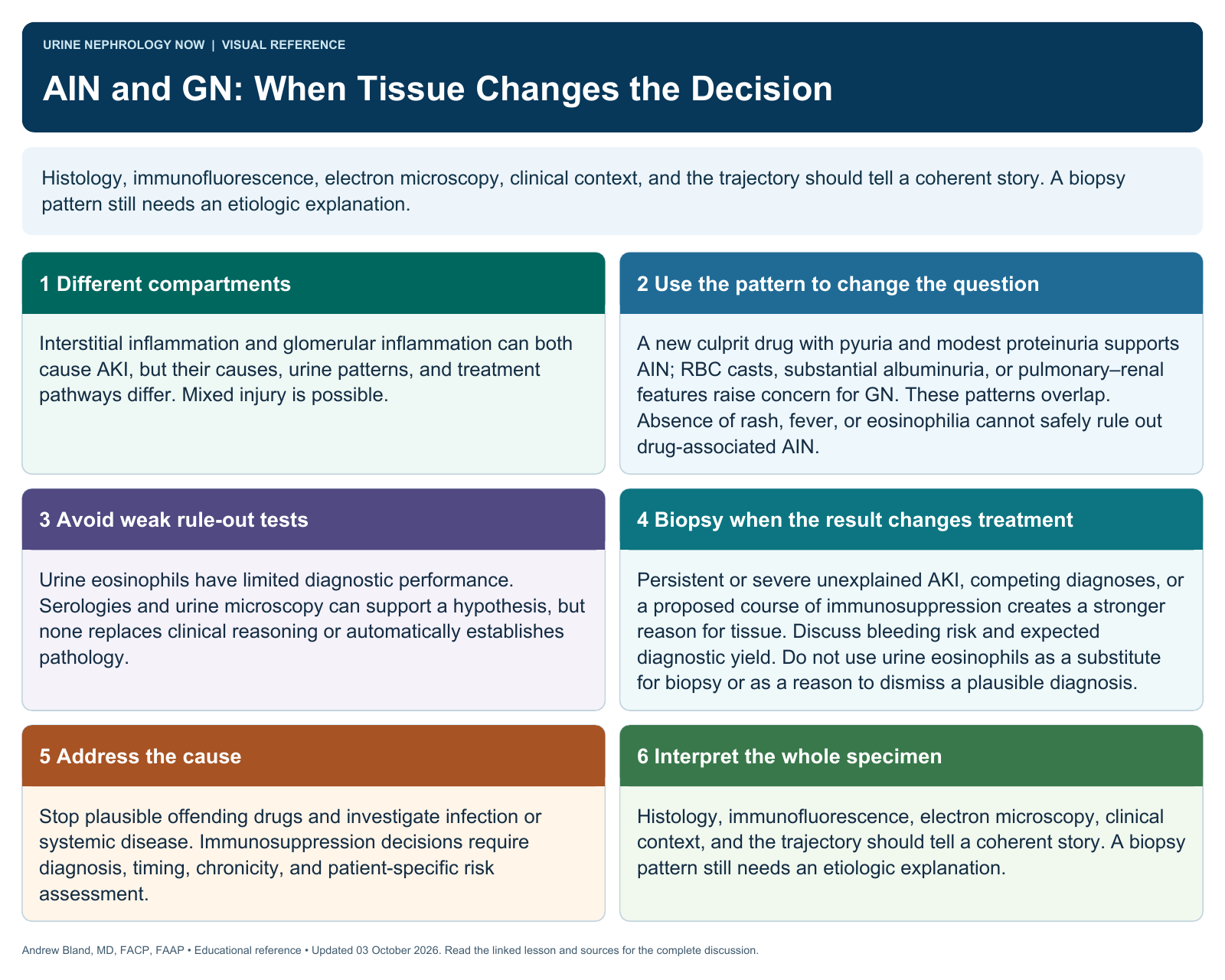
Text version
Different compartments
Interstitial inflammation and glomerular inflammation can both cause AKI, but their causes, urine patterns, and treatment pathways differ. Mixed injury is possible.
Look for supporting clues
Medication timing, systemic symptoms, proteinuria, hematuria, and sediment findings guide suspicion. The classic allergic triad is often absent in AIN.
Avoid weak rule-out tests
Urine eosinophils have limited diagnostic performance. Serologies and urine microscopy can support a hypothesis, but none replaces clinical reasoning or automatically establishes pathology.
Use biopsy purposefully
Consider tissue when uncertainty affects immunosuppression, prognosis, or another major decision. Evaluate bleeding risk and whether the result will change care.
Address the cause
Stop plausible offending drugs and investigate infection or systemic disease. Immunosuppression decisions require diagnosis, timing, chronicity, and patient-specific risk assessment.
Interpret the whole specimen
Histology, immunofluorescence, electron microscopy, clinical context, and the trajectory should tell a coherent story. A biopsy pattern still needs an etiologic explanation.
Continue learning
This graphic summarizes a topic. The full educational pages provide the broader discussion and references.