Visual summary
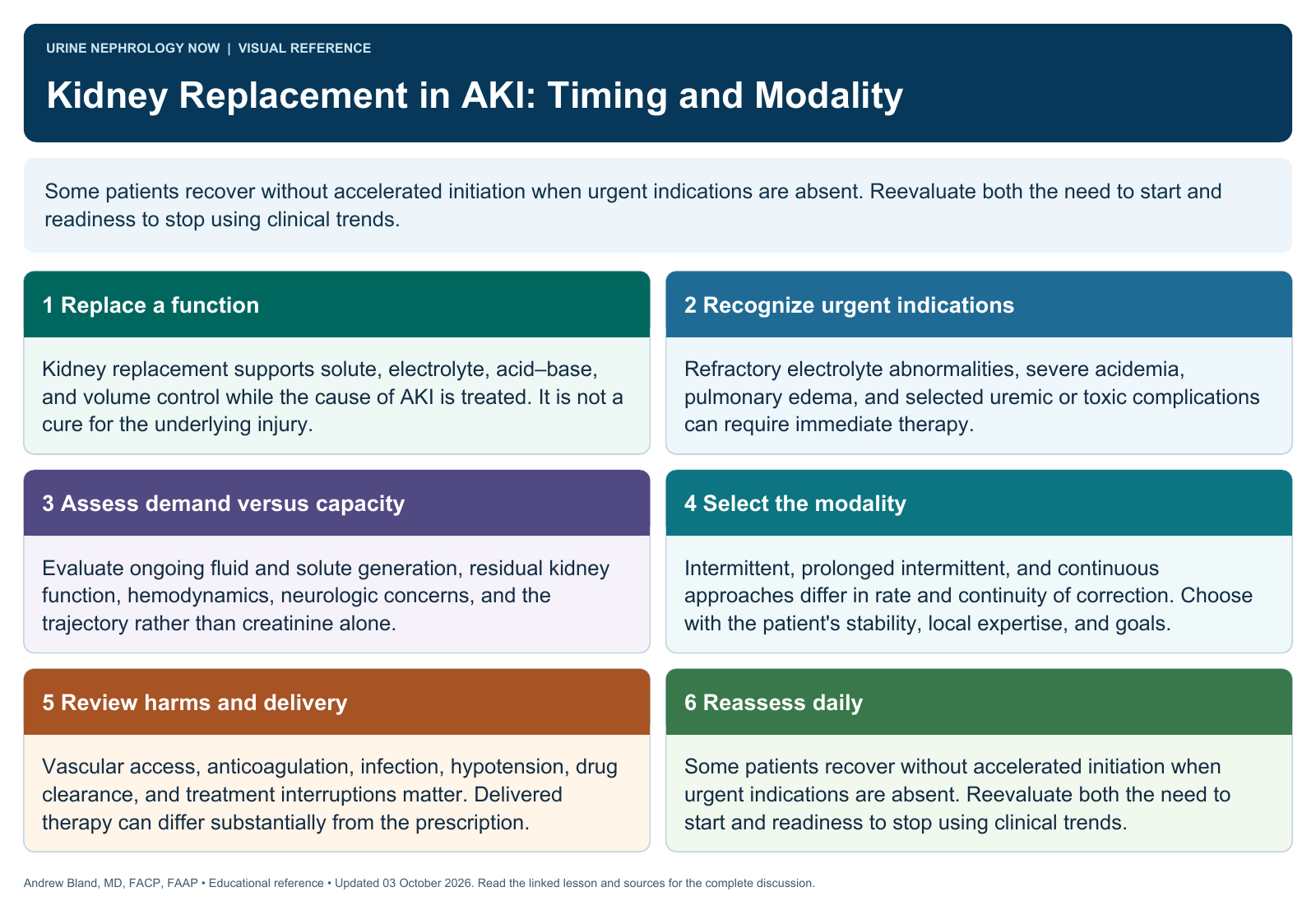
Some patients recover without accelerated initiation when urgent indications are absent. Reevaluate both the need to start and readiness to stop using clinical trends.
Text version
Replace a function
Kidney replacement supports solute, electrolyte, acid–base, and volume control while the cause of AKI is treated. It is not a cure for the underlying injury.
Recognize urgent indications
Refractory electrolyte abnormalities, severe acidemia, pulmonary edema, and selected uremic or toxic complications can require immediate therapy.
Assess demand versus capacity
Evaluate ongoing fluid and solute generation, residual kidney function, hemodynamics, neurologic concerns, and the trajectory rather than creatinine alone.
Select the modality
Intermittent, prolonged intermittent, and continuous approaches differ in rate and continuity of correction. Choose with the patient's stability, local expertise, and goals.
Review harms and delivery
Vascular access, anticoagulation, infection, hypotension, drug clearance, and treatment interruptions matter. Delivered therapy can differ substantially from the prescription.
Reassess daily
Some patients recover without accelerated initiation when urgent indications are absent. Reevaluate both the need to start and readiness to stop using clinical trends.
Continue learning
This graphic summarizes a topic. The full educational pages provide the broader discussion and references.