Visual summary
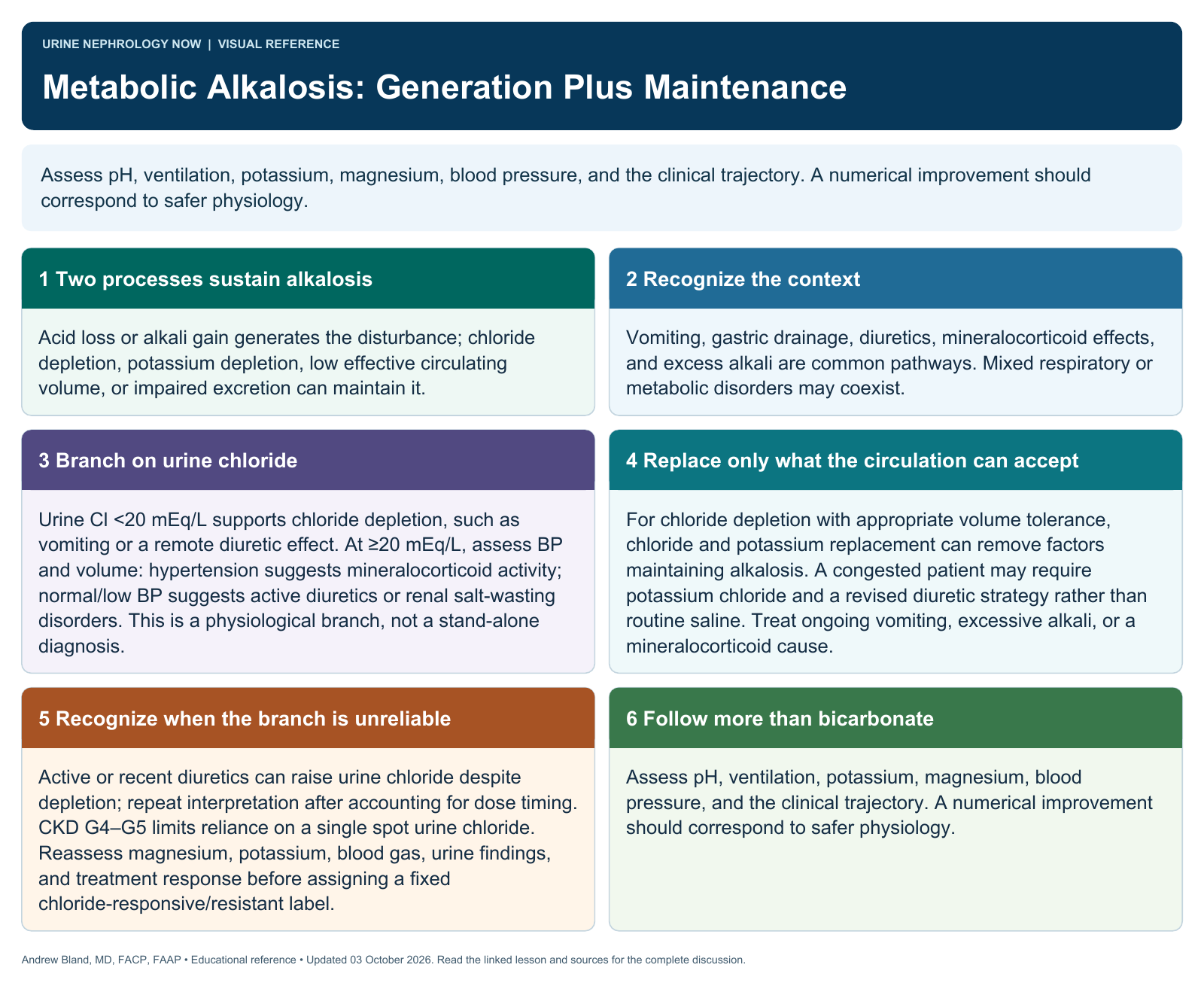
Assess pH, ventilation, potassium, magnesium, blood pressure, and the clinical trajectory. A numerical improvement should correspond to safer physiology.
Text version
Two processes sustain alkalosis
Acid loss or alkali gain generates the disturbance; chloride depletion, potassium depletion, low effective circulating volume, or impaired excretion can maintain it.
Recognize the context
Vomiting, gastric drainage, diuretics, mineralocorticoid effects, and excess alkali are common pathways. Mixed respiratory or metabolic disorders may coexist.
Branch on urine chloride
Urine Cl <20 mEq/L supports chloride depletion, such as vomiting or a remote diuretic effect. At ≥20 mEq/L, assess BP and volume: hypertension suggests mineralocorticoid activity; normal/low BP suggests active diuretics or renal salt-wasting disorders. This is a physiological branch, not a stand-alone diagnosis.
Replace only what the circulation can accept
For chloride depletion with appropriate volume tolerance, chloride and potassium replacement can remove factors maintaining alkalosis. A congested patient may require potassium chloride and a revised diuretic strategy rather than routine saline. Treat ongoing vomiting, excessive alkali, or a mineralocorticoid cause.
Recognize when the branch is unreliable
Active or recent diuretics can raise urine chloride despite depletion; repeat interpretation after accounting for dose timing. CKD G4–G5 limits reliance on a single spot urine chloride. Reassess magnesium, potassium, blood gas, urine findings, and treatment response before assigning a fixed chloride-responsive/resistant label.
Follow more than bicarbonate
Assess pH, ventilation, potassium, magnesium, blood pressure, and the clinical trajectory. A numerical improvement should correspond to safer physiology.