Visual summary
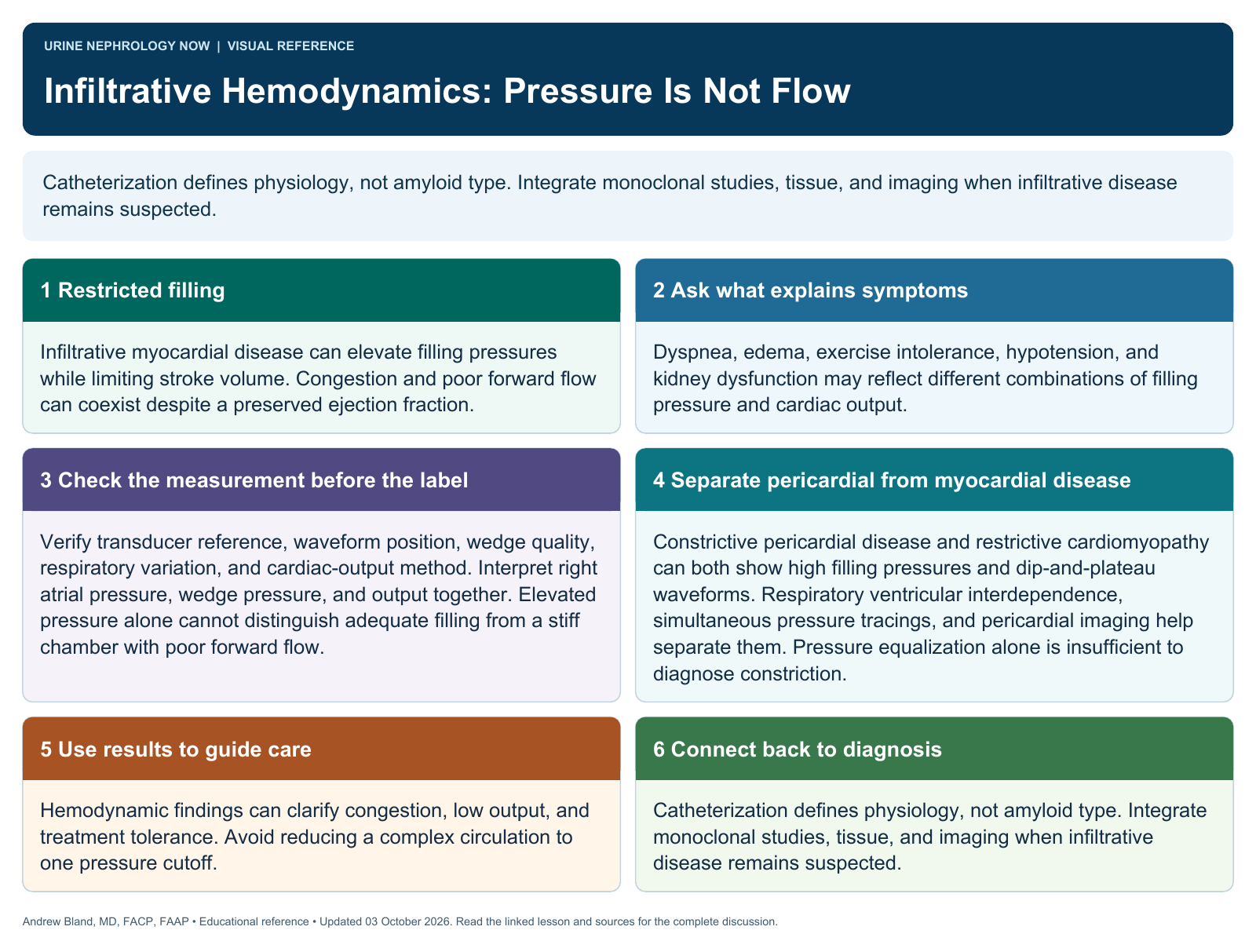
Catheterization defines physiology, not amyloid type. Integrate monoclonal studies, tissue, and imaging when infiltrative disease remains suspected.
Text version
Restricted filling
Infiltrative myocardial disease can elevate filling pressures while limiting stroke volume. Congestion and poor forward flow can coexist despite a preserved ejection fraction.
Ask what explains symptoms
Dyspnea, edema, exercise intolerance, hypotension, and kidney dysfunction may reflect different combinations of filling pressure and cardiac output.
Read the catheterization systematically
Confirm measurement quality, identify right- and left-sided pressures, interpret output, and place derived resistance values in context.
Distinguish competing physiology
Restrictive cardiomyopathy and constrictive pericardial disease can share clinical findings. Respiratory hemodynamics and multimodal imaging help separate them.
Use results to guide care
Hemodynamic findings can clarify congestion, low output, and treatment tolerance. Avoid reducing a complex circulation to one pressure cutoff.
Connect back to diagnosis
Catheterization defines physiology, not amyloid type. Integrate monoclonal studies, tissue, and imaging when infiltrative disease remains suspected.
Continue learning
This graphic summarizes a topic. The full educational pages provide the broader discussion and references.