Visual summary
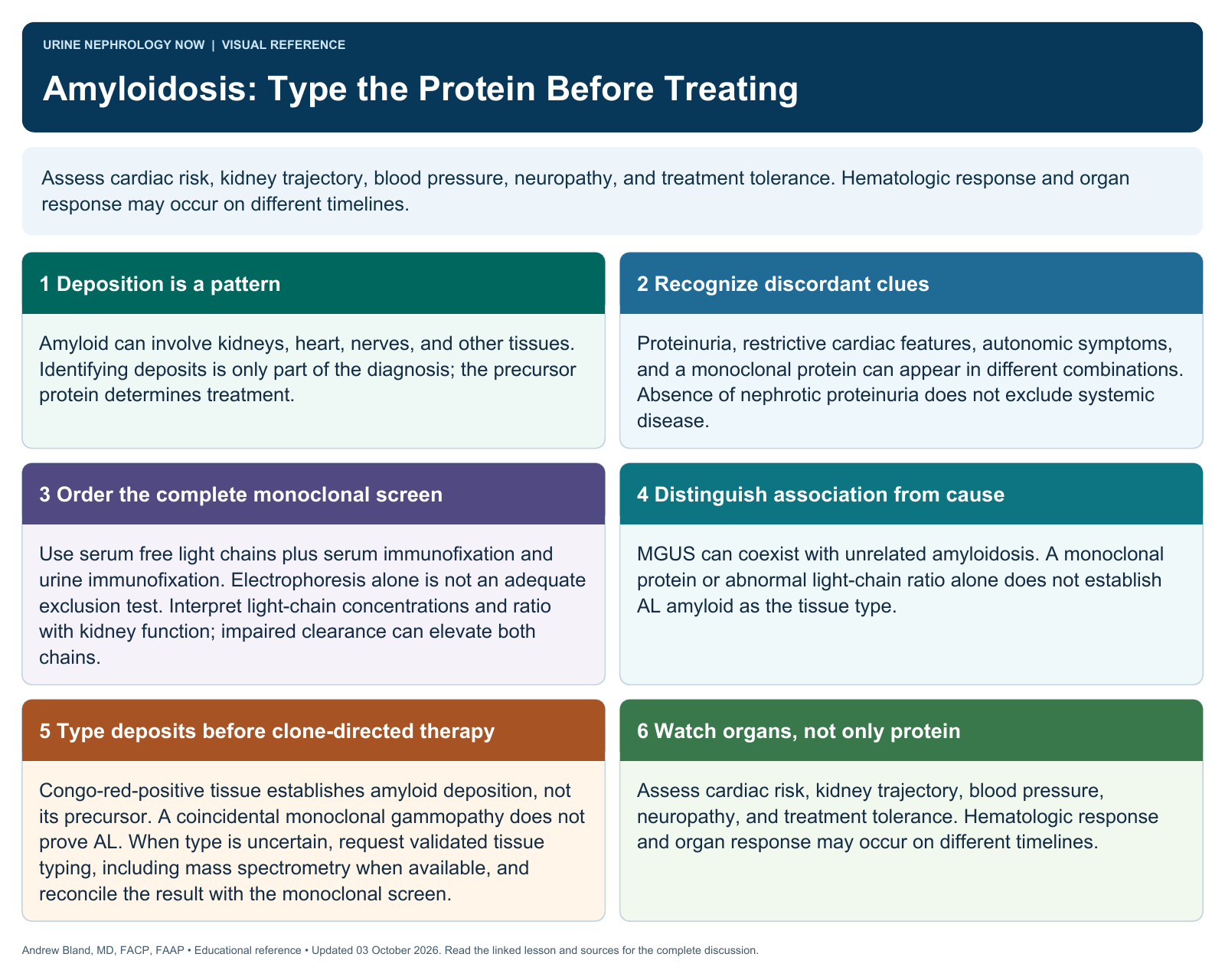
Assess cardiac risk, kidney trajectory, blood pressure, neuropathy, and treatment tolerance. Hematologic response and organ response may occur on different timelines.
Text version
Deposition is a pattern
Amyloid can involve kidneys, heart, nerves, and other tissues. Identifying deposits is only part of the diagnosis; the precursor protein determines treatment.
Recognize discordant clues
Proteinuria, restrictive cardiac features, autonomic symptoms, and a monoclonal protein can appear in different combinations. Absence of nephrotic proteinuria does not exclude systemic disease.
Investigate the clone and tissue
Use serum and urine monoclonal studies, free light chains interpreted with kidney function, and appropriately selected tissue. Coordinate hematology and pathology expertise.
Distinguish association from cause
MGUS can coexist with unrelated amyloidosis. A monoclonal protein or abnormal light-chain ratio alone does not establish AL amyloid as the tissue type.
Type deposits reliably
Immunopathology and specialist methods such as mass spectrometry can resolve uncertainty. Treatment should follow confirmed protein type and organ involvement.
Watch organs, not only protein
Assess cardiac risk, kidney trajectory, blood pressure, neuropathy, and treatment tolerance. Hematologic response and organ response may occur on different timelines.
Continue learning
This graphic summarizes a topic. The full educational pages provide the broader discussion and references.