Visual summary
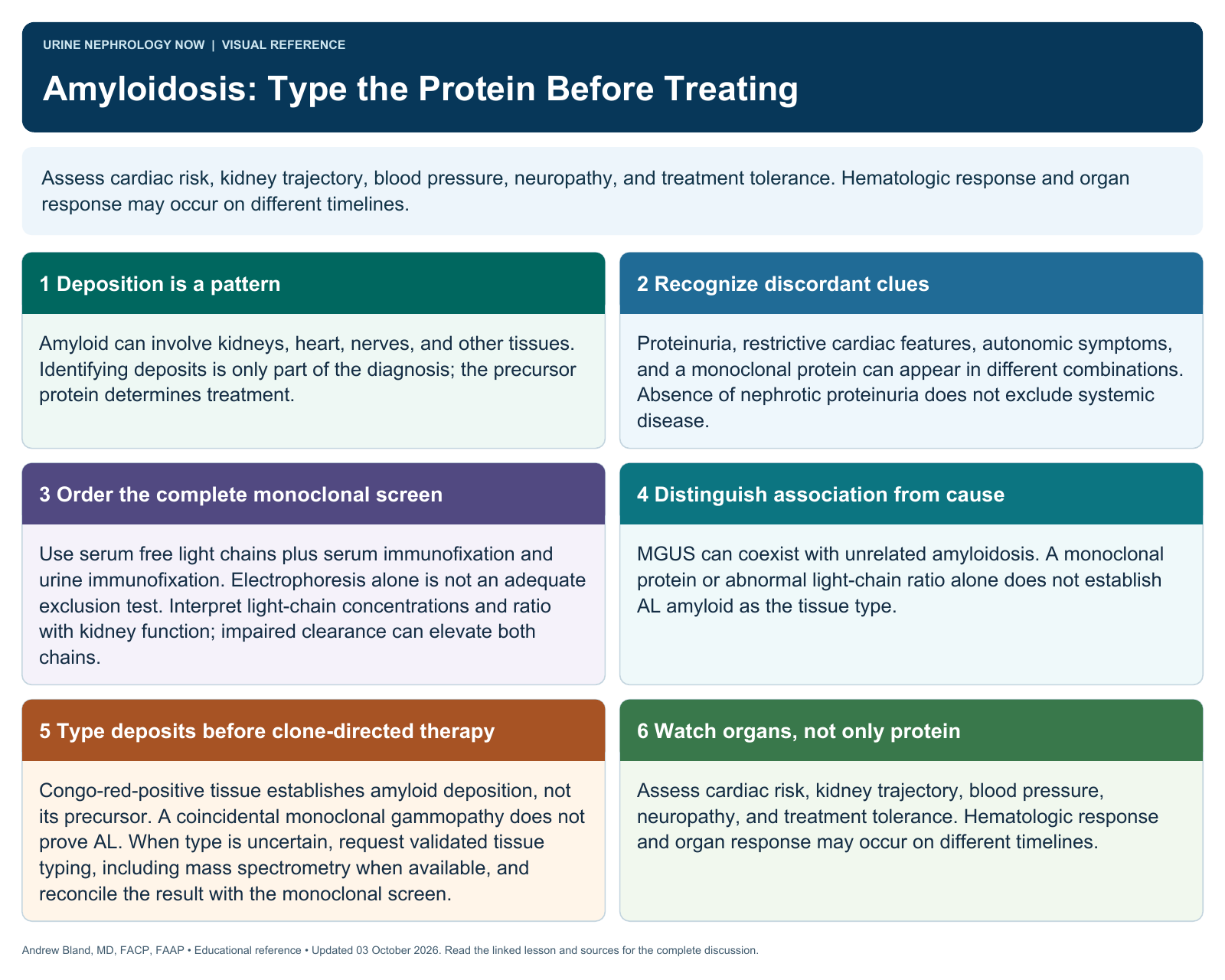
Assess cardiac risk, kidney trajectory, blood pressure, neuropathy, and treatment tolerance. Hematologic response and organ response may occur on different timelines.
Text version
Deposition is a pattern
Amyloid can involve kidneys, heart, nerves, and other tissues. Identifying deposits is only part of the diagnosis; the precursor protein determines treatment.
Recognize discordant clues
Proteinuria, restrictive cardiac features, autonomic symptoms, and a monoclonal protein can appear in different combinations. Absence of nephrotic proteinuria does not exclude systemic disease.
Order the complete monoclonal screen
Use serum free light chains plus serum immunofixation and urine immunofixation. Electrophoresis alone is not an adequate exclusion test. Interpret light-chain concentrations and ratio with kidney function; impaired clearance can elevate both chains.
Distinguish association from cause
MGUS can coexist with unrelated amyloidosis. A monoclonal protein or abnormal light-chain ratio alone does not establish AL amyloid as the tissue type.
Type deposits before clone-directed therapy
Congo-red-positive tissue establishes amyloid deposition, not its precursor. A coincidental monoclonal gammopathy does not prove AL. When type is uncertain, request validated tissue typing, including mass spectrometry when available, and reconcile the result with the monoclonal screen.
Watch organs, not only protein
Assess cardiac risk, kidney trajectory, blood pressure, neuropathy, and treatment tolerance. Hematologic response and organ response may occur on different timelines.