Visual summary
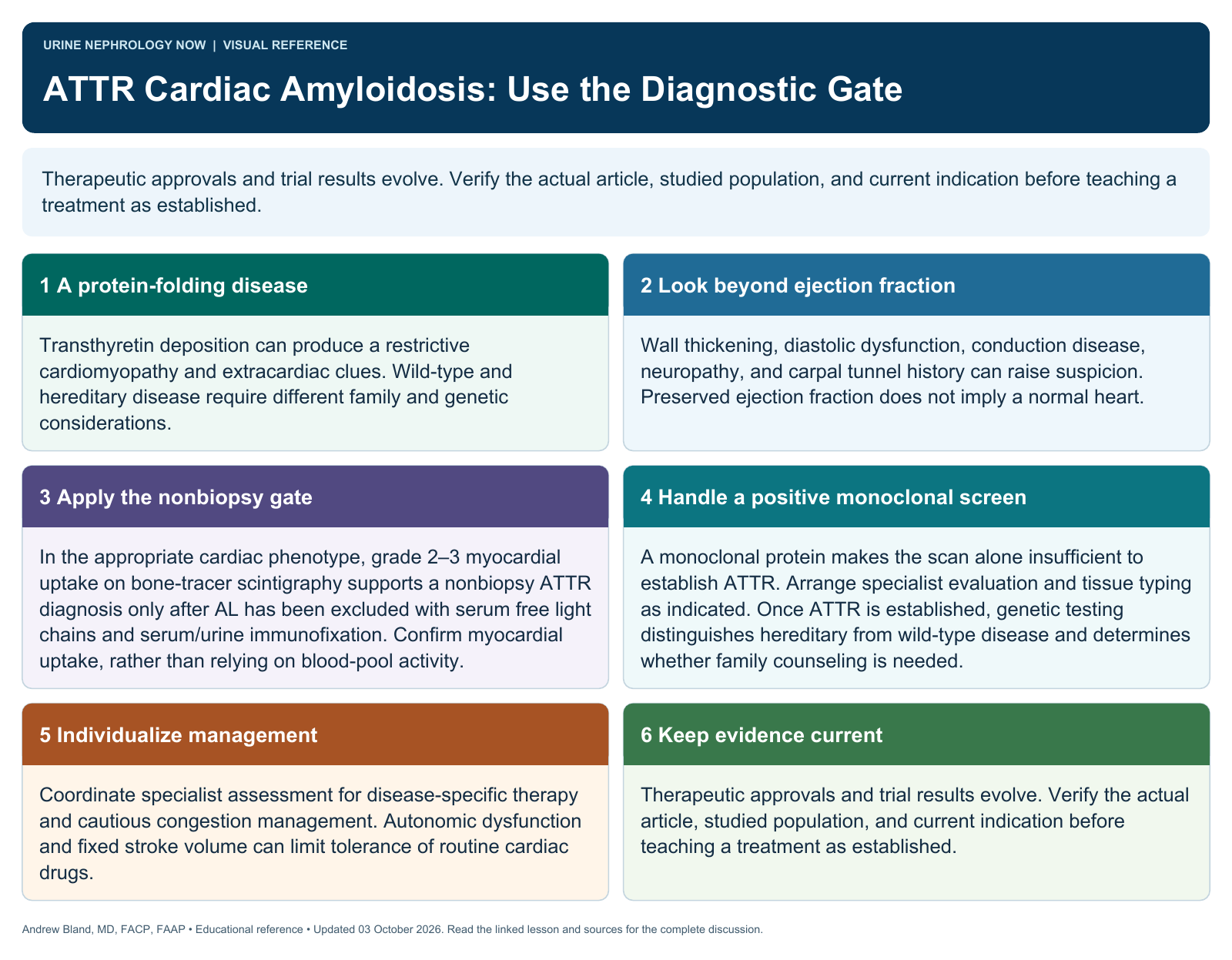
Therapeutic approvals and trial results evolve. Verify the actual article, studied population, and current indication before teaching a treatment as established.
Text version
A protein-folding disease
Transthyretin deposition can produce a restrictive cardiomyopathy and extracardiac clues. Wild-type and hereditary disease require different family and genetic considerations.
Look beyond ejection fraction
Wall thickening, diastolic dysfunction, conduction disease, neuropathy, and carpal tunnel history can raise suspicion. Preserved ejection fraction does not imply a normal heart.
Apply the nonbiopsy gate
In the appropriate cardiac phenotype, grade 2–3 myocardial uptake on bone-tracer scintigraphy supports a nonbiopsy ATTR diagnosis only after AL has been excluded with serum free light chains and serum/urine immunofixation. Confirm myocardial uptake, rather than relying on blood-pool activity.
Handle a positive monoclonal screen
A monoclonal protein makes the scan alone insufficient to establish ATTR. Arrange specialist evaluation and tissue typing as indicated. Once ATTR is established, genetic testing distinguishes hereditary from wild-type disease and determines whether family counseling is needed.
Individualize management
Coordinate specialist assessment for disease-specific therapy and cautious congestion management. Autonomic dysfunction and fixed stroke volume can limit tolerance of routine cardiac drugs.
Keep evidence current
Therapeutic approvals and trial results evolve. Verify the actual article, studied population, and current indication before teaching a treatment as established.