Visual summary
Bone disease, stones, tissue calcification, nutrition, and underlying endocrine or systemic disease determine the broader clinical importance.
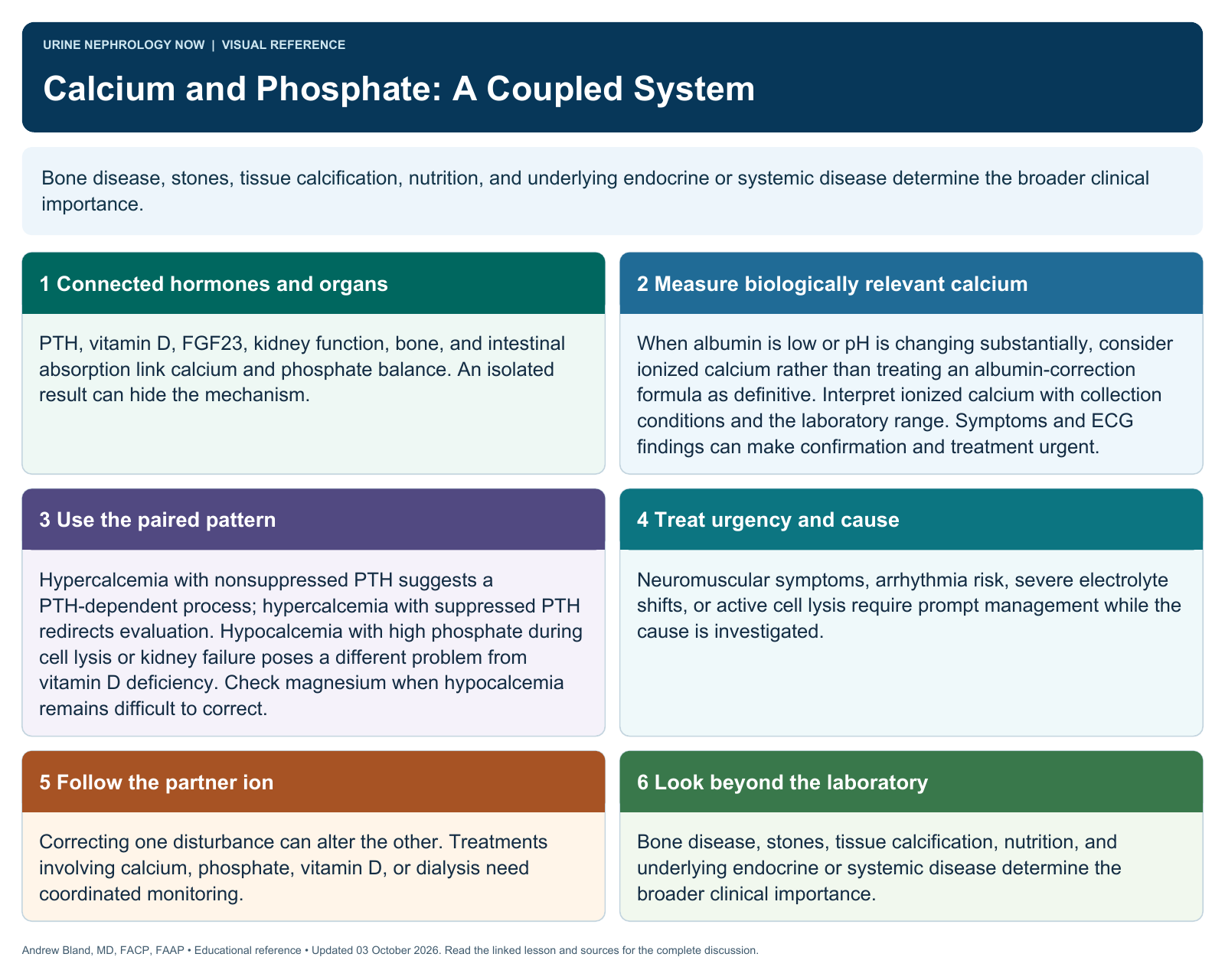
Text version
Connected hormones and organs
PTH, vitamin D, FGF23, kidney function, bone, and intestinal absorption link calcium and phosphate balance. An isolated result can hide the mechanism.
Measure biologically relevant calcium
When albumin is low or pH is changing substantially, consider ionized calcium rather than treating an albumin-correction formula as definitive. Interpret ionized calcium with collection conditions and the laboratory range. Symptoms and ECG findings can make confirmation and treatment urgent.
Use the paired pattern
Hypercalcemia with nonsuppressed PTH suggests a PTH-dependent process; hypercalcemia with suppressed PTH redirects evaluation. Hypocalcemia with high phosphate during cell lysis or kidney failure poses a different problem from vitamin D deficiency. Check magnesium when hypocalcemia remains difficult to correct.
Treat urgency and cause
Neuromuscular symptoms, arrhythmia risk, severe electrolyte shifts, or active cell lysis require prompt management while the cause is investigated.
Follow the partner ion
Correcting one disturbance can alter the other. Treatments involving calcium, phosphate, vitamin D, or dialysis need coordinated monitoring.
Look beyond the laboratory
Bone disease, stones, tissue calcification, nutrition, and underlying endocrine or systemic disease determine the broader clinical importance.