Visual summary
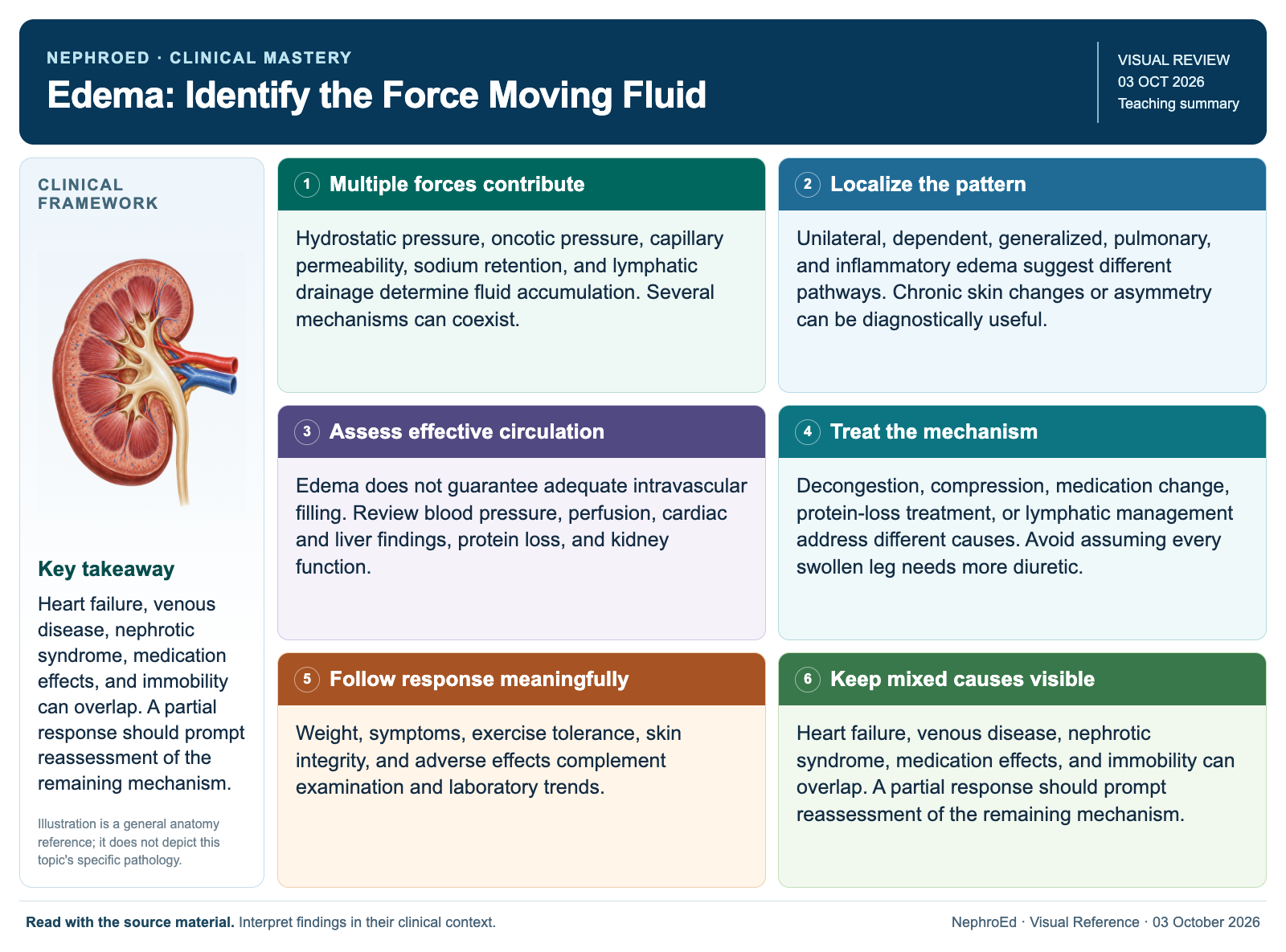
Heart failure, venous disease, nephrotic syndrome, medication effects, and immobility can overlap. A partial response should prompt reassessment of the remaining mechanism.
Text version
Multiple forces contribute
Hydrostatic pressure, oncotic pressure, capillary permeability, sodium retention, and lymphatic drainage determine fluid accumulation. Several mechanisms can coexist.
Localize the pattern
Unilateral, dependent, generalized, pulmonary, and inflammatory edema suggest different pathways. Chronic skin changes or asymmetry can be diagnostically useful.
Assess effective circulation
Edema does not guarantee adequate intravascular filling. Review blood pressure, perfusion, cardiac and liver findings, protein loss, and kidney function.
Treat the mechanism
Decongestion, compression, medication change, protein-loss treatment, or lymphatic management address different causes. Avoid assuming every swollen leg needs more diuretic.
Follow response meaningfully
Weight, symptoms, exercise tolerance, skin integrity, and adverse effects complement examination and laboratory trends.
Keep mixed causes visible
Heart failure, venous disease, nephrotic syndrome, medication effects, and immobility can overlap. A partial response should prompt reassessment of the remaining mechanism.
Continue learning
This graphic summarizes a topic. The full educational pages provide the broader discussion and references.