Visual summary
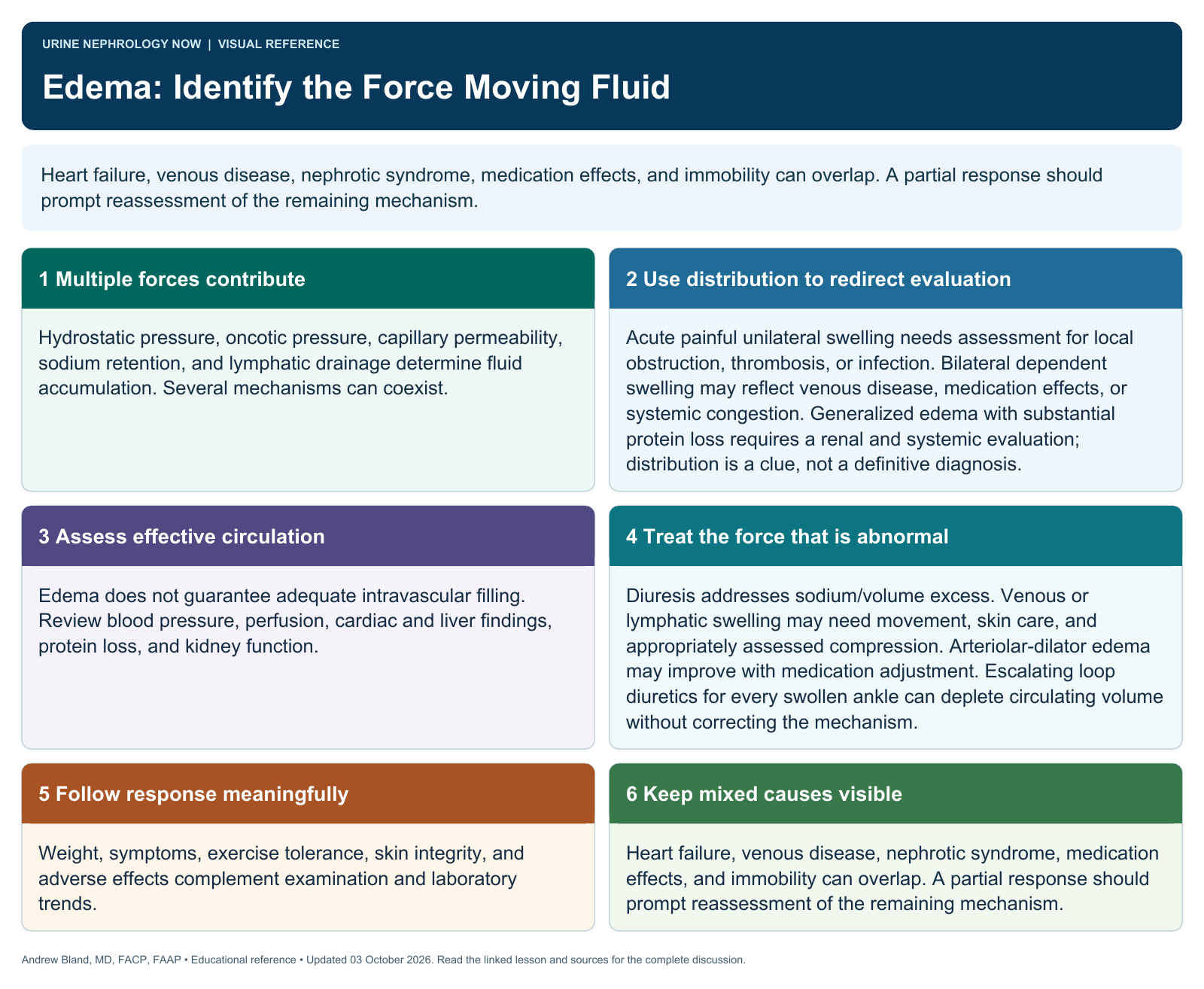
Heart failure, venous disease, nephrotic syndrome, medication effects, and immobility can overlap. A partial response should prompt reassessment of the remaining mechanism.
Text version
Multiple forces contribute
Hydrostatic pressure, oncotic pressure, capillary permeability, sodium retention, and lymphatic drainage determine fluid accumulation. Several mechanisms can coexist.
Use distribution to redirect evaluation
Acute painful unilateral swelling needs assessment for local obstruction, thrombosis, or infection. Bilateral dependent swelling may reflect venous disease, medication effects, or systemic congestion. Generalized edema with substantial protein loss requires a renal and systemic evaluation; distribution is a clue, not a definitive diagnosis.
Assess effective circulation
Edema does not guarantee adequate intravascular filling. Review blood pressure, perfusion, cardiac and liver findings, protein loss, and kidney function.
Treat the force that is abnormal
Diuresis addresses sodium/volume excess. Venous or lymphatic swelling may need movement, skin care, and appropriately assessed compression. Arteriolar-dilator edema may improve with medication adjustment. Escalating loop diuretics for every swollen ankle can deplete circulating volume without correcting the mechanism.
Follow response meaningfully
Weight, symptoms, exercise tolerance, skin integrity, and adverse effects complement examination and laboratory trends.
Keep mixed causes visible
Heart failure, venous disease, nephrotic syndrome, medication effects, and immobility can overlap. A partial response should prompt reassessment of the remaining mechanism.