Visual summary
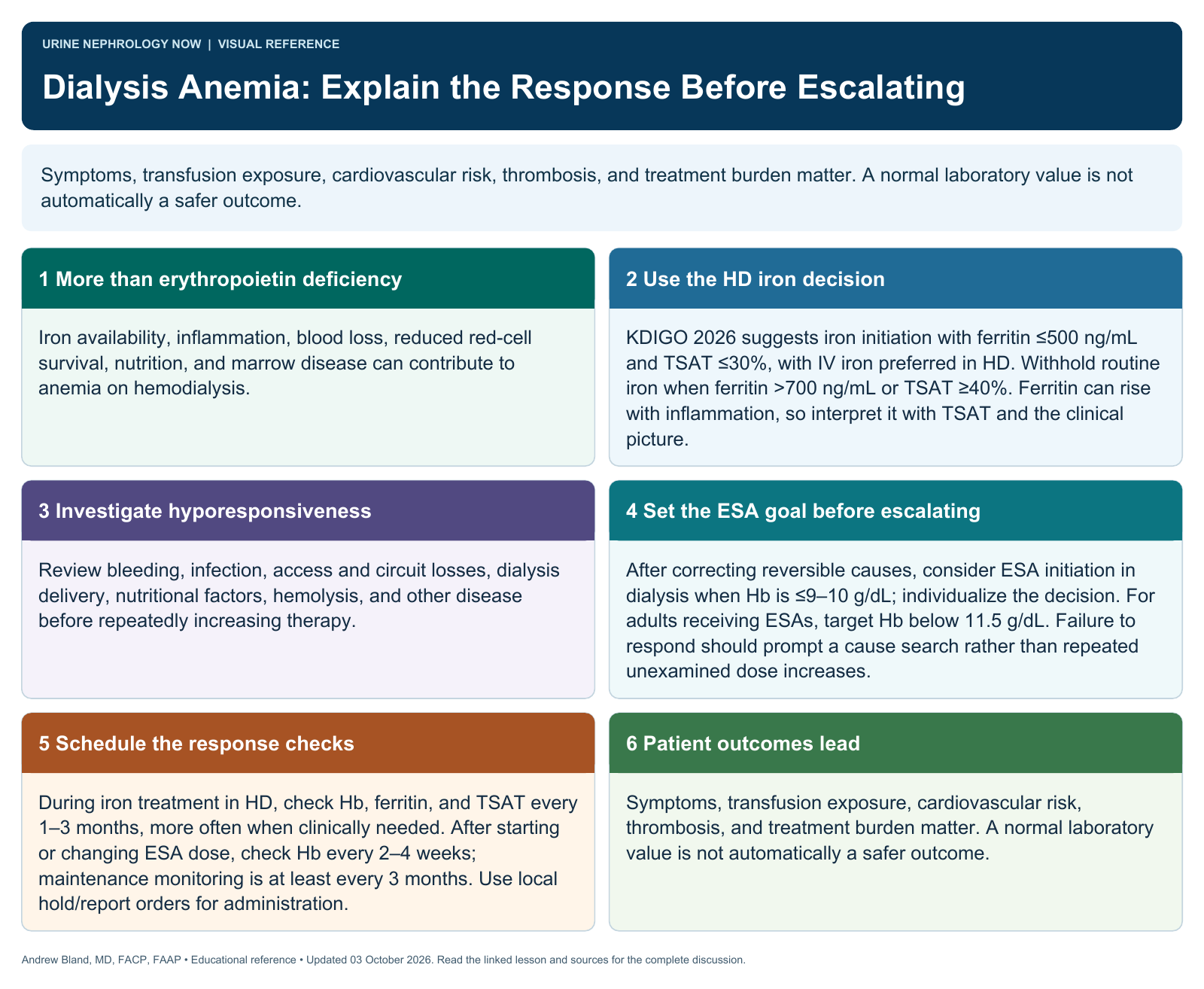
Symptoms, transfusion exposure, cardiovascular risk, thrombosis, and treatment burden matter. A normal laboratory value is not automatically a safer outcome.
Text version
More than erythropoietin deficiency
Iron availability, inflammation, blood loss, reduced red-cell survival, nutrition, and marrow disease can contribute to anemia on hemodialysis.
Read the pattern
Hemoglobin trajectory, reticulocytes, ferritin, transferrin saturation, symptoms, and recent treatment help distinguish mechanisms. Ferritin also reflects inflammation.
Investigate hyporesponsiveness
Review bleeding, infection, access and circuit losses, dialysis delivery, nutritional factors, hemolysis, and other disease before repeatedly increasing therapy.
Individualize treatment
Iron, ESAs, HIF-pathway agents, and transfusion have distinct indications and risks. Use the published KDIGO 2026 anemia guideline and current labeling; normalizing hemoglobin is not the treatment goal.
Nursing checkpoints
Verify orders and recent results; document administration, symptoms, bleeding, infection, and treatment response. Use the approved local hold-and-report protocol.
Patient outcomes lead
Symptoms, transfusion exposure, cardiovascular risk, thrombosis, and treatment burden matter. A normal laboratory value is not automatically a safer outcome.
Continue learning
This graphic summarizes a topic. The full educational pages provide the broader discussion and references.