Visual summary
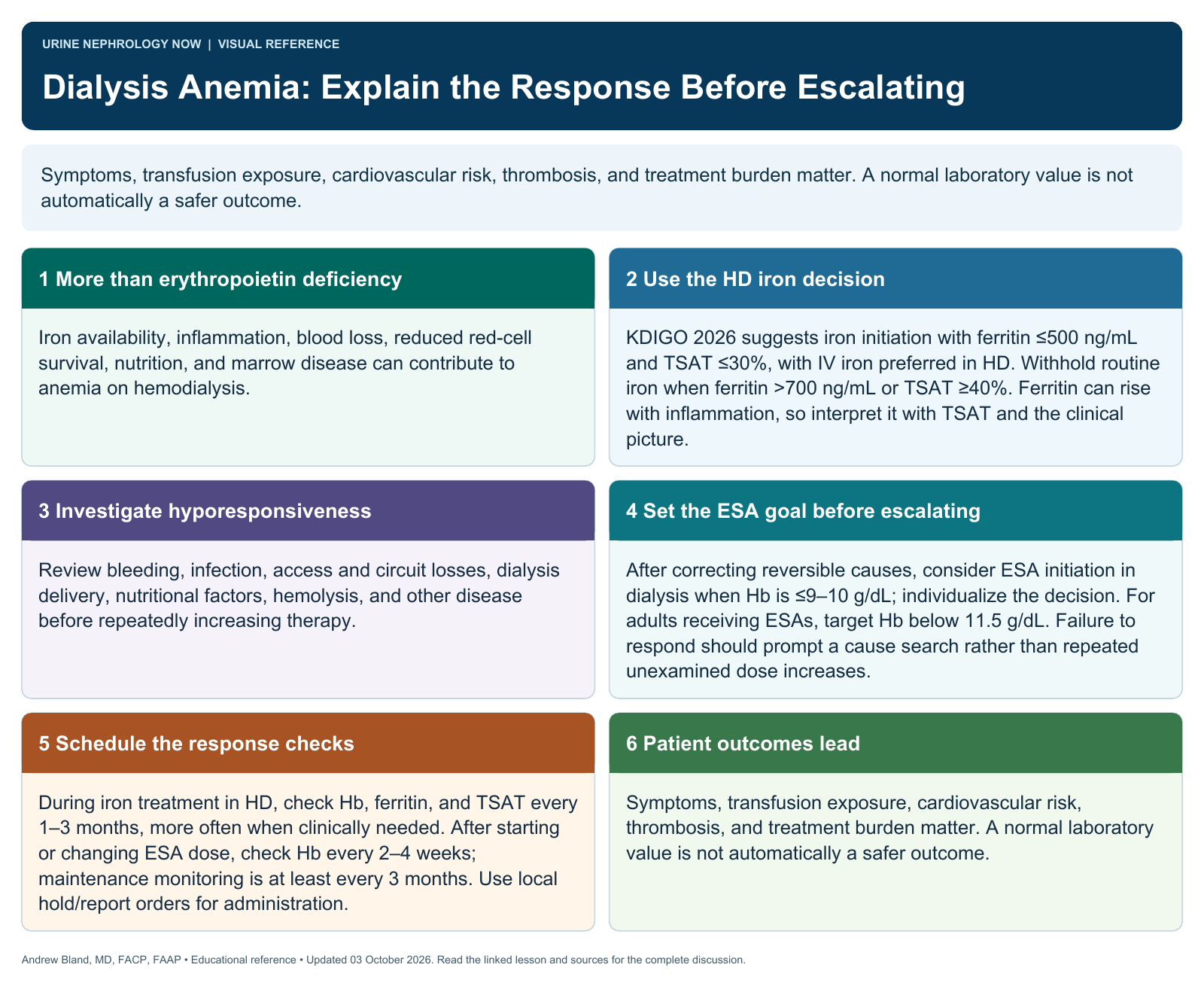
Symptoms, transfusion exposure, cardiovascular risk, thrombosis, and treatment burden matter. A normal laboratory value is not automatically a safer outcome.
Text version
More than erythropoietin deficiency
Iron availability, inflammation, blood loss, reduced red-cell survival, nutrition, and marrow disease can contribute to anemia on hemodialysis.
Use the HD iron decision
KDIGO 2026 suggests iron initiation with ferritin ≤500 ng/mL and TSAT ≤30%, with IV iron preferred in HD. Withhold routine iron when ferritin >700 ng/mL or TSAT ≥40%. Ferritin can rise with inflammation, so interpret it with TSAT and the clinical picture.
Investigate hyporesponsiveness
Review bleeding, infection, access and circuit losses, dialysis delivery, nutritional factors, hemolysis, and other disease before repeatedly increasing therapy.
Set the ESA goal before escalating
After correcting reversible causes, consider ESA initiation in dialysis when Hb is ≤9–10 g/dL; individualize the decision. For adults receiving ESAs, target Hb below 11.5 g/dL. Failure to respond should prompt a cause search rather than repeated unexamined dose increases.
Schedule the response checks
During iron treatment in HD, check Hb, ferritin, and TSAT every 1–3 months, more often when clinically needed. After starting or changing ESA dose, check Hb every 2–4 weeks; maintenance monitoring is at least every 3 months. Use local hold/report orders for administration.
Patient outcomes lead
Symptoms, transfusion exposure, cardiovascular risk, thrombosis, and treatment burden matter. A normal laboratory value is not automatically a safer outcome.