Visual summary
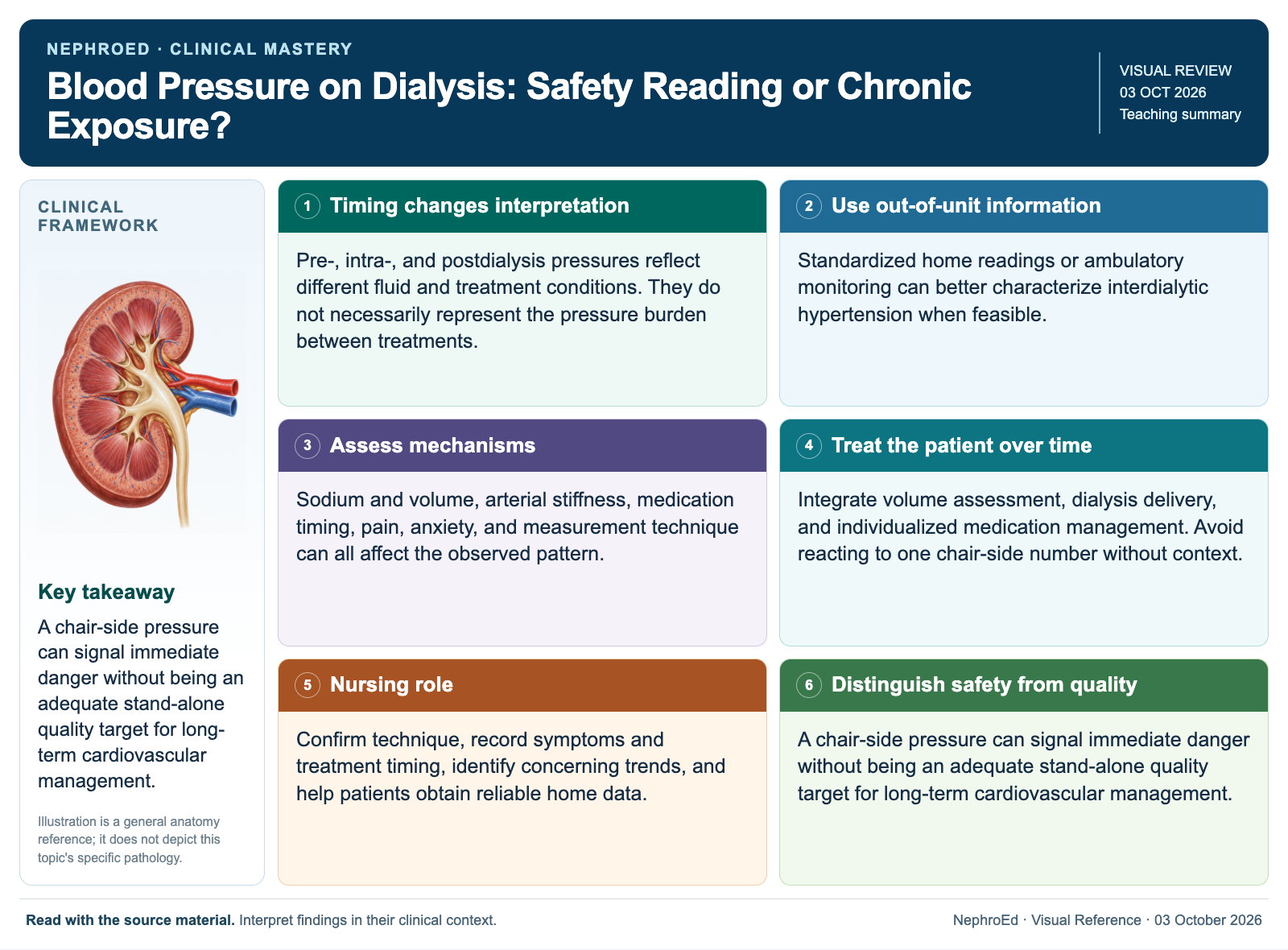
A chair-side pressure can signal immediate danger without being an adequate stand-alone quality target for long-term cardiovascular management.
Text version
Timing changes interpretation
Pre-, intra-, and postdialysis pressures reflect different fluid and treatment conditions. They do not necessarily represent the pressure burden between treatments.
Use out-of-unit information
Standardized home readings or ambulatory monitoring can better characterize interdialytic hypertension when feasible.
Assess mechanisms
Sodium and volume, arterial stiffness, medication timing, pain, anxiety, and measurement technique can all affect the observed pattern.
Treat the patient over time
Integrate volume assessment, dialysis delivery, and individualized medication management. Avoid reacting to one chair-side number without context.
Nursing role
Confirm technique, record symptoms and treatment timing, identify concerning trends, and help patients obtain reliable home data.
Distinguish safety from quality
A chair-side pressure can signal immediate danger without being an adequate stand-alone quality target for long-term cardiovascular management.
Continue learning
This graphic summarizes a topic. The full educational pages provide the broader discussion and references.