Visual summary
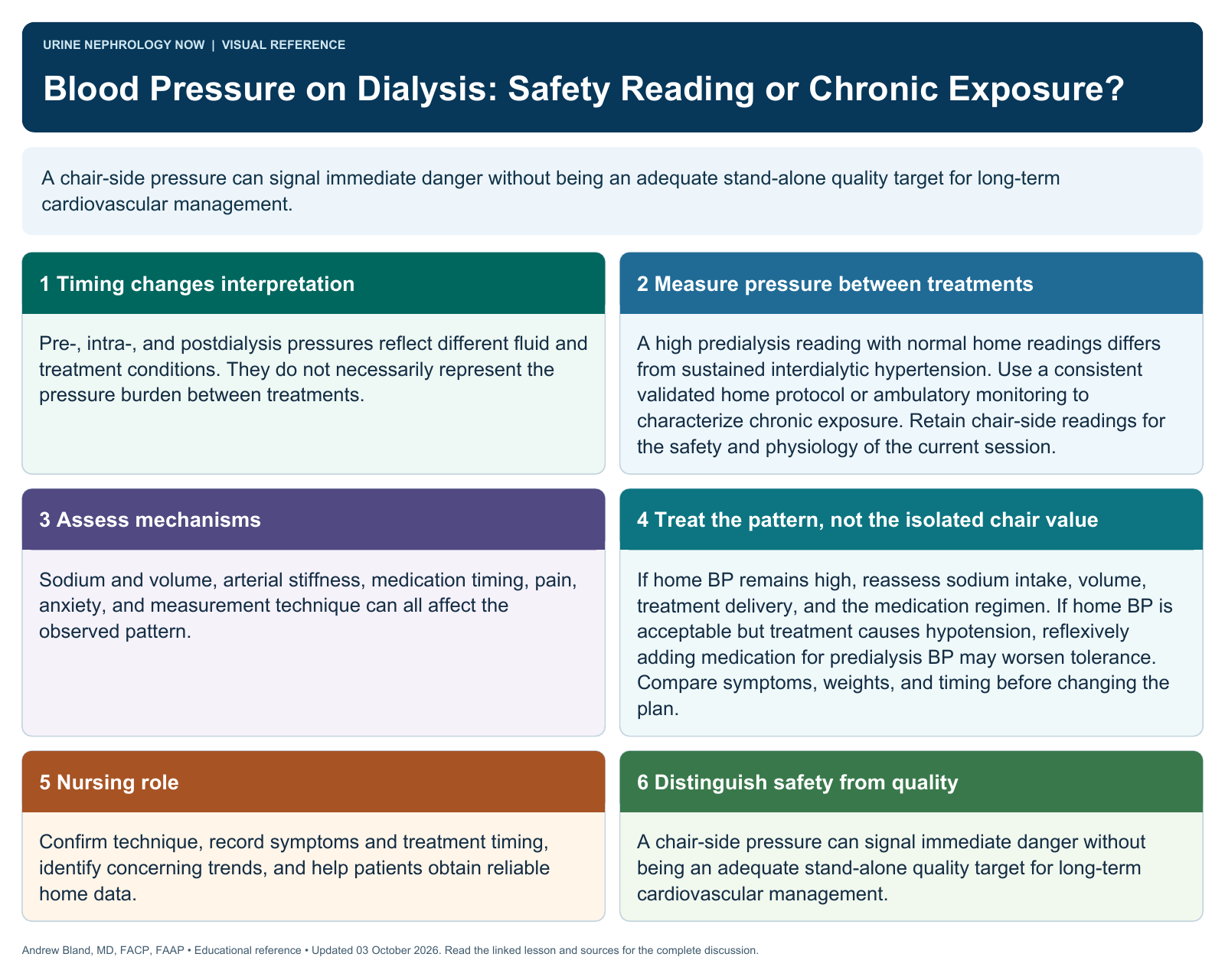
A chair-side pressure can signal immediate danger without being an adequate stand-alone quality target for long-term cardiovascular management.
Text version
Timing changes interpretation
Pre-, intra-, and postdialysis pressures reflect different fluid and treatment conditions. They do not necessarily represent the pressure burden between treatments.
Measure pressure between treatments
A high predialysis reading with normal home readings differs from sustained interdialytic hypertension. Use a consistent validated home protocol or ambulatory monitoring to characterize chronic exposure. Retain chair-side readings for the safety and physiology of the current session.
Assess mechanisms
Sodium and volume, arterial stiffness, medication timing, pain, anxiety, and measurement technique can all affect the observed pattern.
Treat the pattern, not the isolated chair value
If home BP remains high, reassess sodium intake, volume, treatment delivery, and the medication regimen. If home BP is acceptable but treatment causes hypotension, reflexively adding medication for predialysis BP may worsen tolerance. Compare symptoms, weights, and timing before changing the plan.
Nursing role
Confirm technique, record symptoms and treatment timing, identify concerning trends, and help patients obtain reliable home data.
Distinguish safety from quality
A chair-side pressure can signal immediate danger without being an adequate stand-alone quality target for long-term cardiovascular management.