Visual summary
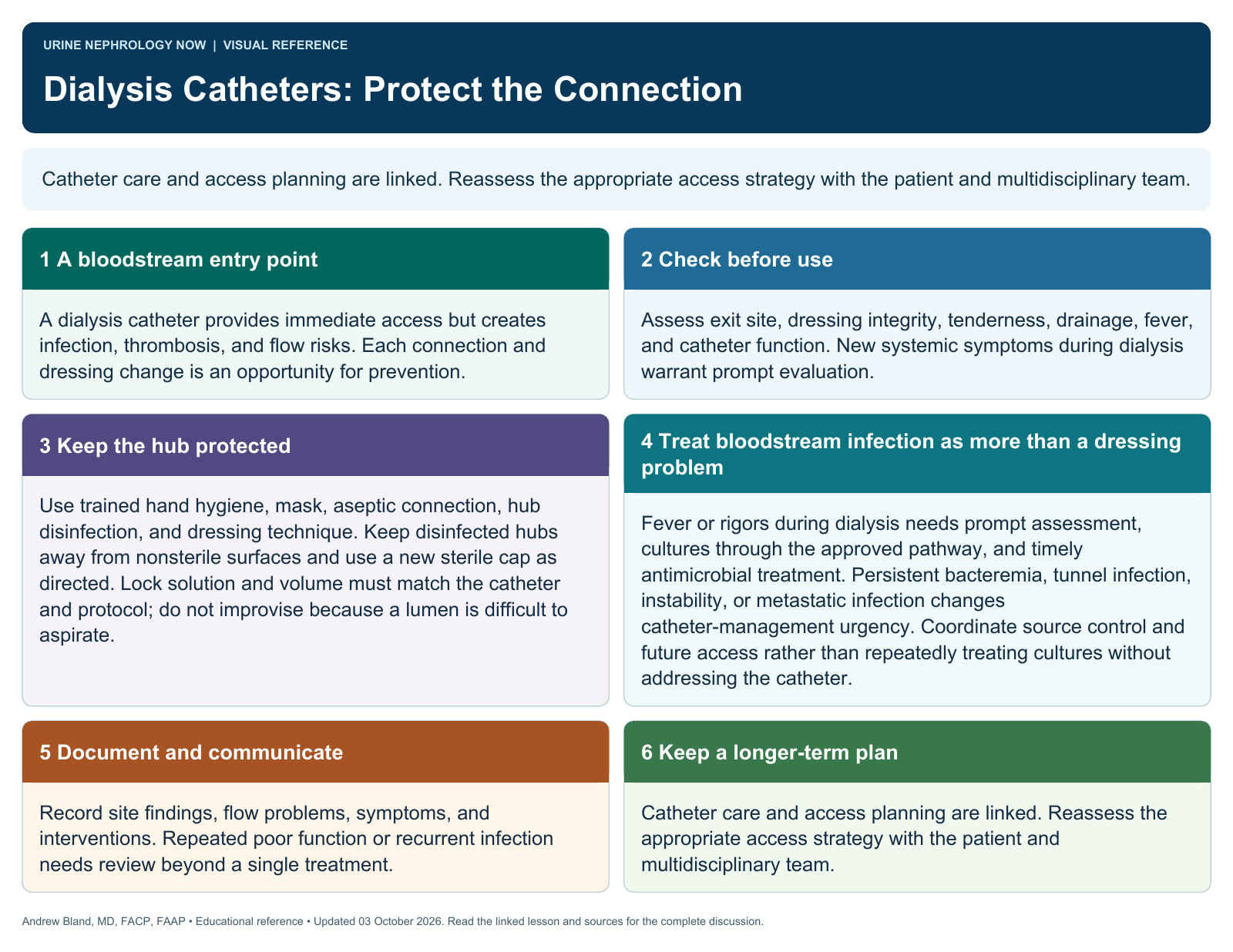
Catheter care and access planning are linked. Reassess the appropriate access strategy with the patient and multidisciplinary team.
Text version
A bloodstream entry point
A dialysis catheter provides immediate access but creates infection, thrombosis, and flow risks. Each connection and dressing change is an opportunity for prevention.
Check before use
Assess exit site, dressing integrity, tenderness, drainage, fever, and catheter function. New systemic symptoms during dialysis warrant prompt evaluation.
Use the infection bundle
Follow trained aseptic connection, hub disinfection, dressing, and locking procedures. Product choice and dwell volumes must match the approved protocol.
Investigate suspected infection
Cultures, clinical assessment, antimicrobial treatment, and catheter-management decisions should follow the established pathway without unnecessary delay.
Document and communicate
Record site findings, flow problems, symptoms, and interventions. Repeated poor function or recurrent infection needs review beyond a single treatment.
Keep a longer-term plan
Catheter care and access planning are linked. Reassess the appropriate access strategy with the patient and multidisciplinary team.
Continue learning
This graphic summarizes a topic. The full educational pages provide the broader discussion and references.