Visual summary
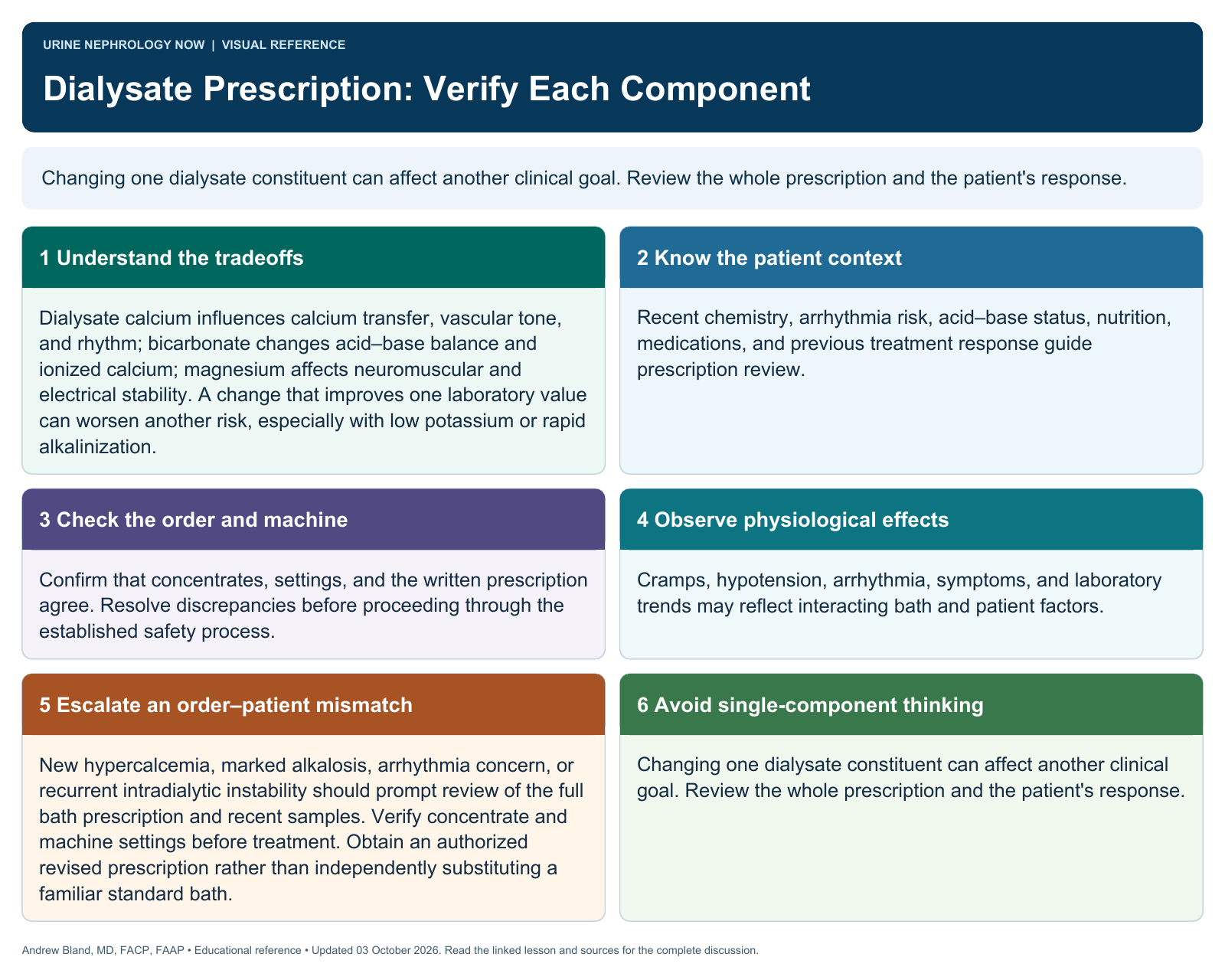
Changing one dialysate constituent can affect another clinical goal. Review the whole prescription and the patient's response.
Text version
Understand the tradeoffs
Dialysate calcium influences calcium transfer, vascular tone, and rhythm; bicarbonate changes acid–base balance and ionized calcium; magnesium affects neuromuscular and electrical stability. A change that improves one laboratory value can worsen another risk, especially with low potassium or rapid alkalinization.
Know the patient context
Recent chemistry, arrhythmia risk, acid–base status, nutrition, medications, and previous treatment response guide prescription review.
Check the order and machine
Confirm that concentrates, settings, and the written prescription agree. Resolve discrepancies before proceeding through the established safety process.
Observe physiological effects
Cramps, hypotension, arrhythmia, symptoms, and laboratory trends may reflect interacting bath and patient factors.
Escalate an order–patient mismatch
New hypercalcemia, marked alkalosis, arrhythmia concern, or recurrent intradialytic instability should prompt review of the full bath prescription and recent samples. Verify concentrate and machine settings before treatment. Obtain an authorized revised prescription rather than independently substituting a familiar standard bath.
Avoid single-component thinking
Changing one dialysate constituent can affect another clinical goal. Review the whole prescription and the patient's response.