Visual summary
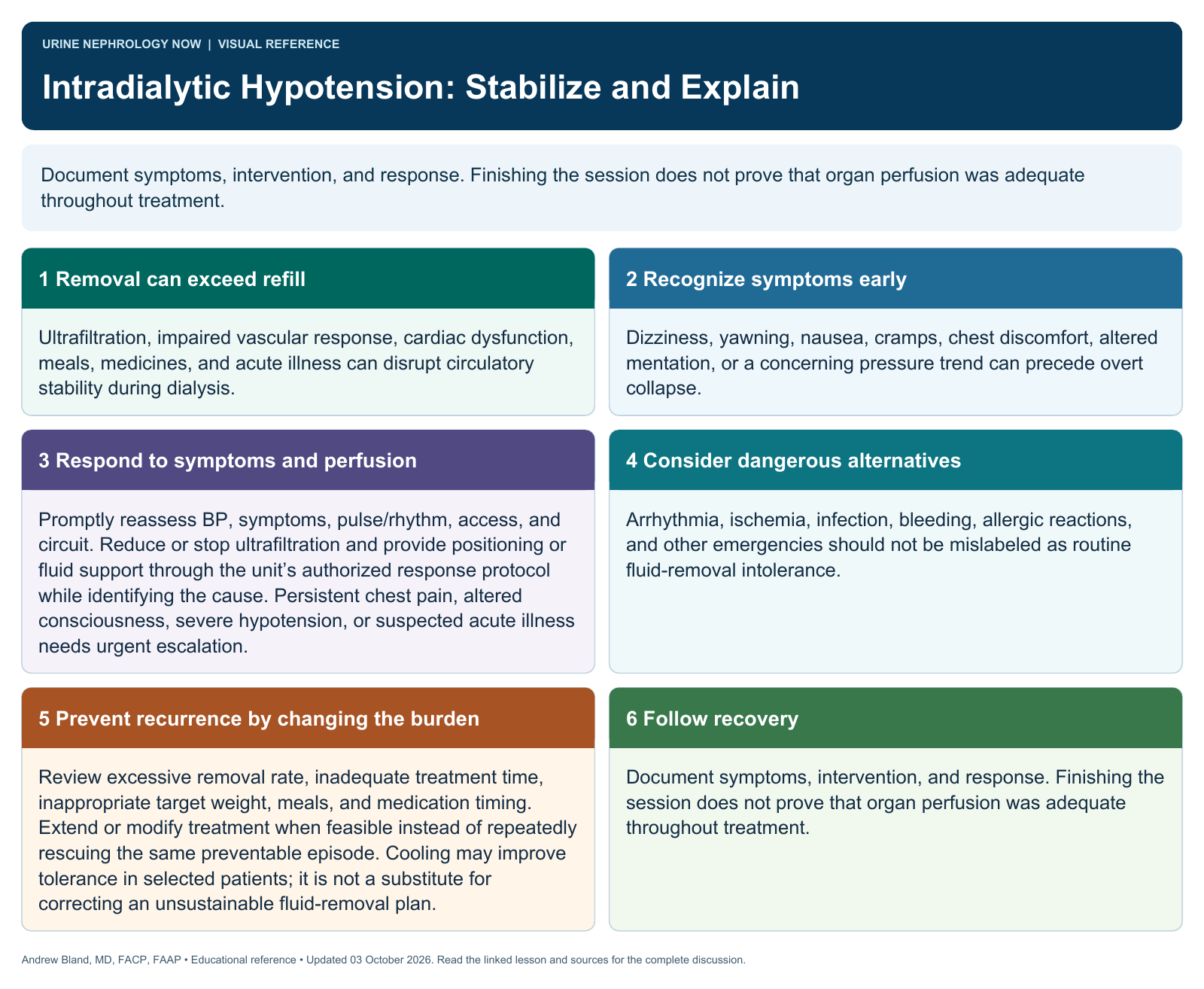
Document symptoms, intervention, and response. Finishing the session does not prove that organ perfusion was adequate throughout treatment.
Text version
Removal can exceed refill
Ultrafiltration, impaired vascular response, cardiac dysfunction, meals, medicines, and acute illness can disrupt circulatory stability during dialysis.
Recognize symptoms early
Dizziness, yawning, nausea, cramps, chest discomfort, altered mentation, or a concerning pressure trend can precede overt collapse.
Use the immediate protocol
Assess the patient and circuit, modify treatment and provide support through the authorized unit response, and escalate severe or persistent instability.
Consider dangerous alternatives
Arrhythmia, ischemia, infection, bleeding, allergic reactions, and other emergencies should not be mislabeled as routine fluid-removal intolerance.
Prevent recurrence
Review target weight, ultrafiltration rate, session time, medication timing, and selected strategies such as temperature adjustment with the team.
Follow recovery
Document symptoms, intervention, and response. Finishing the session does not prove that organ perfusion was adequate throughout treatment.
Continue learning
This graphic summarizes a topic. The full educational pages provide the broader discussion and references.