Visual summary
Reassess after changes and measure the broader pressure burden. Success is not simply forcing one intradialytic number lower.
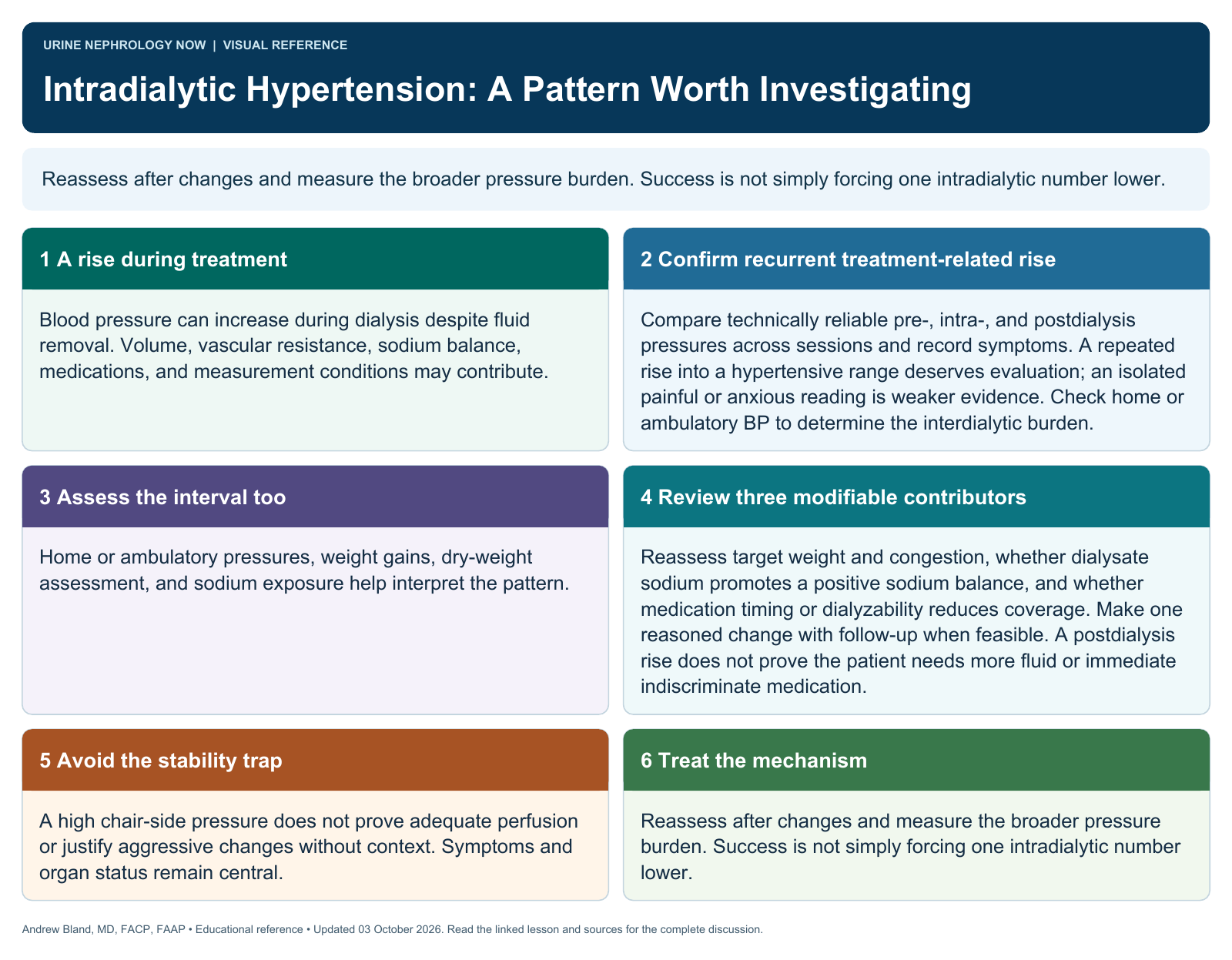
Text version
A rise during treatment
Blood pressure can increase during dialysis despite fluid removal. Volume, vascular resistance, sodium balance, medications, and measurement conditions may contribute.
Confirm recurrent treatment-related rise
Compare technically reliable pre-, intra-, and postdialysis pressures across sessions and record symptoms. A repeated rise into a hypertensive range deserves evaluation; an isolated painful or anxious reading is weaker evidence. Check home or ambulatory BP to determine the interdialytic burden.
Assess the interval too
Home or ambulatory pressures, weight gains, dry-weight assessment, and sodium exposure help interpret the pattern.
Review three modifiable contributors
Reassess target weight and congestion, whether dialysate sodium promotes a positive sodium balance, and whether medication timing or dialyzability reduces coverage. Make one reasoned change with follow-up when feasible. A postdialysis rise does not prove the patient needs more fluid or immediate indiscriminate medication.
Avoid the stability trap
A high chair-side pressure does not prove adequate perfusion or justify aggressive changes without context. Symptoms and organ status remain central.
Treat the mechanism
Reassess after changes and measure the broader pressure burden. Success is not simply forcing one intradialytic number lower.