Visual summary
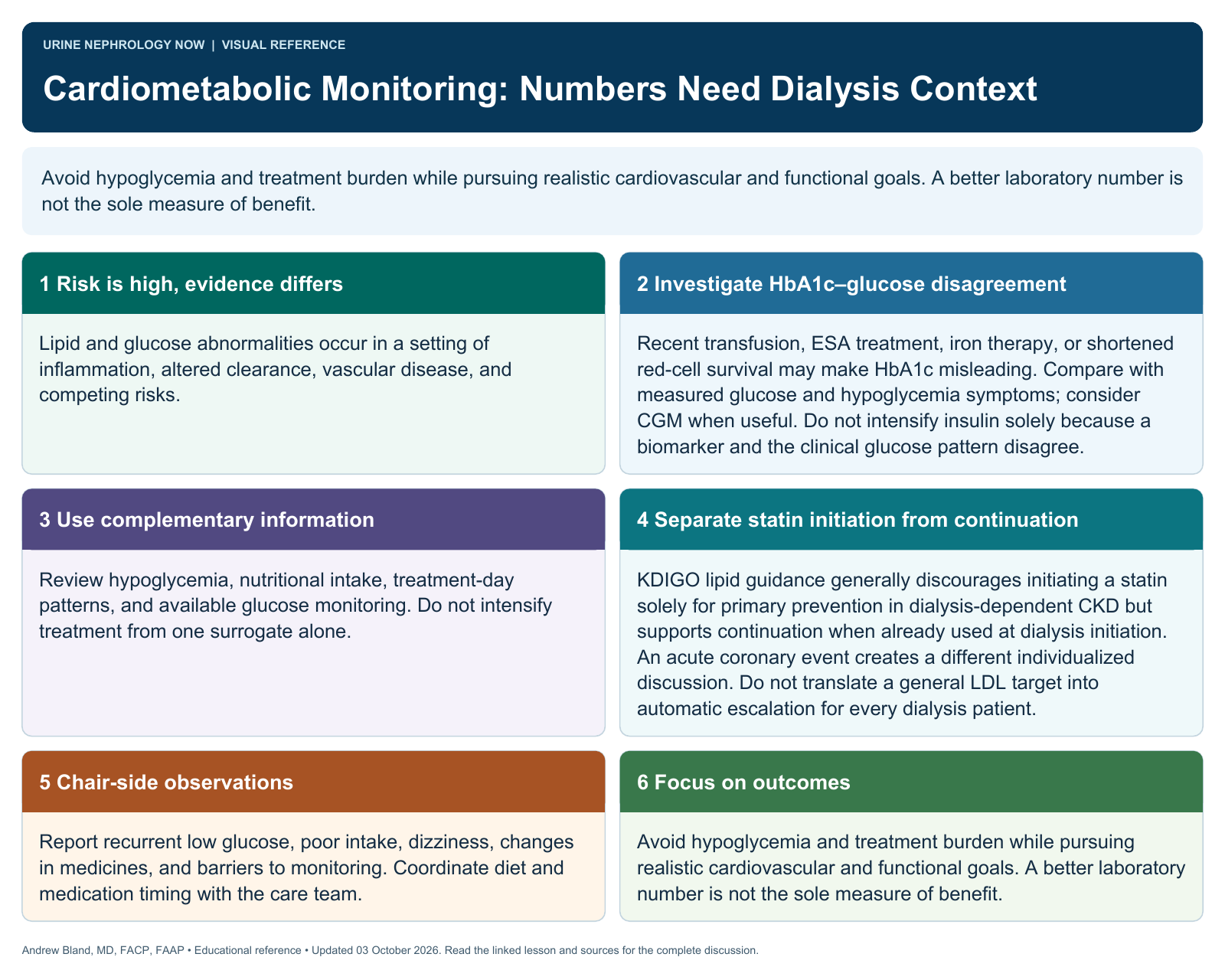
Avoid hypoglycemia and treatment burden while pursuing realistic cardiovascular and functional goals. A better laboratory number is not the sole measure of benefit.
Text version
Risk is high, evidence differs
Lipid and glucose abnormalities occur in a setting of inflammation, altered clearance, vascular disease, and competing risks.
Interpret glycemia carefully
Anemia, shortened red-cell survival, transfusion, and erythropoiesis treatment can affect HbA1c. Glucose patterns and symptoms may tell a different story.
Use complementary information
Review hypoglycemia, nutritional intake, treatment-day patterns, and available glucose monitoring. Do not intensify treatment from one surrogate alone.
Individualize medication review
Distinguish starting a new lipid or glucose therapy from continuing an established one. Dialysis-specific evidence and drug handling matter.
Chair-side observations
Report recurrent low glucose, poor intake, dizziness, changes in medicines, and barriers to monitoring. Coordinate diet and medication timing with the care team.
Focus on outcomes
Avoid hypoglycemia and treatment burden while pursuing realistic cardiovascular and functional goals. A better laboratory number is not the sole measure of benefit.
Continue learning
This graphic summarizes a topic. The full educational pages provide the broader discussion and references.