Visual summary
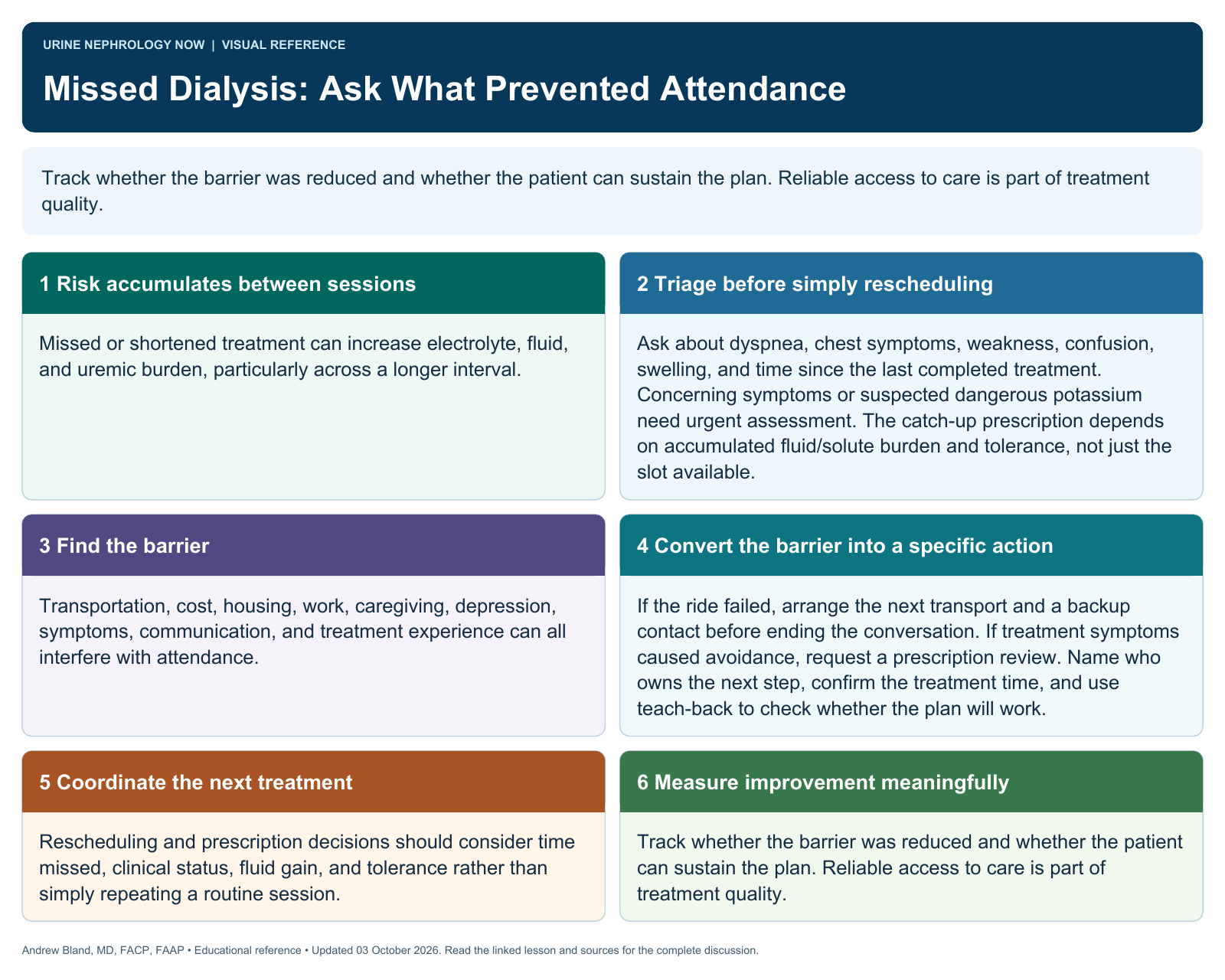
Track whether the barrier was reduced and whether the patient can sustain the plan. Reliable access to care is part of treatment quality.
Text version
Risk accumulates between sessions
Missed or shortened treatment can increase electrolyte, fluid, and uremic burden, particularly across a longer interval.
Triage before simply rescheduling
Ask about dyspnea, chest symptoms, weakness, confusion, swelling, and time since the last completed treatment. Concerning symptoms or suspected dangerous potassium need urgent assessment. The catch-up prescription depends on accumulated fluid/solute burden and tolerance, not just the slot available.
Find the barrier
Transportation, cost, housing, work, caregiving, depression, symptoms, communication, and treatment experience can all interfere with attendance.
Convert the barrier into a specific action
If the ride failed, arrange the next transport and a backup contact before ending the conversation. If treatment symptoms caused avoidance, request a prescription review. Name who owns the next step, confirm the treatment time, and use teach-back to check whether the plan will work.
Coordinate the next treatment
Rescheduling and prescription decisions should consider time missed, clinical status, fluid gain, and tolerance rather than simply repeating a routine session.
Measure improvement meaningfully
Track whether the barrier was reduced and whether the patient can sustain the plan. Reliable access to care is part of treatment quality.