Visual summary
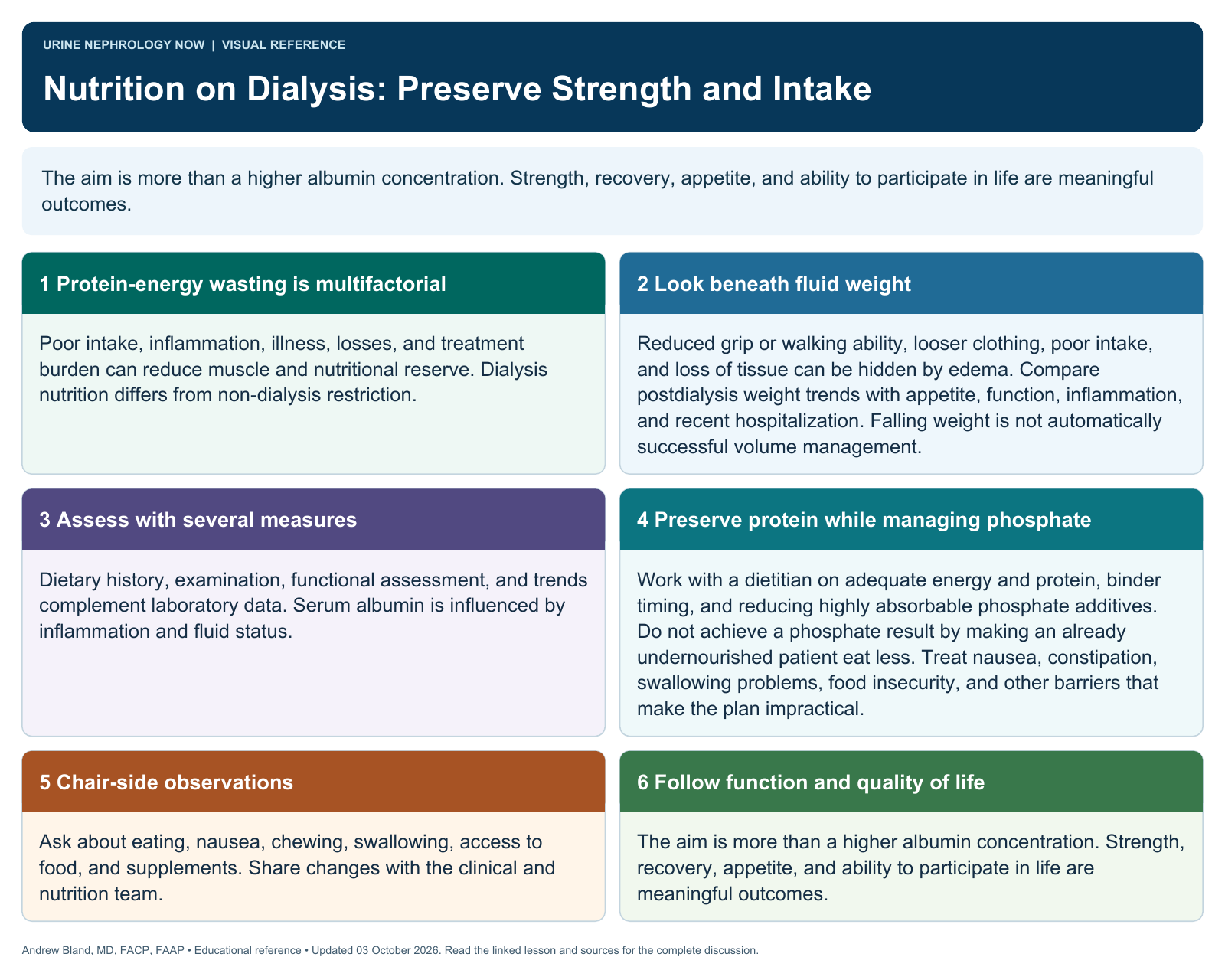
The aim is more than a higher albumin concentration. Strength, recovery, appetite, and ability to participate in life are meaningful outcomes.
Text version
Protein-energy wasting is multifactorial
Poor intake, inflammation, illness, losses, and treatment burden can reduce muscle and nutritional reserve. Dialysis nutrition differs from non-dialysis restriction.
Recognize the trajectory
Unintentional weight loss, declining strength, poor appetite, food insecurity, and reduced function deserve attention even when edema obscures body-weight change.
Assess with several measures
Dietary history, examination, functional assessment, and trends complement laboratory data. Serum albumin is influenced by inflammation and fluid status.
Individualize support
Coordinate dietitian input, adequate energy and protein, symptom control, and manageable potassium/phosphate strategies rather than excessive blanket food restriction.
Chair-side observations
Ask about eating, nausea, chewing, swallowing, access to food, and supplements. Share changes with the clinical and nutrition team.
Follow function and quality of life
The aim is more than a higher albumin concentration. Strength, recovery, appetite, and ability to participate in life are meaningful outcomes.
Continue learning
This graphic summarizes a topic. The full educational pages provide the broader discussion and references.