Visual summary
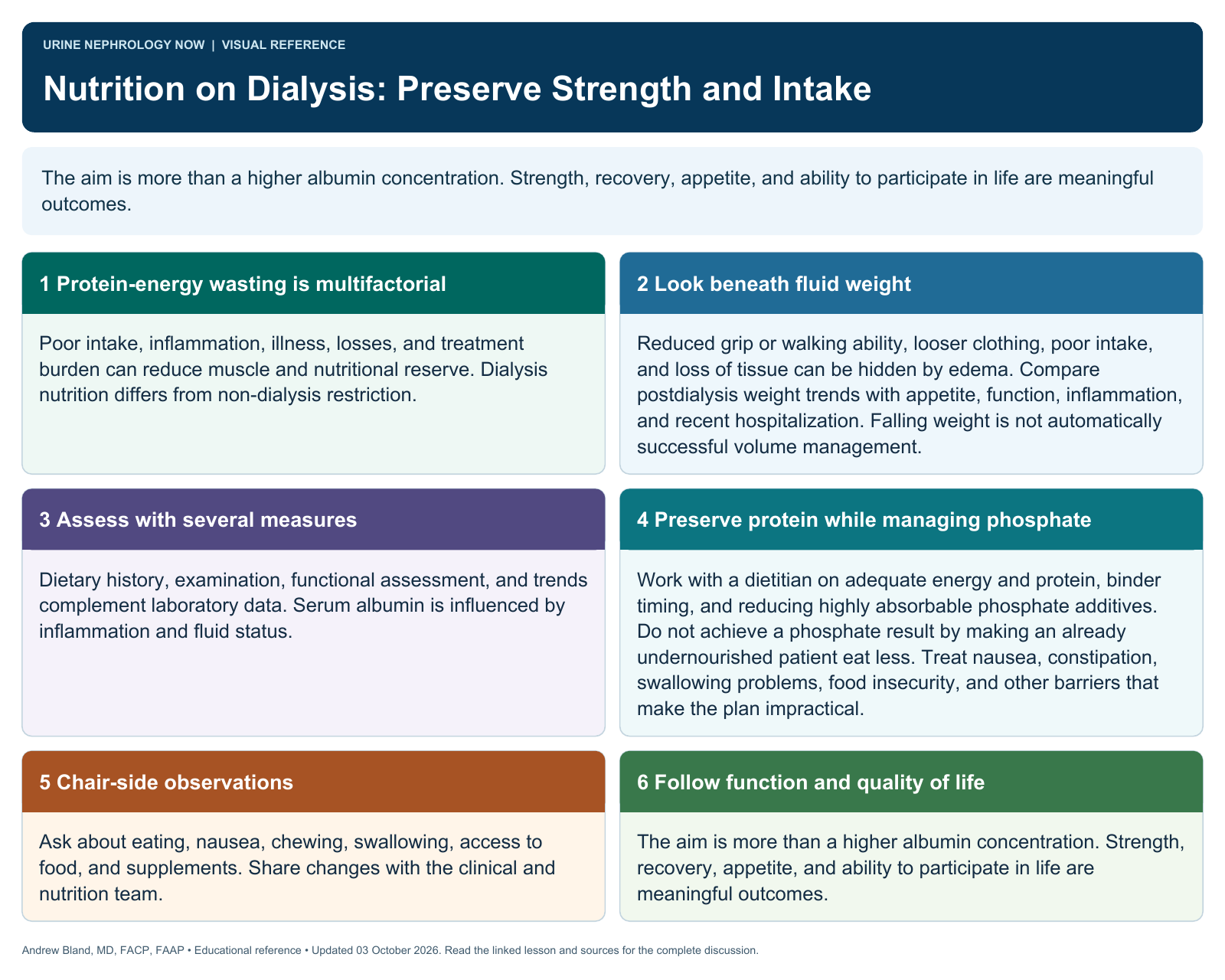
The aim is more than a higher albumin concentration. Strength, recovery, appetite, and ability to participate in life are meaningful outcomes.
Text version
Protein-energy wasting is multifactorial
Poor intake, inflammation, illness, losses, and treatment burden can reduce muscle and nutritional reserve. Dialysis nutrition differs from non-dialysis restriction.
Look beneath fluid weight
Reduced grip or walking ability, looser clothing, poor intake, and loss of tissue can be hidden by edema. Compare postdialysis weight trends with appetite, function, inflammation, and recent hospitalization. Falling weight is not automatically successful volume management.
Assess with several measures
Dietary history, examination, functional assessment, and trends complement laboratory data. Serum albumin is influenced by inflammation and fluid status.
Preserve protein while managing phosphate
Work with a dietitian on adequate energy and protein, binder timing, and reducing highly absorbable phosphate additives. Do not achieve a phosphate result by making an already undernourished patient eat less. Treat nausea, constipation, swallowing problems, food insecurity, and other barriers that make the plan impractical.
Chair-side observations
Ask about eating, nausea, chewing, swallowing, access to food, and supplements. Share changes with the clinical and nutrition team.
Follow function and quality of life
The aim is more than a higher albumin concentration. Strength, recovery, appetite, and ability to participate in life are meaningful outcomes.