Visual summary
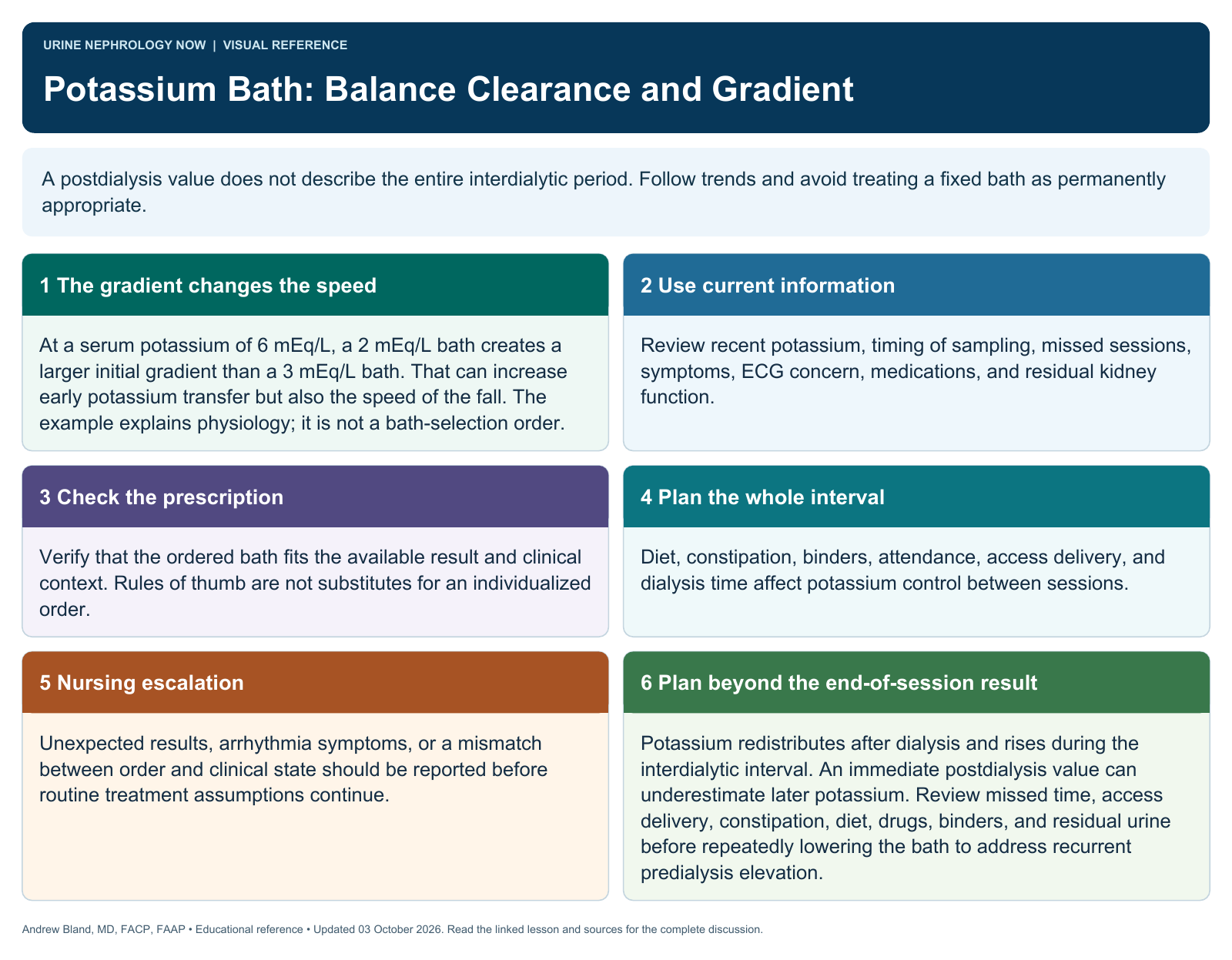
A postdialysis value does not describe the entire interdialytic period. Follow trends and avoid treating a fixed bath as permanently appropriate.
Text version
A gradient drives removal
Serum-to-dialysate potassium difference influences the rate of transfer. A larger gradient can increase clearance and produce a more abrupt shift.
Use current information
Review recent potassium, timing of sampling, missed sessions, symptoms, ECG concern, medications, and residual kidney function.
Check the prescription
Verify that the ordered bath fits the available result and clinical context. Rules of thumb are not substitutes for an individualized order.
Plan the whole interval
Diet, constipation, binders, attendance, access delivery, and dialysis time affect potassium control between sessions.
Nursing escalation
Unexpected results, arrhythmia symptoms, or a mismatch between order and clinical state should be reported before routine treatment assumptions continue.
Expect rebound and variability
A postdialysis value does not describe the entire interdialytic period. Follow trends and avoid treating a fixed bath as permanently appropriate.
Continue learning
This graphic summarizes a topic. The full educational pages provide the broader discussion and references.