Visual summary
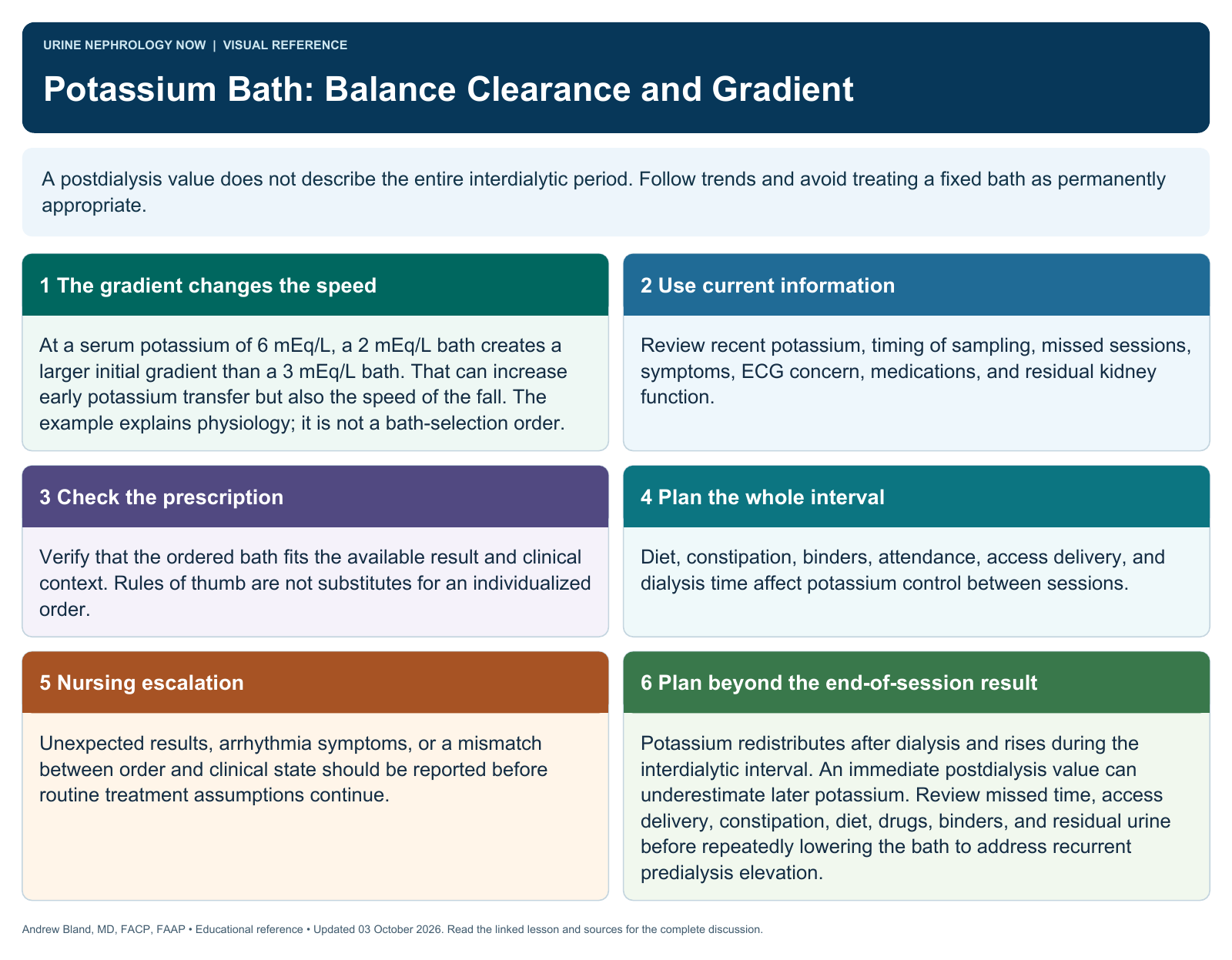
A postdialysis value does not describe the entire interdialytic period. Follow trends and avoid treating a fixed bath as permanently appropriate.
Text version
The gradient changes the speed
At a serum potassium of 6 mEq/L, a 2 mEq/L bath creates a larger initial gradient than a 3 mEq/L bath. That can increase early potassium transfer but also the speed of the fall. The example explains physiology; it is not a bath-selection order.
Use current information
Review recent potassium, timing of sampling, missed sessions, symptoms, ECG concern, medications, and residual kidney function.
Check the prescription
Verify that the ordered bath fits the available result and clinical context. Rules of thumb are not substitutes for an individualized order.
Plan the whole interval
Diet, constipation, binders, attendance, access delivery, and dialysis time affect potassium control between sessions.
Nursing escalation
Unexpected results, arrhythmia symptoms, or a mismatch between order and clinical state should be reported before routine treatment assumptions continue.
Plan beyond the end-of-session result
Potassium redistributes after dialysis and rises during the interdialytic interval. An immediate postdialysis value can underestimate later potassium. Review missed time, access delivery, constipation, diet, drugs, binders, and residual urine before repeatedly lowering the bath to address recurrent predialysis elevation.