Visual summary
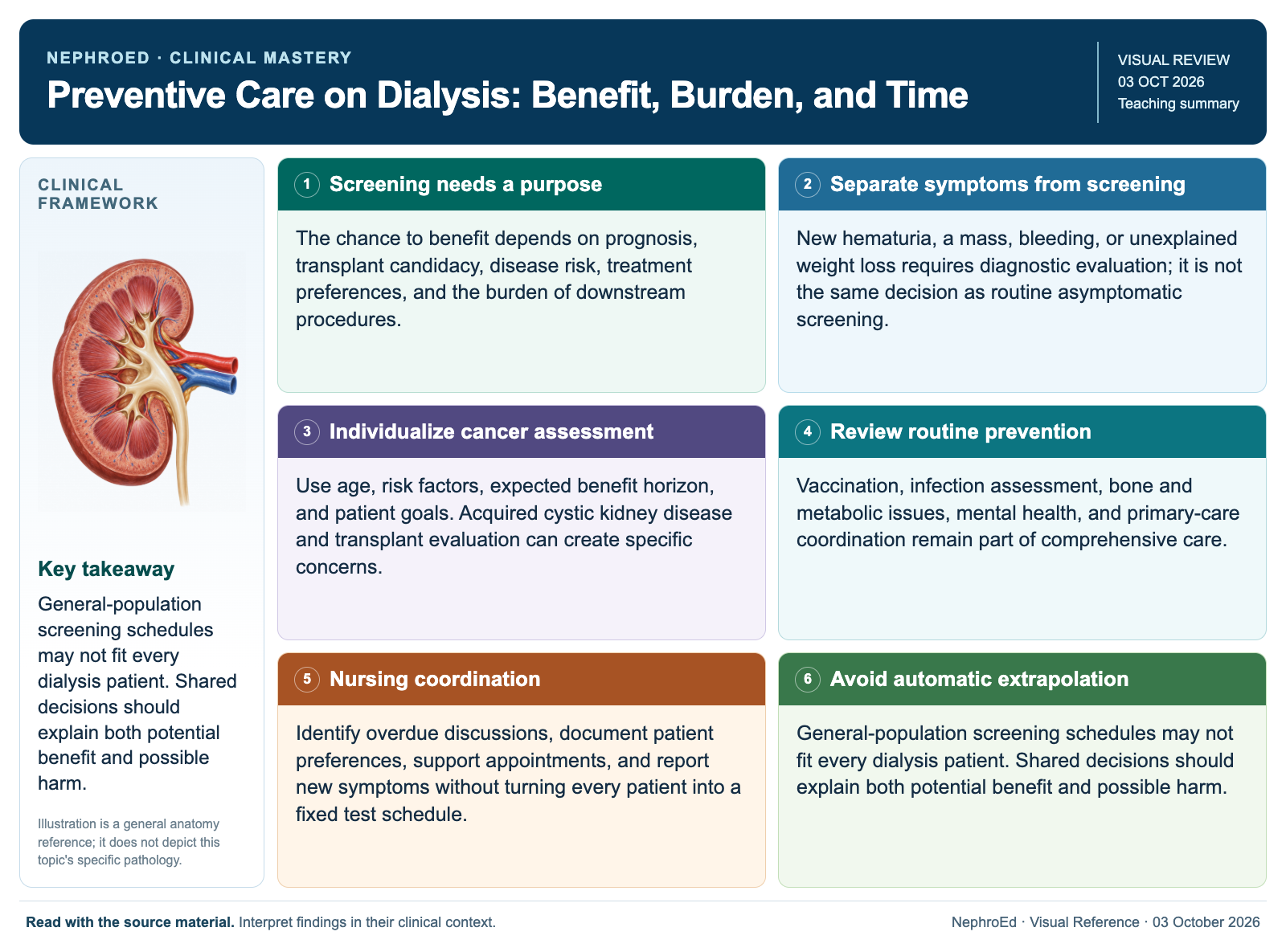
General-population screening schedules may not fit every dialysis patient. Shared decisions should explain both potential benefit and possible harm.
Text version
Screening needs a purpose
The chance to benefit depends on prognosis, transplant candidacy, disease risk, treatment preferences, and the burden of downstream procedures.
Separate symptoms from screening
New hematuria, a mass, bleeding, or unexplained weight loss requires diagnostic evaluation; it is not the same decision as routine asymptomatic screening.
Individualize cancer assessment
Use age, risk factors, expected benefit horizon, and patient goals. Acquired cystic kidney disease and transplant evaluation can create specific concerns.
Review routine prevention
Vaccination, infection assessment, bone and metabolic issues, mental health, and primary-care coordination remain part of comprehensive care.
Nursing coordination
Identify overdue discussions, document patient preferences, support appointments, and report new symptoms without turning every patient into a fixed test schedule.
Avoid automatic extrapolation
General-population screening schedules may not fit every dialysis patient. Shared decisions should explain both potential benefit and possible harm.
Continue learning
This graphic summarizes a topic. The full educational pages provide the broader discussion and references.