Visual summary
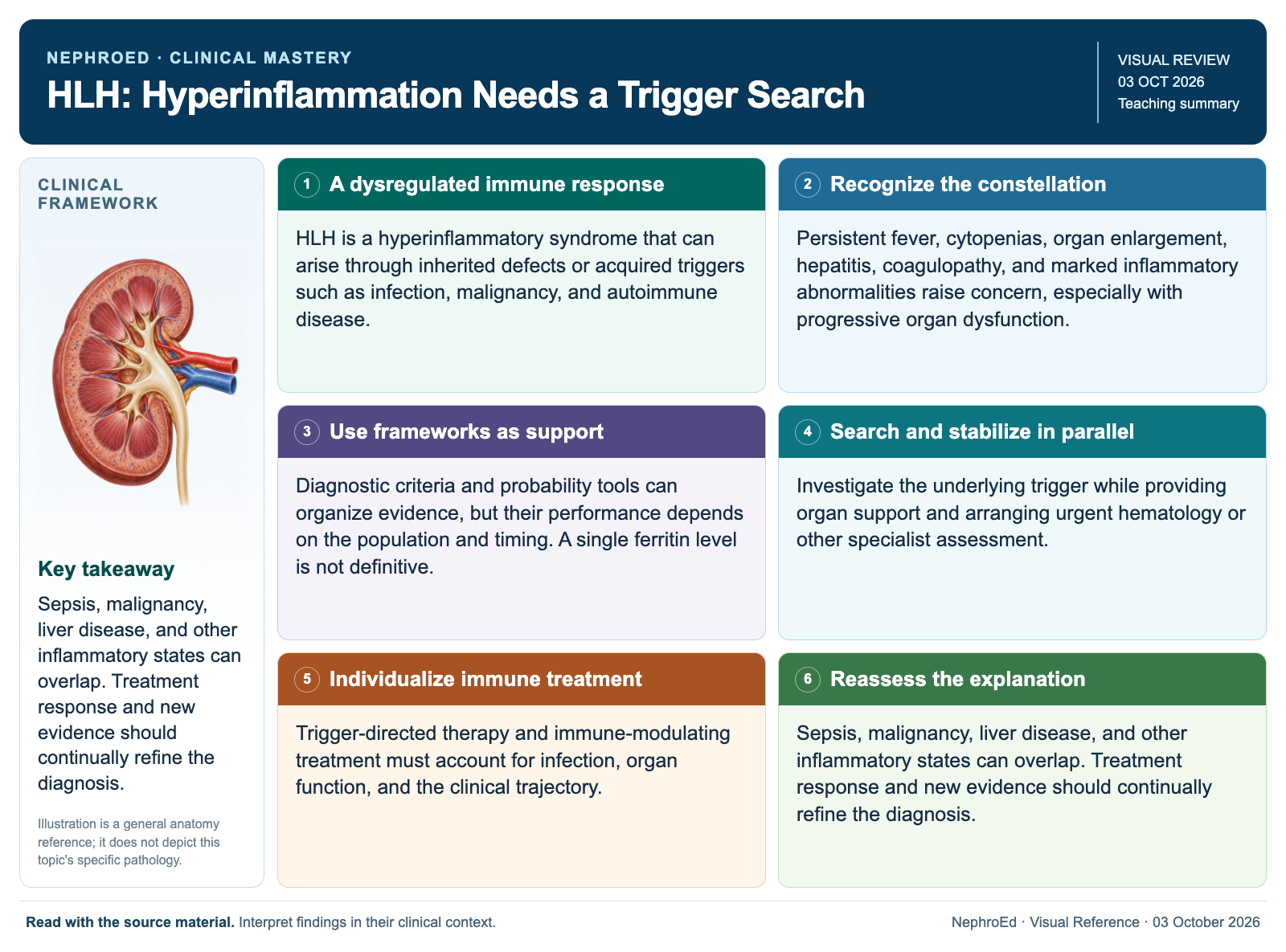
Sepsis, malignancy, liver disease, and other inflammatory states can overlap. Treatment response and new evidence should continually refine the diagnosis.
Text version
A dysregulated immune response
HLH is a hyperinflammatory syndrome that can arise through inherited defects or acquired triggers such as infection, malignancy, and autoimmune disease.
Recognize the constellation
Persistent fever, cytopenias, organ enlargement, hepatitis, coagulopathy, and marked inflammatory abnormalities raise concern, especially with progressive organ dysfunction.
Use frameworks as support
Diagnostic criteria and probability tools can organize evidence, but their performance depends on the population and timing. A single ferritin level is not definitive.
Search and stabilize in parallel
Investigate the underlying trigger while providing organ support and arranging urgent hematology or other specialist assessment.
Individualize immune treatment
Trigger-directed therapy and immune-modulating treatment must account for infection, organ function, and the clinical trajectory.
Reassess the explanation
Sepsis, malignancy, liver disease, and other inflammatory states can overlap. Treatment response and new evidence should continually refine the diagnosis.
Continue learning
This graphic summarizes a topic. The full educational pages provide the broader discussion and references.