Visual summary
Sepsis, malignancy, liver disease, and other inflammatory states can overlap. Treatment response and new evidence should continually refine the diagnosis.
Text version
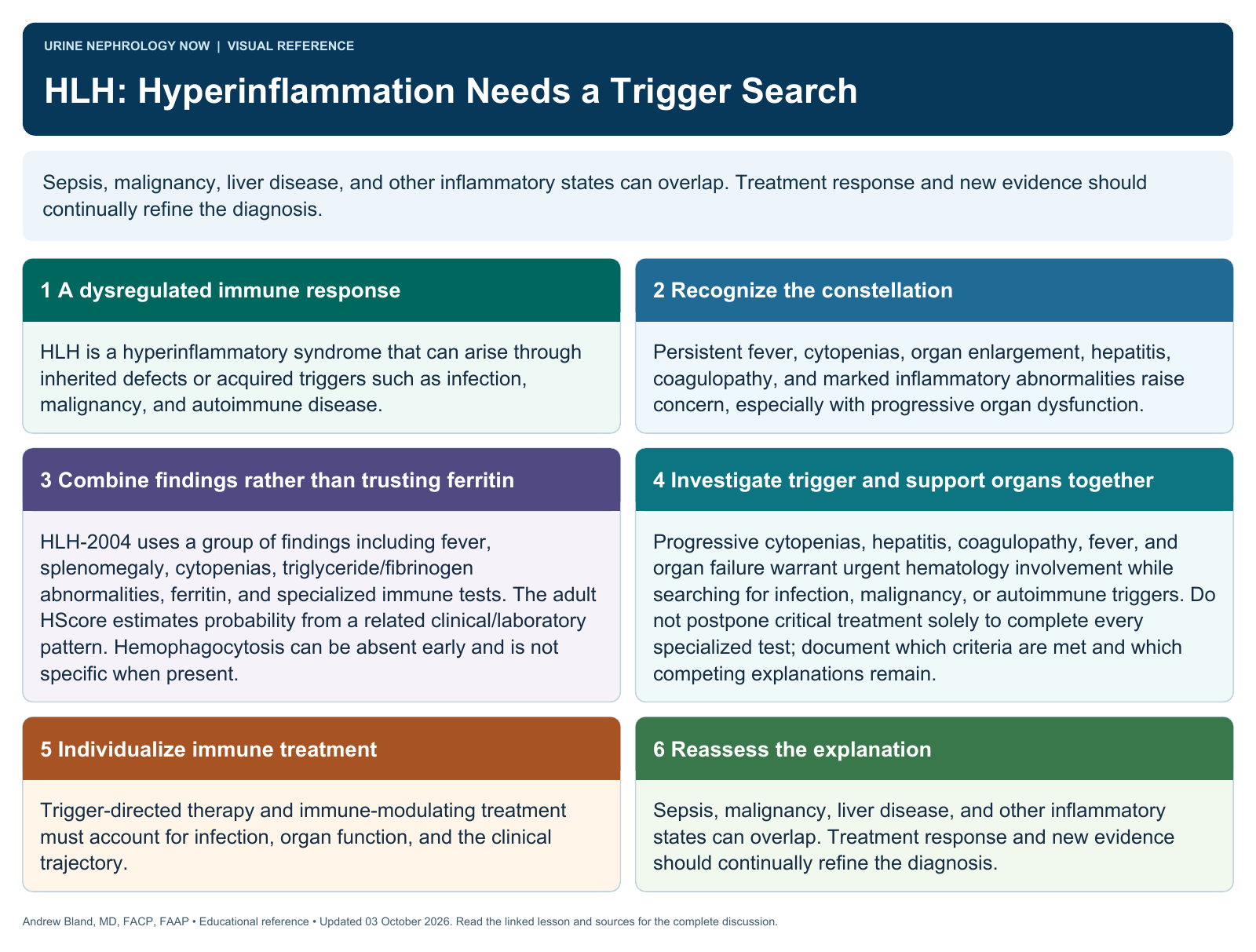
A dysregulated immune response
HLH is a hyperinflammatory syndrome that can arise through inherited defects or acquired triggers such as infection, malignancy, and autoimmune disease.
Recognize the constellation
Persistent fever, cytopenias, organ enlargement, hepatitis, coagulopathy, and marked inflammatory abnormalities raise concern, especially with progressive organ dysfunction.
Combine findings rather than trusting ferritin
HLH-2004 uses a group of findings including fever, splenomegaly, cytopenias, triglyceride/fibrinogen abnormalities, ferritin, and specialized immune tests. The adult HScore estimates probability from a related clinical/laboratory pattern. Hemophagocytosis can be absent early and is not specific when present.
Investigate trigger and support organs together
Progressive cytopenias, hepatitis, coagulopathy, fever, and organ failure warrant urgent hematology involvement while searching for infection, malignancy, or autoimmune triggers. Do not postpone critical treatment solely to complete every specialized test; document which criteria are met and which competing explanations remain.
Individualize immune treatment
Trigger-directed therapy and immune-modulating treatment must account for infection, organ function, and the clinical trajectory.
Reassess the explanation
Sepsis, malignancy, liver disease, and other inflammatory states can overlap. Treatment response and new evidence should continually refine the diagnosis.