Visual summary
Intrapulmonary shunting and elevated pulmonary vascular resistance are different physiological problems. The diagnostic distinction changes management.
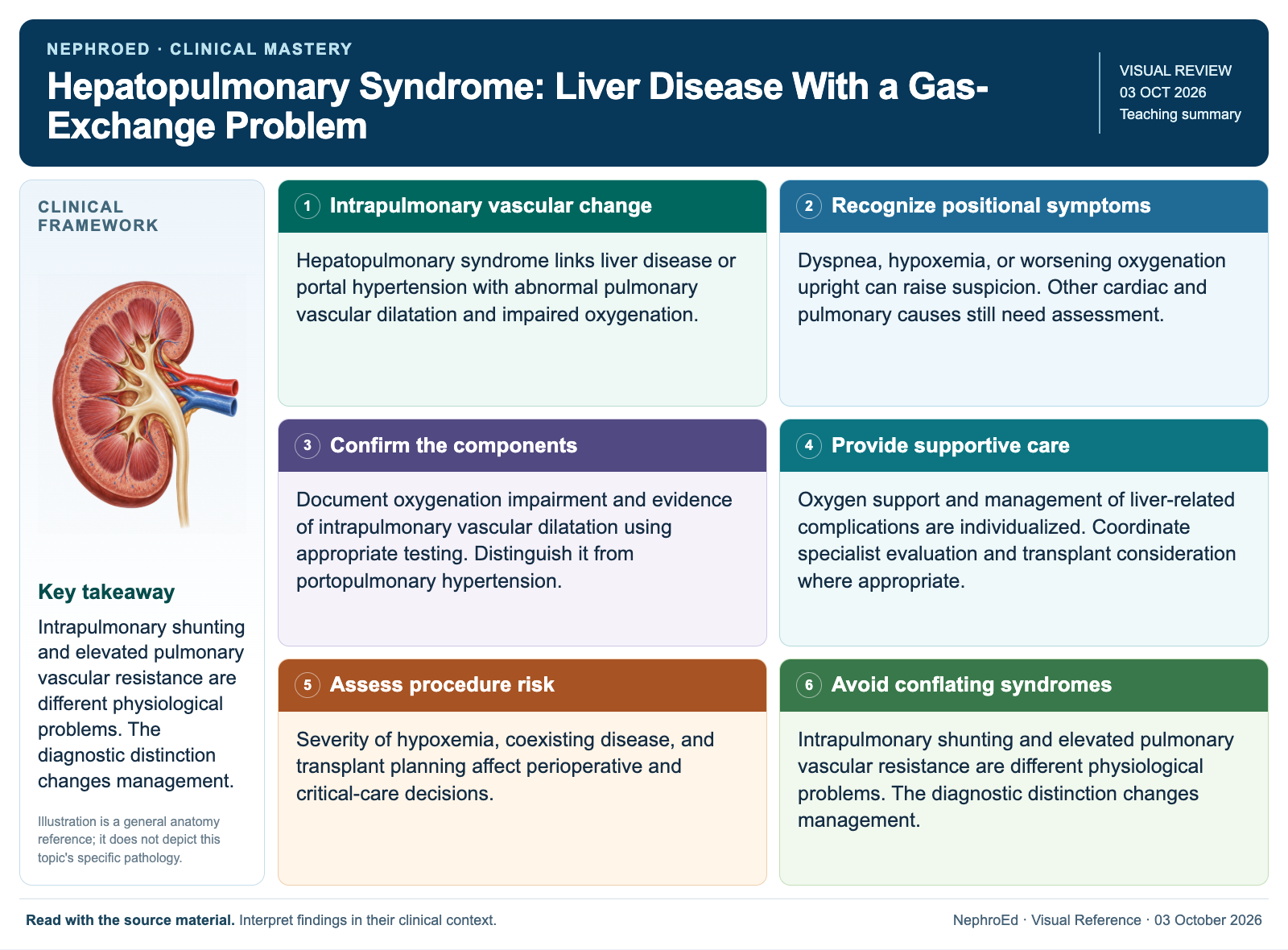
Text version
Intrapulmonary vascular change
Hepatopulmonary syndrome links liver disease or portal hypertension with abnormal pulmonary vascular dilatation and impaired oxygenation.
Recognize positional symptoms
Dyspnea, hypoxemia, or worsening oxygenation upright can raise suspicion. Other cardiac and pulmonary causes still need assessment.
Confirm the components
Document oxygenation impairment and evidence of intrapulmonary vascular dilatation using appropriate testing. Distinguish it from portopulmonary hypertension.
Provide supportive care
Oxygen support and management of liver-related complications are individualized. Coordinate specialist evaluation and transplant consideration where appropriate.
Assess procedure risk
Severity of hypoxemia, coexisting disease, and transplant planning affect perioperative and critical-care decisions.
Avoid conflating syndromes
Intrapulmonary shunting and elevated pulmonary vascular resistance are different physiological problems. The diagnostic distinction changes management.
Continue learning
This graphic summarizes a topic. The full educational pages provide the broader discussion and references.