Visual summary
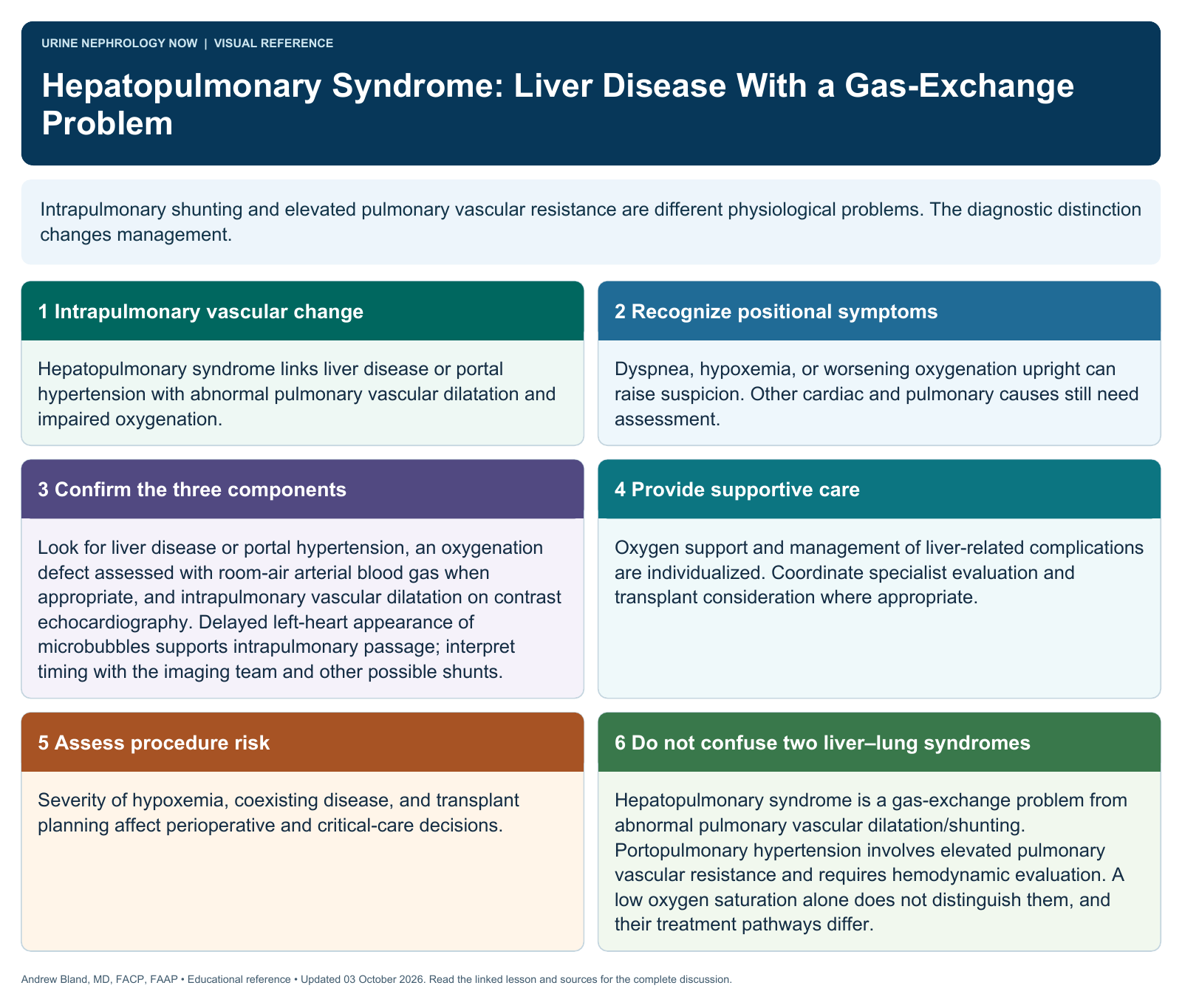
Intrapulmonary shunting and elevated pulmonary vascular resistance are different physiological problems. The diagnostic distinction changes management.
Text version
Intrapulmonary vascular change
Hepatopulmonary syndrome links liver disease or portal hypertension with abnormal pulmonary vascular dilatation and impaired oxygenation.
Recognize positional symptoms
Dyspnea, hypoxemia, or worsening oxygenation upright can raise suspicion. Other cardiac and pulmonary causes still need assessment.
Confirm the three components
Look for liver disease or portal hypertension, an oxygenation defect assessed with room-air arterial blood gas when appropriate, and intrapulmonary vascular dilatation on contrast echocardiography. Delayed left-heart appearance of microbubbles supports intrapulmonary passage; interpret timing with the imaging team and other possible shunts.
Provide supportive care
Oxygen support and management of liver-related complications are individualized. Coordinate specialist evaluation and transplant consideration where appropriate.
Assess procedure risk
Severity of hypoxemia, coexisting disease, and transplant planning affect perioperative and critical-care decisions.
Do not confuse two liver–lung syndromes
Hepatopulmonary syndrome is a gas-exchange problem from abnormal pulmonary vascular dilatation/shunting. Portopulmonary hypertension involves elevated pulmonary vascular resistance and requires hemodynamic evaluation. A low oxygen saturation alone does not distinguish them, and their treatment pathways differ.