Visual summary
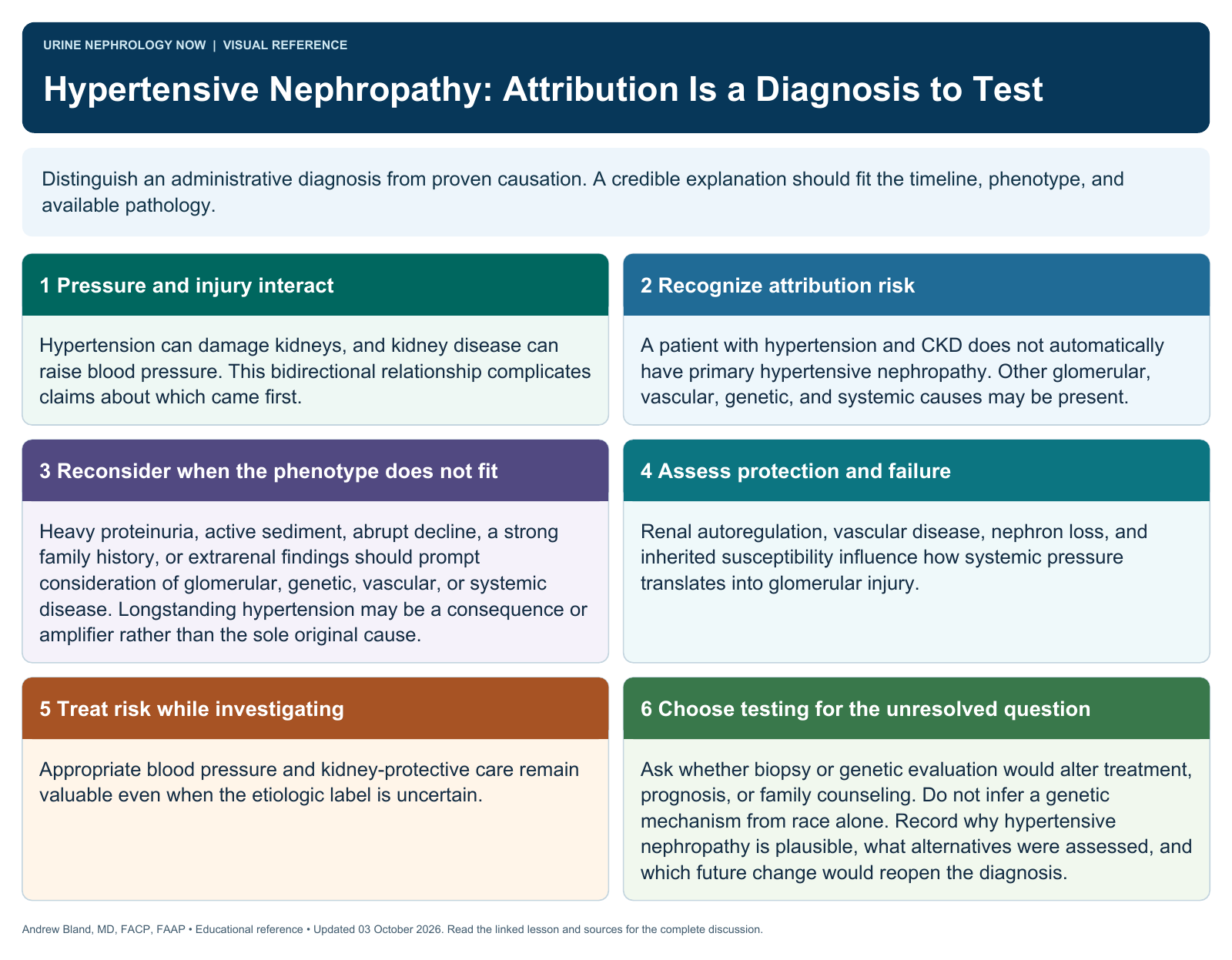
Distinguish an administrative diagnosis from proven causation. A credible explanation should fit the timeline, phenotype, and available pathology.
Text version
Pressure and injury interact
Hypertension can damage kidneys, and kidney disease can raise blood pressure. This bidirectional relationship complicates claims about which came first.
Recognize attribution risk
A patient with hypertension and CKD does not automatically have primary hypertensive nephropathy. Other glomerular, vascular, genetic, and systemic causes may be present.
Look for discordant features
Proteinuria pattern, active sediment, rapid decline, family history, and extrarenal findings can point away from a simple attribution.
Assess protection and failure
Renal autoregulation, vascular disease, nephron loss, and inherited susceptibility influence how systemic pressure translates into glomerular injury.
Treat risk while investigating
Appropriate blood pressure and kidney-protective care remain valuable even when the etiologic label is uncertain.
Use careful language
Distinguish an administrative diagnosis from proven causation. A credible explanation should fit the timeline, phenotype, and available pathology.
Continue learning
This graphic summarizes a topic. The full educational pages provide the broader discussion and references.