Visual summary
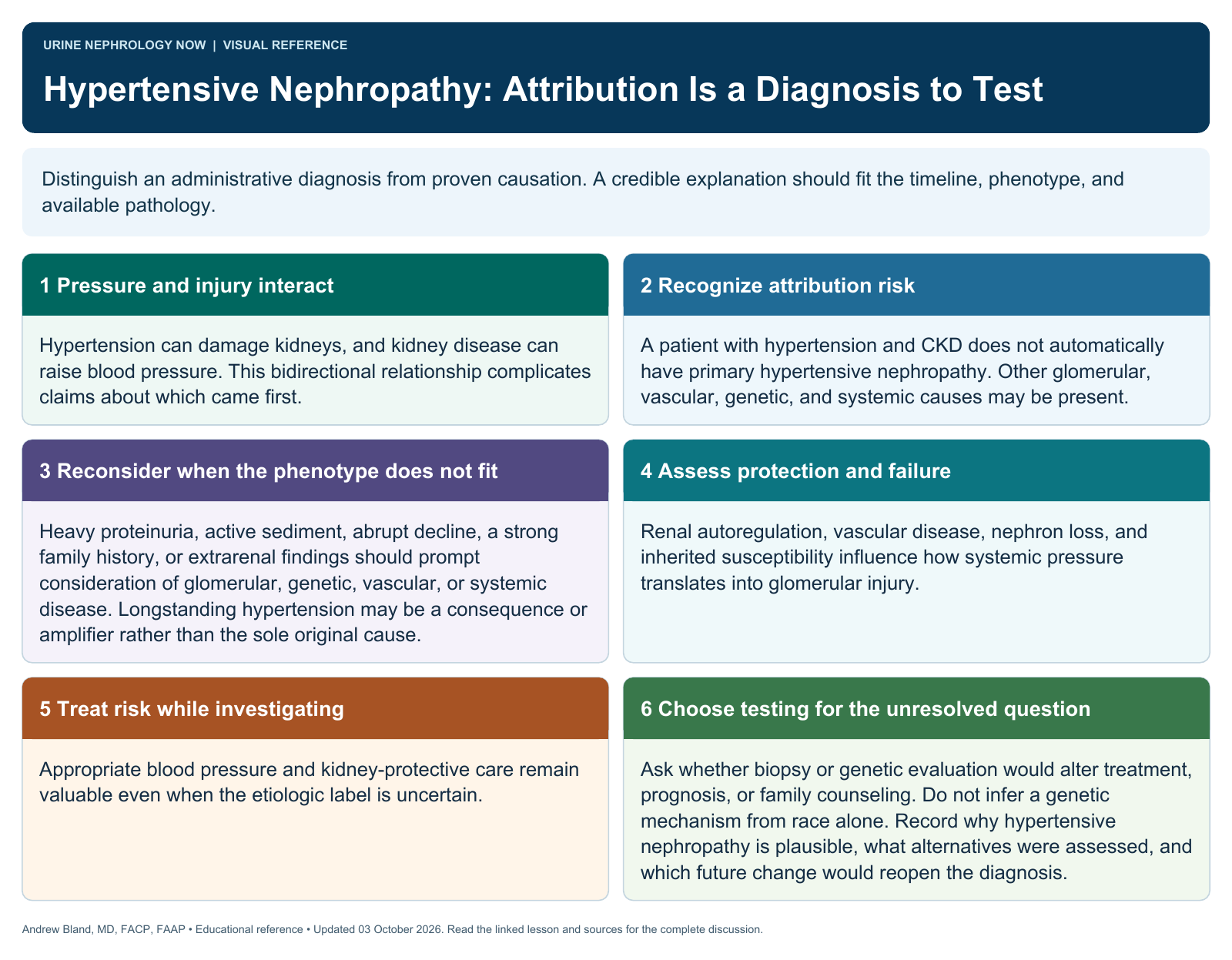
Distinguish an administrative diagnosis from proven causation. A credible explanation should fit the timeline, phenotype, and available pathology.
Text version
Pressure and injury interact
Hypertension can damage kidneys, and kidney disease can raise blood pressure. This bidirectional relationship complicates claims about which came first.
Recognize attribution risk
A patient with hypertension and CKD does not automatically have primary hypertensive nephropathy. Other glomerular, vascular, genetic, and systemic causes may be present.
Reconsider when the phenotype does not fit
Heavy proteinuria, active sediment, abrupt decline, a strong family history, or extrarenal findings should prompt consideration of glomerular, genetic, vascular, or systemic disease. Longstanding hypertension may be a consequence or amplifier rather than the sole original cause.
Assess protection and failure
Renal autoregulation, vascular disease, nephron loss, and inherited susceptibility influence how systemic pressure translates into glomerular injury.
Treat risk while investigating
Appropriate blood pressure and kidney-protective care remain valuable even when the etiologic label is uncertain.
Choose testing for the unresolved question
Ask whether biopsy or genetic evaluation would alter treatment, prognosis, or family counseling. Do not infer a genetic mechanism from race alone. Record why hypertensive nephropathy is plausible, what alternatives were assessed, and which future change would reopen the diagnosis.