Visual summary
Definitive care follows the cause. Recheck medications, calcium intake, kidney effects, and treatment-related electrolyte changes.
Text version
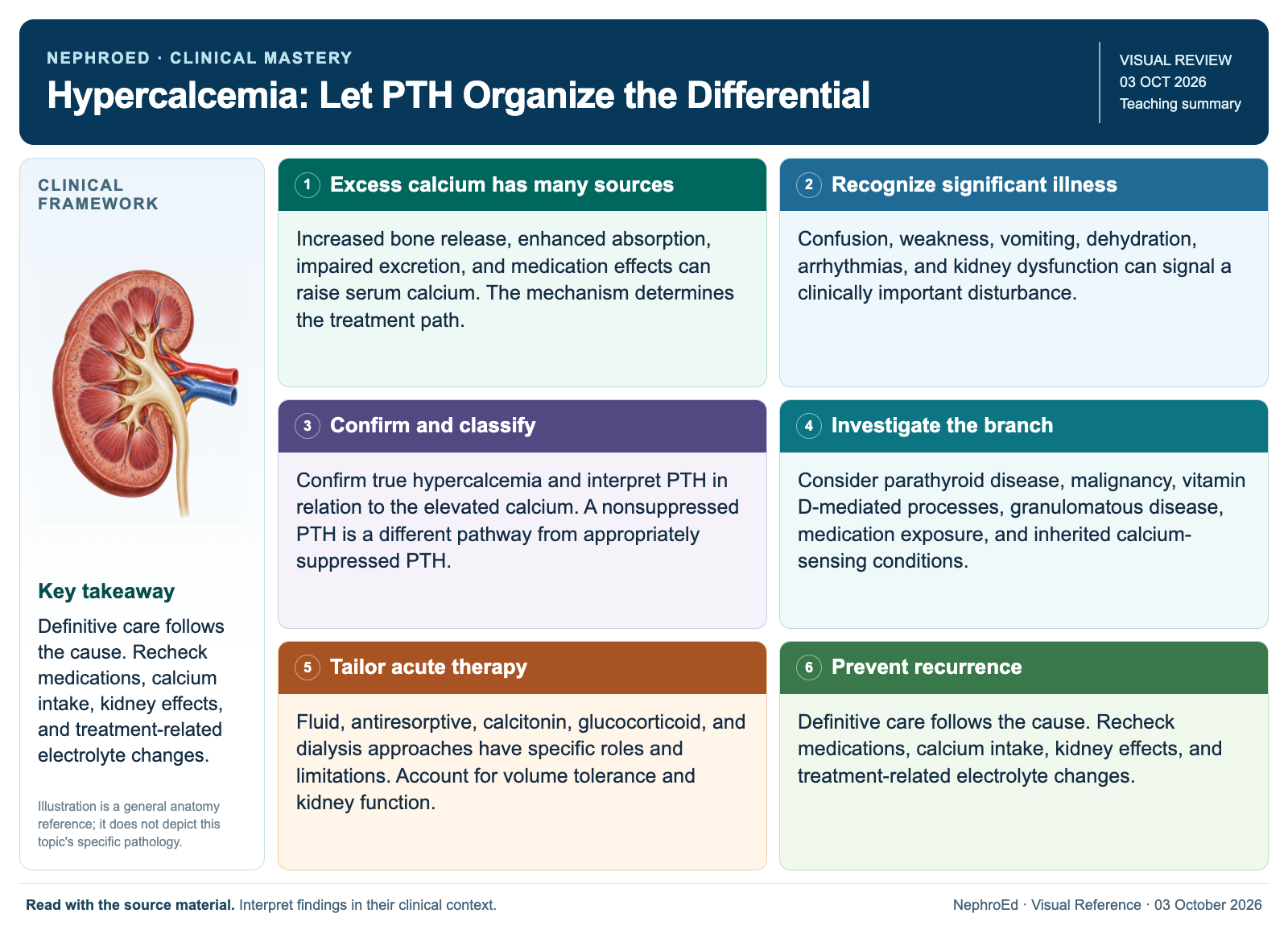
Excess calcium has many sources
Increased bone release, enhanced absorption, impaired excretion, and medication effects can raise serum calcium. The mechanism determines the treatment path.
Recognize significant illness
Confusion, weakness, vomiting, dehydration, arrhythmias, and kidney dysfunction can signal a clinically important disturbance.
Confirm and classify
Confirm true hypercalcemia and interpret PTH in relation to the elevated calcium. A nonsuppressed PTH is a different pathway from appropriately suppressed PTH.
Investigate the branch
Consider parathyroid disease, malignancy, vitamin D-mediated processes, granulomatous disease, medication exposure, and inherited calcium-sensing conditions.
Tailor acute therapy
Fluid, antiresorptive, calcitonin, glucocorticoid, and dialysis approaches have specific roles and limitations. Account for volume tolerance and kidney function.
Prevent recurrence
Definitive care follows the cause. Recheck medications, calcium intake, kidney effects, and treatment-related electrolyte changes.
Continue learning
This graphic summarizes a topic. The full educational pages provide the broader discussion and references.