Visual summary
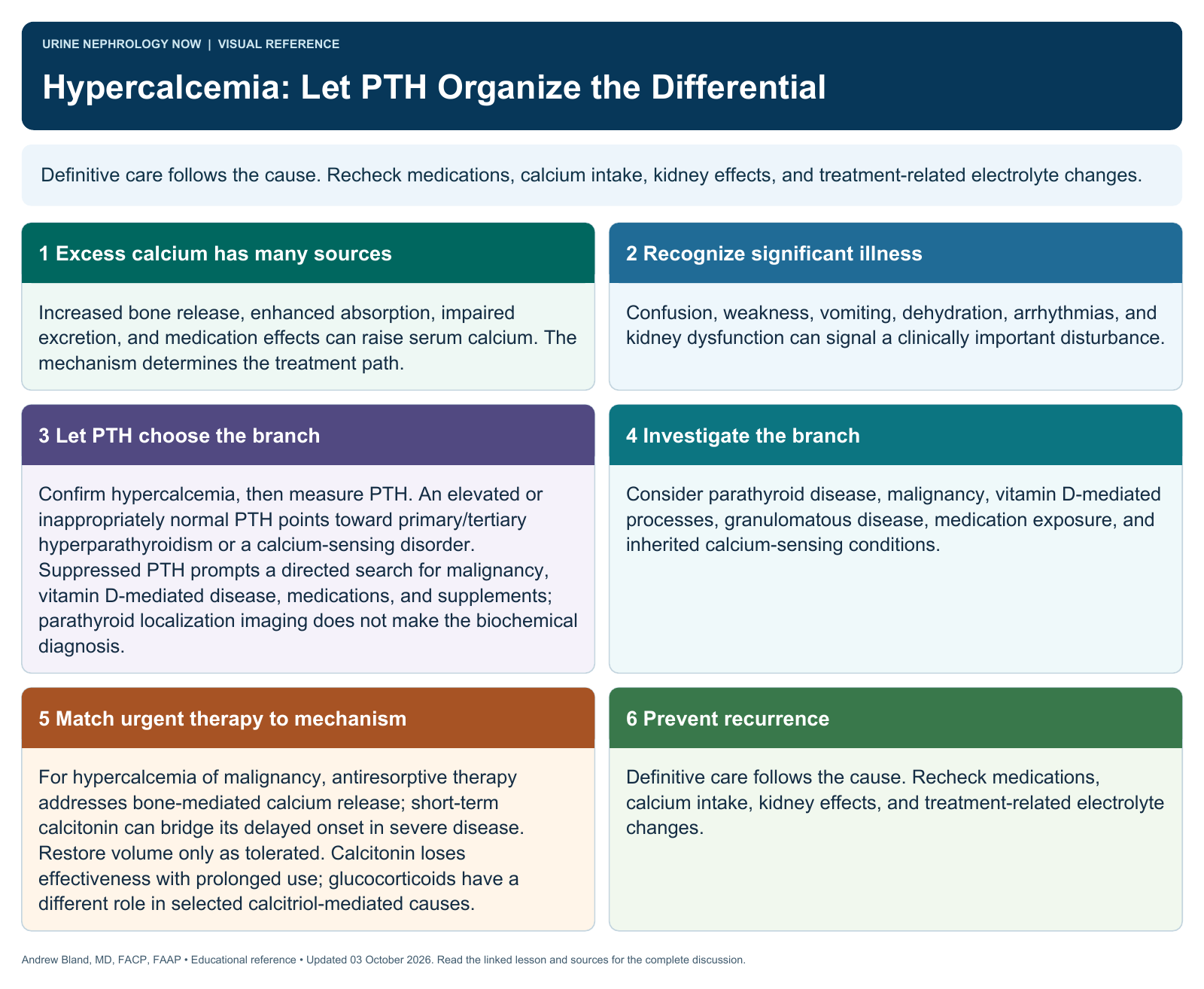
Definitive care follows the cause. Recheck medications, calcium intake, kidney effects, and treatment-related electrolyte changes.
Text version
Excess calcium has many sources
Increased bone release, enhanced absorption, impaired excretion, and medication effects can raise serum calcium. The mechanism determines the treatment path.
Recognize significant illness
Confusion, weakness, vomiting, dehydration, arrhythmias, and kidney dysfunction can signal a clinically important disturbance.
Let PTH choose the branch
Confirm hypercalcemia, then measure PTH. An elevated or inappropriately normal PTH points toward primary/tertiary hyperparathyroidism or a calcium-sensing disorder. Suppressed PTH prompts a directed search for malignancy, vitamin D-mediated disease, medications, and supplements; parathyroid localization imaging does not make the biochemical diagnosis.
Investigate the branch
Consider parathyroid disease, malignancy, vitamin D-mediated processes, granulomatous disease, medication exposure, and inherited calcium-sensing conditions.
Match urgent therapy to mechanism
For hypercalcemia of malignancy, antiresorptive therapy addresses bone-mediated calcium release; short-term calcitonin can bridge its delayed onset in severe disease. Restore volume only as tolerated. Calcitonin loses effectiveness with prolonged use; glucocorticoids have a different role in selected calcitriol-mediated causes.
Prevent recurrence
Definitive care follows the cause. Recheck medications, calcium intake, kidney effects, and treatment-related electrolyte changes.