Visual summary
The observed sodium trajectory is more important than a calculation alone. Neurologic status, chronicity, and treatment tolerance remain central.
Text version
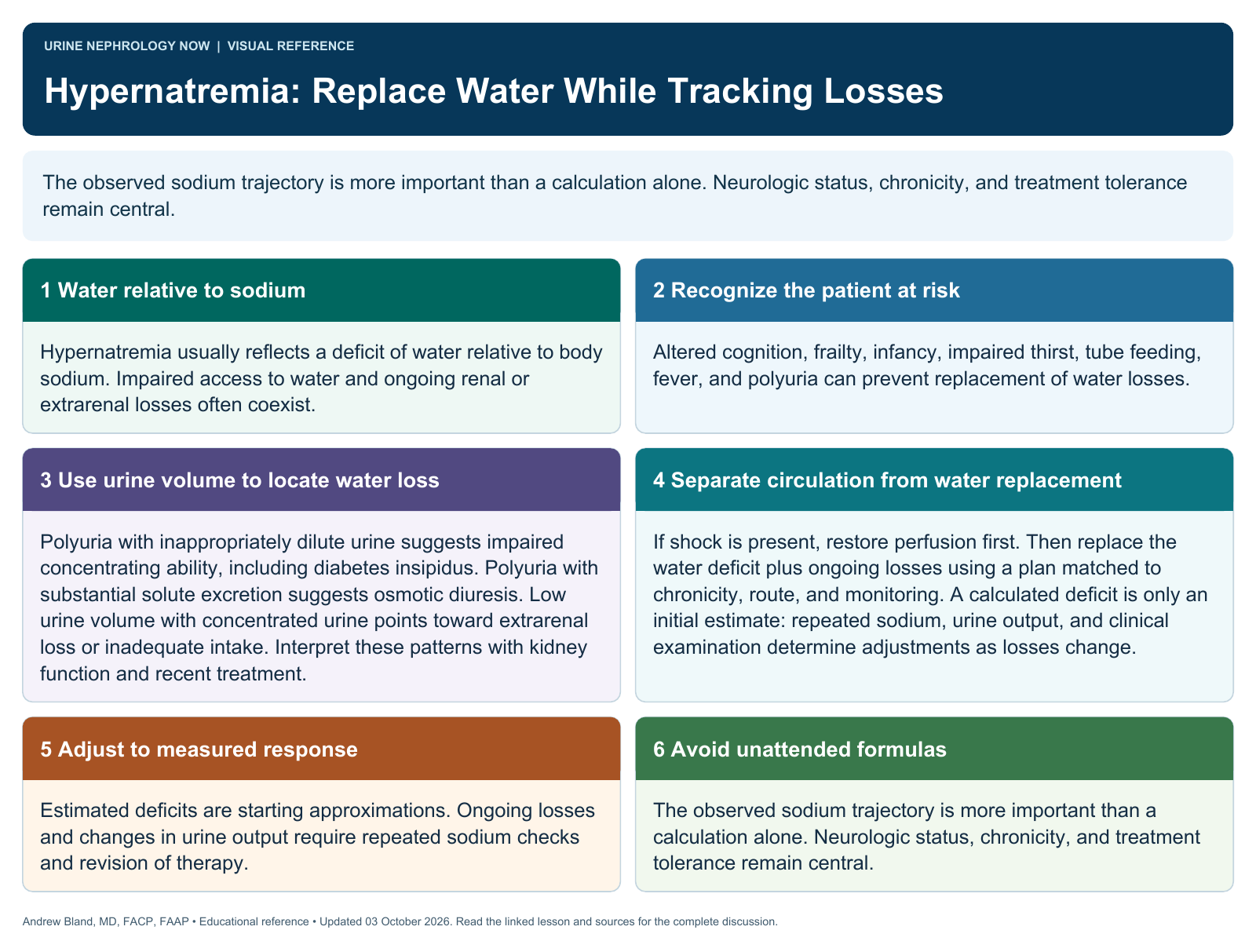
Water relative to sodium
Hypernatremia usually reflects a deficit of water relative to body sodium. Impaired access to water and ongoing renal or extrarenal losses often coexist.
Recognize the patient at risk
Altered cognition, frailty, infancy, impaired thirst, tube feeding, fever, and polyuria can prevent replacement of water losses.
Use urine volume to locate water loss
Polyuria with inappropriately dilute urine suggests impaired concentrating ability, including diabetes insipidus. Polyuria with substantial solute excretion suggests osmotic diuresis. Low urine volume with concentrated urine points toward extrarenal loss or inadequate intake. Interpret these patterns with kidney function and recent treatment.
Separate circulation from water replacement
If shock is present, restore perfusion first. Then replace the water deficit plus ongoing losses using a plan matched to chronicity, route, and monitoring. A calculated deficit is only an initial estimate: repeated sodium, urine output, and clinical examination determine adjustments as losses change.
Adjust to measured response
Estimated deficits are starting approximations. Ongoing losses and changes in urine output require repeated sodium checks and revision of therapy.
Avoid unattended formulas
The observed sodium trajectory is more important than a calculation alone. Neurologic status, chronicity, and treatment tolerance remain central.