Visual summary
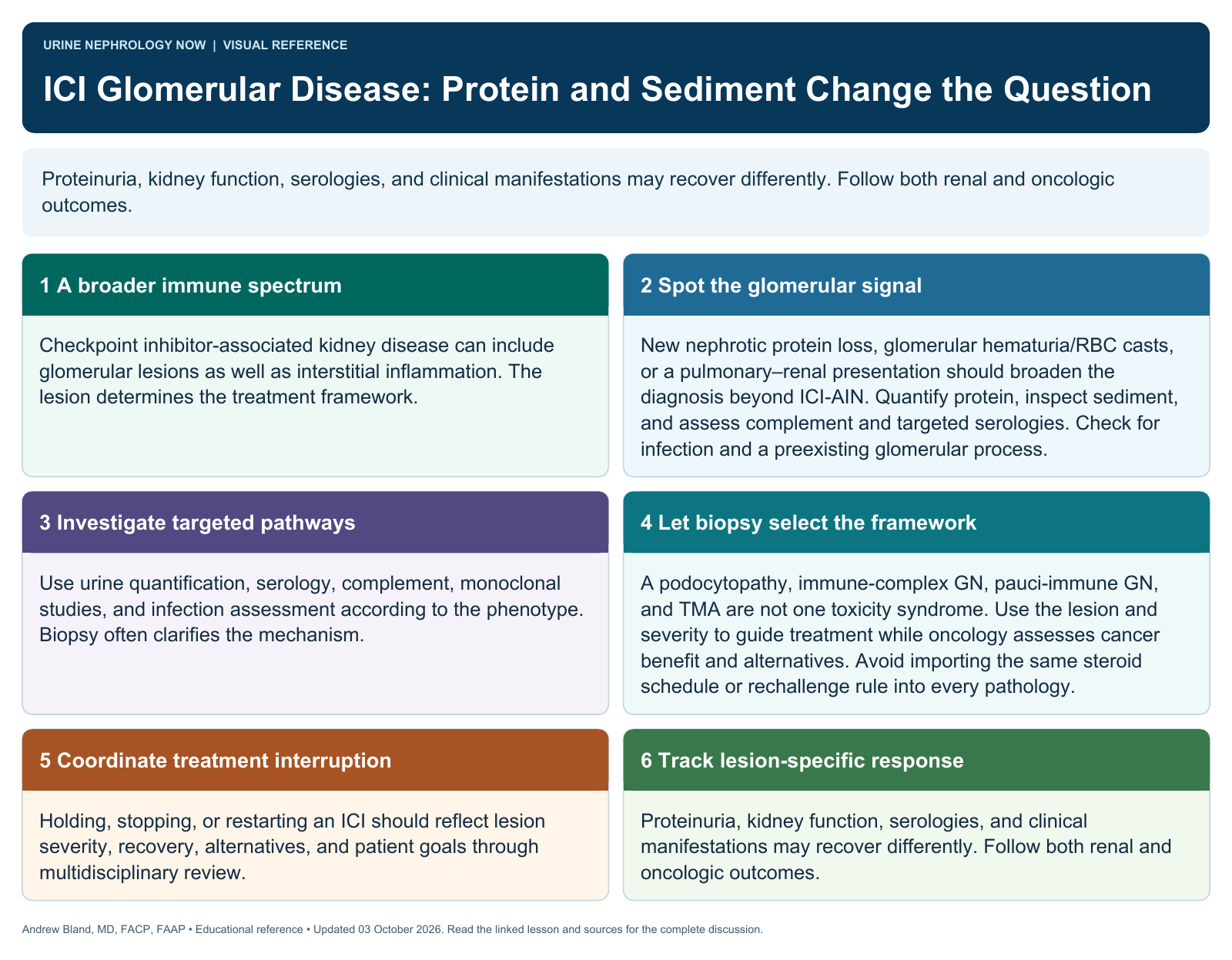
Proteinuria, kidney function, serologies, and clinical manifestations may recover differently. Follow both renal and oncologic outcomes.
Text version
A broader immune spectrum
Checkpoint inhibitor-associated kidney disease can include glomerular lesions as well as interstitial inflammation. The lesion determines the treatment framework.
Recognize atypical findings
Substantial proteinuria, active hematuria, red cell casts, nephrotic features, or systemic vasculitic findings should broaden assessment beyond presumed AIN.
Investigate targeted pathways
Use urine quantification, serology, complement, monoclonal studies, and infection assessment according to the phenotype. Biopsy often clarifies the mechanism.
Avoid one-size-fits-all steroids
Different glomerular lesions require different disease-specific reasoning. Cancer status and infection risk remain part of every immunosuppression decision.
Coordinate treatment interruption
Holding, stopping, or restarting an ICI should reflect lesion severity, recovery, alternatives, and patient goals through multidisciplinary review.
Track lesion-specific response
Proteinuria, kidney function, serologies, and clinical manifestations may recover differently. Follow both renal and oncologic outcomes.
Continue learning
This graphic summarizes a topic. The full educational pages provide the broader discussion and references.