Visual summary
Establish laboratory surveillance, symptom reporting, and a shared response plan so recurrent injury is recognized promptly.
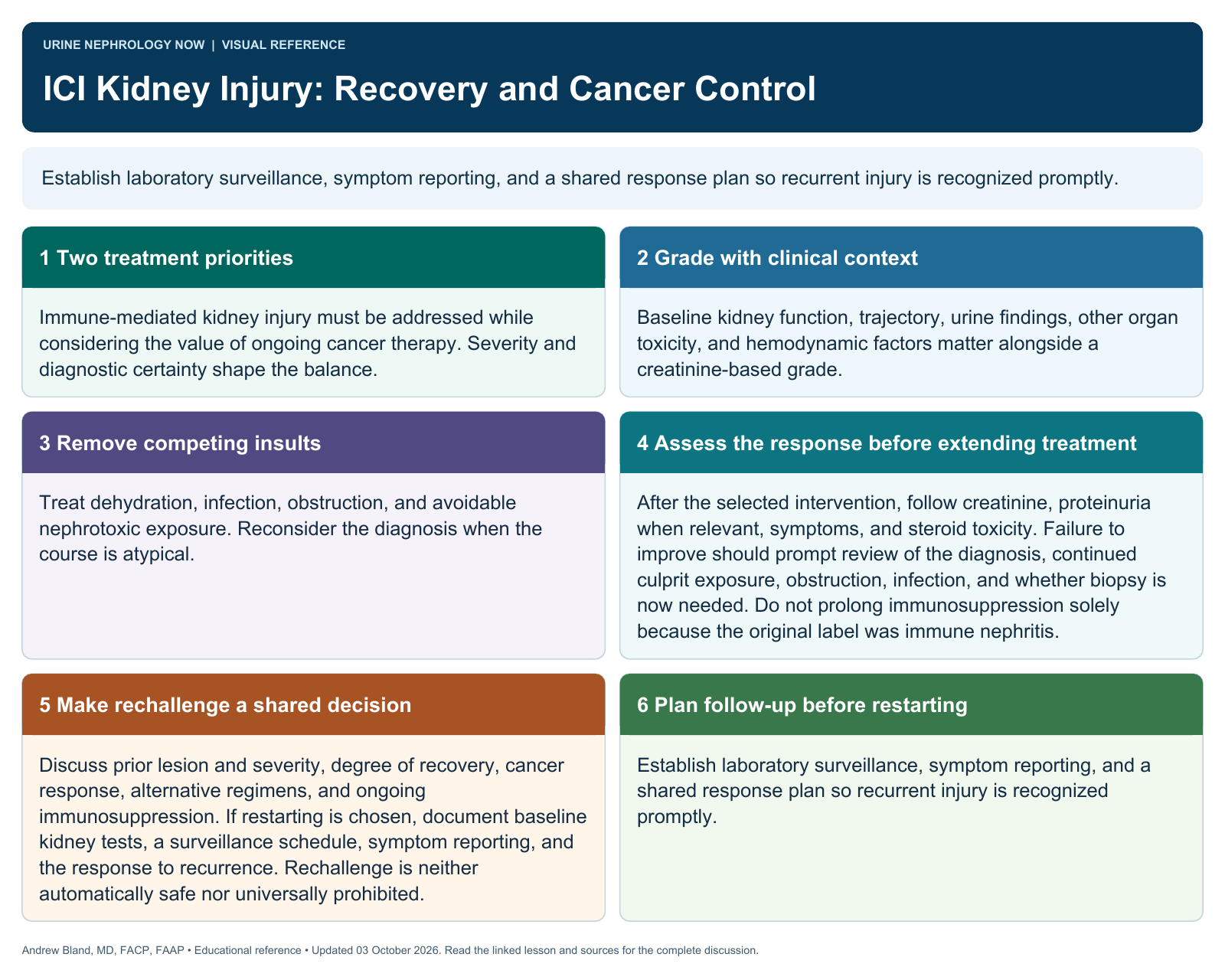
Text version
Two treatment priorities
Immune-mediated kidney injury must be addressed while considering the value of ongoing cancer therapy. Severity and diagnostic certainty shape the balance.
Grade with clinical context
Baseline kidney function, trajectory, urine findings, other organ toxicity, and hemodynamic factors matter alongside a creatinine-based grade.
Remove competing insults
Treat dehydration, infection, obstruction, and avoidable nephrotoxic exposure. Reconsider the diagnosis when the course is atypical.
Assess the response before extending treatment
After the selected intervention, follow creatinine, proteinuria when relevant, symptoms, and steroid toxicity. Failure to improve should prompt review of the diagnosis, continued culprit exposure, obstruction, infection, and whether biopsy is now needed. Do not prolong immunosuppression solely because the original label was immune nephritis.
Make rechallenge a shared decision
Discuss prior lesion and severity, degree of recovery, cancer response, alternative regimens, and ongoing immunosuppression. If restarting is chosen, document baseline kidney tests, a surveillance schedule, symptom reporting, and the response to recurrence. Rechallenge is neither automatically safe nor universally prohibited.
Plan follow-up before restarting
Establish laboratory surveillance, symptom reporting, and a shared response plan so recurrent injury is recognized promptly.