Visual summary
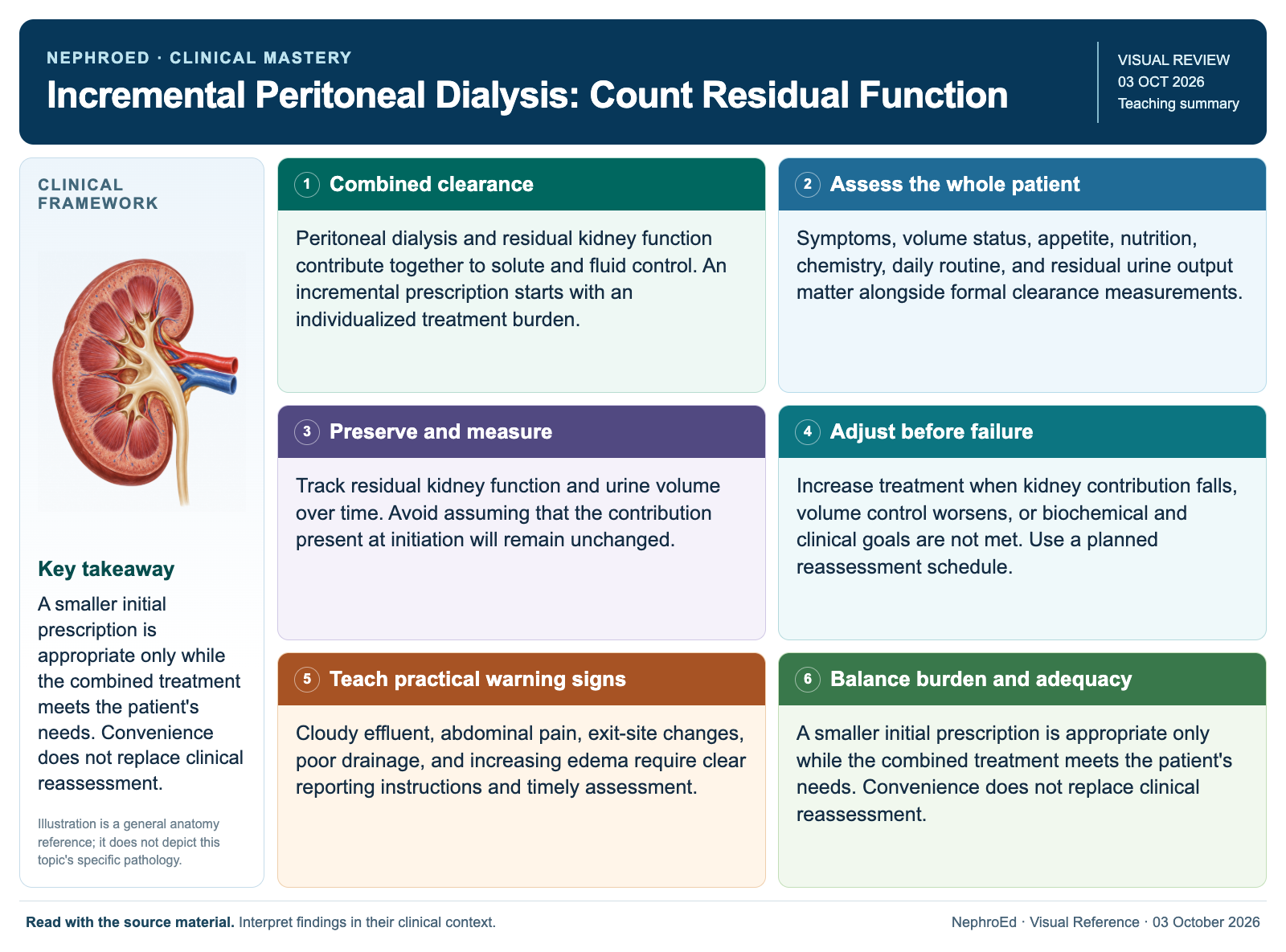
A smaller initial prescription is appropriate only while the combined treatment meets the patient's needs. Convenience does not replace clinical reassessment.
Text version
Combined clearance
Peritoneal dialysis and residual kidney function contribute together to solute and fluid control. An incremental prescription starts with an individualized treatment burden.
Assess the whole patient
Symptoms, volume status, appetite, nutrition, chemistry, daily routine, and residual urine output matter alongside formal clearance measurements.
Preserve and measure
Track residual kidney function and urine volume over time. Avoid assuming that the contribution present at initiation will remain unchanged.
Adjust before failure
Increase treatment when kidney contribution falls, volume control worsens, or biochemical and clinical goals are not met. Use a planned reassessment schedule.
Teach practical warning signs
Cloudy effluent, abdominal pain, exit-site changes, poor drainage, and increasing edema require clear reporting instructions and timely assessment.
Balance burden and adequacy
A smaller initial prescription is appropriate only while the combined treatment meets the patient's needs. Convenience does not replace clinical reassessment.
Continue learning
This graphic summarizes a topic. The full educational pages provide the broader discussion and references.