Visual summary
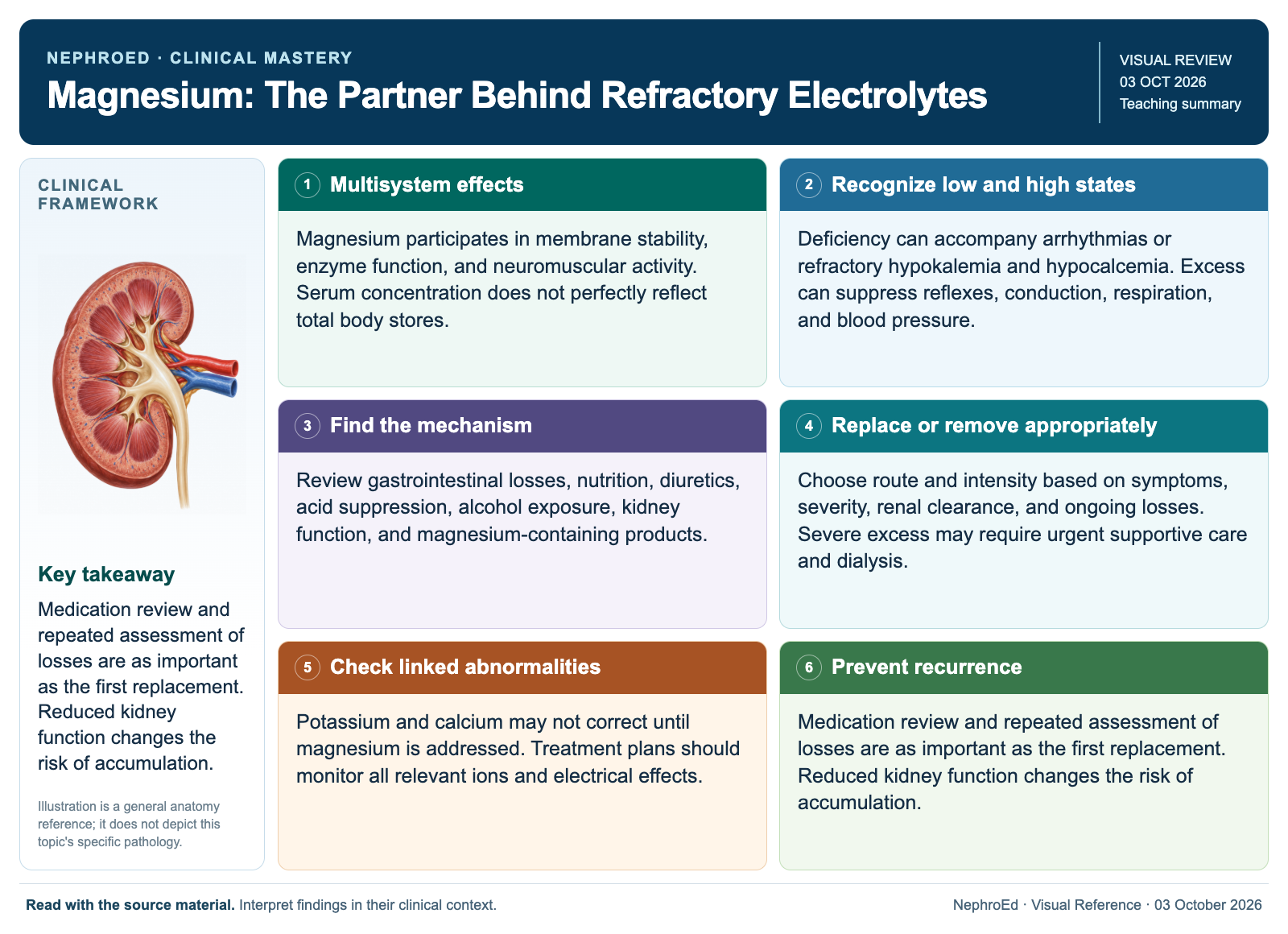
Medication review and repeated assessment of losses are as important as the first replacement. Reduced kidney function changes the risk of accumulation.
Text version
Multisystem effects
Magnesium participates in membrane stability, enzyme function, and neuromuscular activity. Serum concentration does not perfectly reflect total body stores.
Recognize low and high states
Deficiency can accompany arrhythmias or refractory hypokalemia and hypocalcemia. Excess can suppress reflexes, conduction, respiration, and blood pressure.
Find the mechanism
Review gastrointestinal losses, nutrition, diuretics, acid suppression, alcohol exposure, kidney function, and magnesium-containing products.
Replace or remove appropriately
Choose route and intensity based on symptoms, severity, renal clearance, and ongoing losses. Severe excess may require urgent supportive care and dialysis.
Check linked abnormalities
Potassium and calcium may not correct until magnesium is addressed. Treatment plans should monitor all relevant ions and electrical effects.
Prevent recurrence
Medication review and repeated assessment of losses are as important as the first replacement. Reduced kidney function changes the risk of accumulation.
Continue learning
This graphic summarizes a topic. The full educational pages provide the broader discussion and references.