Visual summary
Medication review and repeated assessment of losses are as important as the first replacement. Reduced kidney function changes the risk of accumulation.
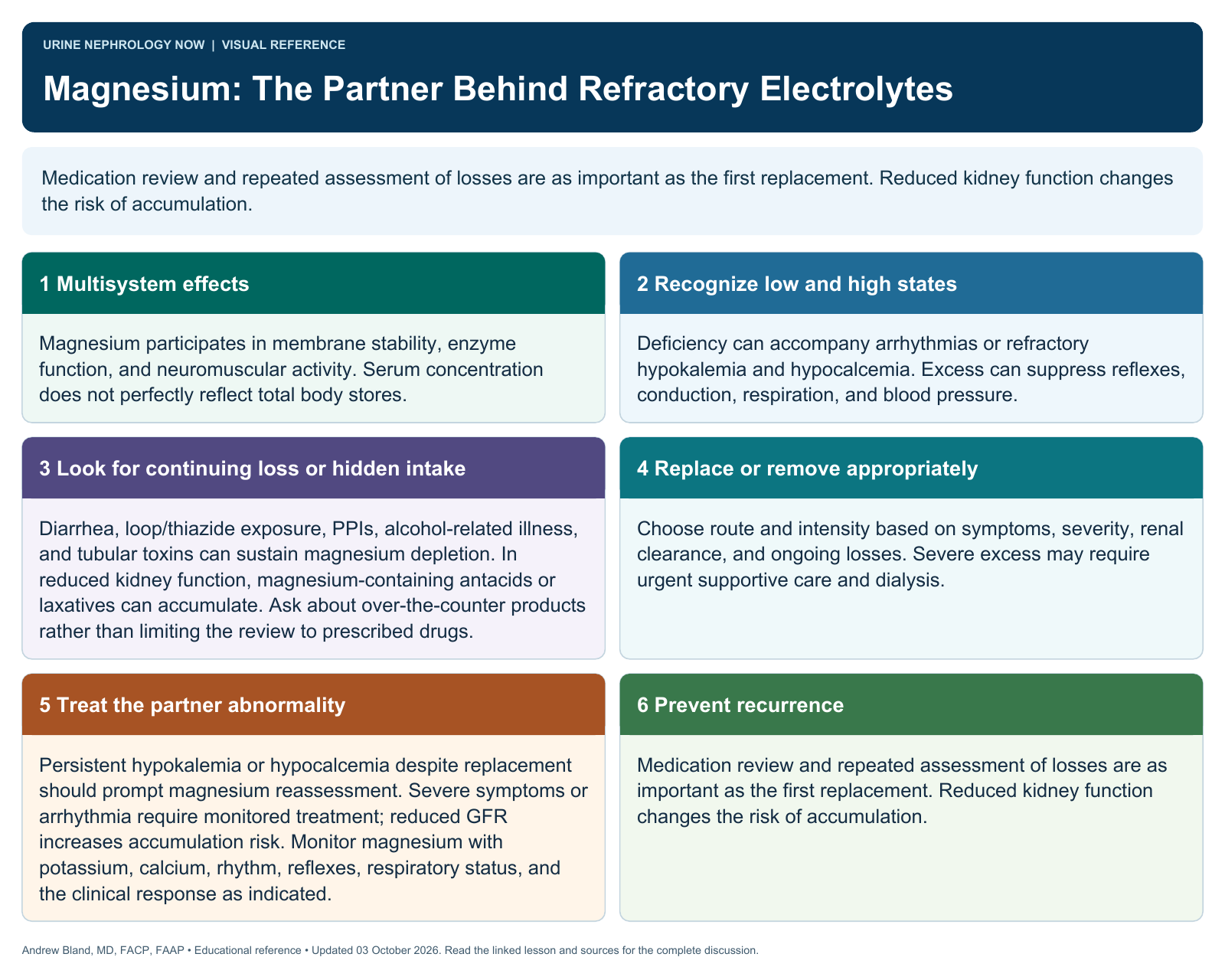
Text version
Multisystem effects
Magnesium participates in membrane stability, enzyme function, and neuromuscular activity. Serum concentration does not perfectly reflect total body stores.
Recognize low and high states
Deficiency can accompany arrhythmias or refractory hypokalemia and hypocalcemia. Excess can suppress reflexes, conduction, respiration, and blood pressure.
Look for continuing loss or hidden intake
Diarrhea, loop/thiazide exposure, PPIs, alcohol-related illness, and tubular toxins can sustain magnesium depletion. In reduced kidney function, magnesium-containing antacids or laxatives can accumulate. Ask about over-the-counter products rather than limiting the review to prescribed drugs.
Replace or remove appropriately
Choose route and intensity based on symptoms, severity, renal clearance, and ongoing losses. Severe excess may require urgent supportive care and dialysis.
Treat the partner abnormality
Persistent hypokalemia or hypocalcemia despite replacement should prompt magnesium reassessment. Severe symptoms or arrhythmia require monitored treatment; reduced GFR increases accumulation risk. Monitor magnesium with potassium, calcium, rhythm, reflexes, respiratory status, and the clinical response as indicated.
Prevent recurrence
Medication review and repeated assessment of losses are as important as the first replacement. Reduced kidney function changes the risk of accumulation.